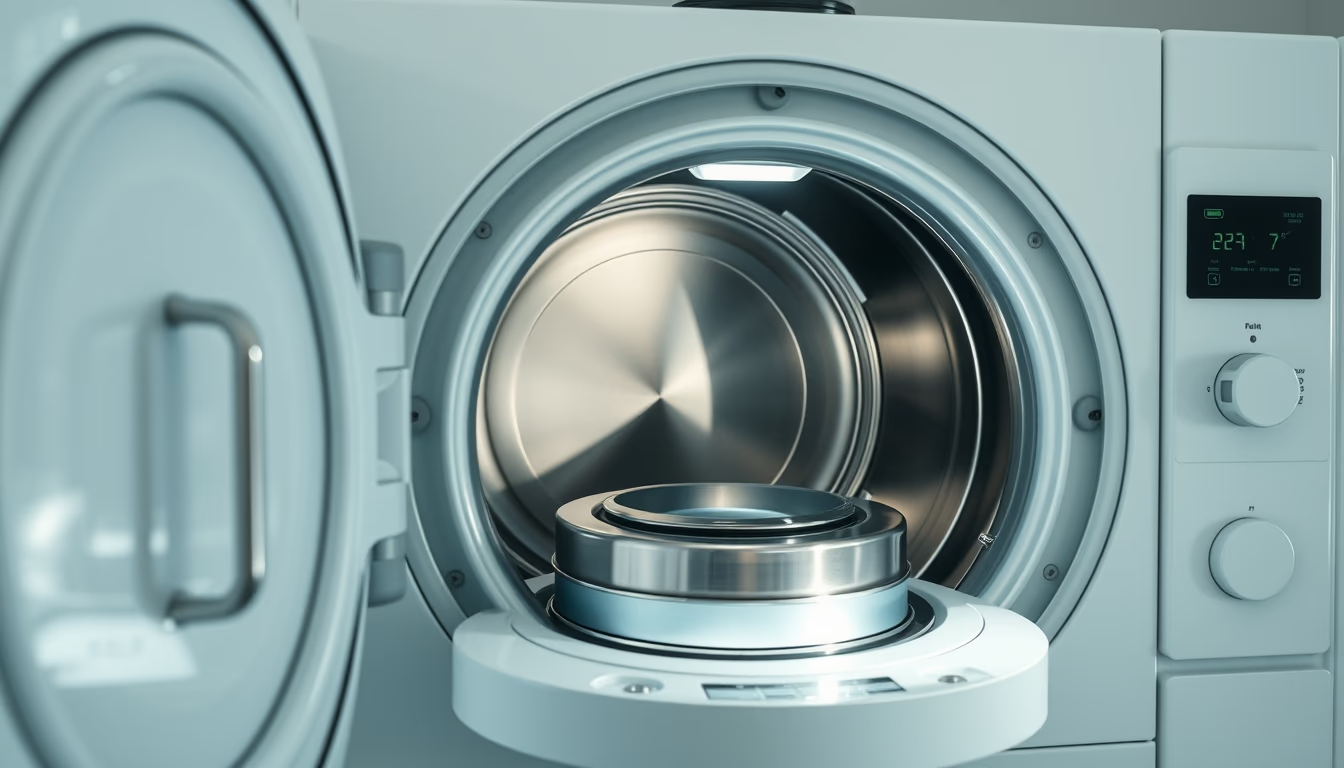
Fume hood chemistry
1344×768 · AVIF · CC BY 4.0

A fume hood is an essential safety device in chemistry laboratories, designed to protect users from toxic fumes and hazardous reactions.
About this subject
A fume hood, also known as a chemical safety cabinet, is one of the most critical pieces of equipment in laboratories handling volatile or hazardous substances. Its primary function is to remove airborne contaminants such as vapors, gases, and particulates through an exhaust system that creates an air barrier between the operator and the work area. Air is drawn into the hood, passes through filters or is expelled outside, ensuring no harmful chemicals reach the user.
There are two main types of fume hoods: ducted and ductless. Ducted hoods connect directly to the building's ventilation system, while ductless models use activated carbon or HEPA filters to purify recirculated air. Ducted hoods are more effective for highly toxic substances, whereas ductless ones offer greater flexibility and easier installation. International standards such as ANSI/ASHRAE 110 and EN 14175 specify testing protocols for performance and safety.
Fume hood efficiency is measured by face velocity, typically maintained between 0.3 and 0.5 m/s for adequate containment. Regular maintenance, including leak checks and filter replacement, is crucial for safety. Interestingly, the first fume hoods appeared in the 19th century as laboratories began handling more dangerous compounds. Today, they are mandatory in any chemistry lab adhering to modern safety practices.
Frequently Asked Questions
What is the ideal face velocity for a fume hood?
The recommended face velocity for fume hoods is between 0.3 and 0.5 m/s, as per standards like ANSI/ASHRAE 110. Lower values may compromise containment, while higher values can cause turbulence.
What is the difference between ducted and ductless fume hoods?
Ducted fume hoods expel contaminants outside the building, making them suitable for highly toxic substances. Ductless fume hoods recirculate air after filtering with activated carbon or HEPA, offering portability and easier installation.
Which standards regulate fume hoods in laboratories?
Key international standards include ANSI/ASHRAE 110 (performance testing) and EN 14175 (European standard). In the US, OSHA also provides guidelines. Local building codes may apply.
Direct URL
https://pub-c7d6a6ea828543ac903a74a341ccb2e1.r2.dev/imagens/fume-hood-chemistry-isometric-flat-lay-fresh8.avifHow to credit
Include a visible link back to UtilizAí. Copy one of the snippets below:
<a href="https://xn--utiliza-eza.com/en/midia/imagens/fume-hood-chemistry-isometric-flat-lay-fresh8">Fume hood chemistry</a> by <a href="https://xn--utiliza-eza.com">UtilizAí</a>, licensed under <a href="https://creativecommons.org/licenses/by/4.0/">CC BY 4.0</a>.
[Fume hood chemistry](https://xn--utiliza-eza.com/en/midia/imagens/fume-hood-chemistry-isometric-flat-lay-fresh8) by [UtilizAí](https://xn--utiliza-eza.com), CC BY 4.0
License: CC-BY-4.0