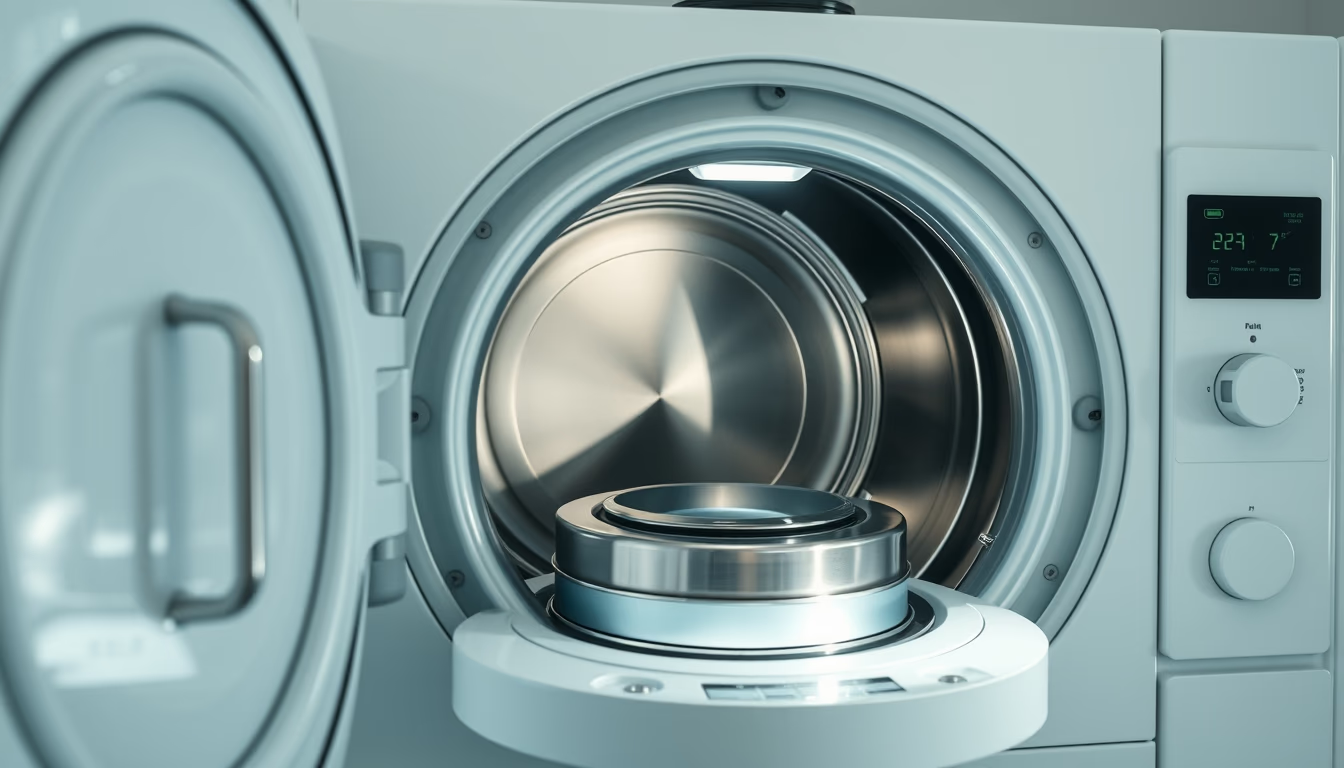
Fume hood chemistry
1344×768 · AVIF · CC BY 4.0

Learn how a chemical fume hood works, its role in laboratory safety, ventilation, and protection during experiments.
About this subject
A chemical fume hood is a crucial piece of safety equipment in laboratories. It is a ventilated enclosure that captures and removes hazardous fumes, vapors, dust, and gases, protecting the user and the surrounding area. The hood operates by continuously exhausting air, either to the outside through ducts or through filters, creating a barrier between the experiment and the operator.
There are two main types: ducted fume hoods, which expel air outside the building, and ductless (or recirculating) fume hoods, which use activated carbon or HEPA filters to purify the air before recirculating it. Ducted hoods are standard in most chemistry labs due to their ability to handle a wide range of chemicals, while ductless models are suitable for specific applications where duct installation is not possible.
Safety standards, such as ANSI Z9.5-2012, set requirements for fume hood performance. The face velocity, or the speed of air entering the hood opening, typically ranges from 0.4 to 0.6 m/s to ensure effective containment. Regular inspections are necessary to maintain compliance and safety.
In high-fashion editorial photography, the fume hood can serve as an industrial aesthetic element. Its metallic frame, glass sash, and interior lighting offer a striking visual contrast between the sterile laboratory environment and avant-garde fashion. This juxtaposition highlights the unexpected beauty of scientific apparatus.
Frequently Asked Questions
What is a laboratory fume hood?
It is a safety device that removes toxic vapors, dust, and gases from the work area, protecting the user and the laboratory.
How does a fume hood protect the user?
It provides a physical barrier with a sliding glass sash and maintains an airflow that draws contaminants into the exhaust system, preventing inhalation of hazardous substances.
What types of fume hoods exist?
There are ducted fume hoods, which expel air outside, and ductless (recirculating) fume hoods, which filter and recirculate air. The choice depends on the chemicals used and facility limitations.
Direct URL
https://pub-c7d6a6ea828543ac903a74a341ccb2e1.r2.dev/imagens/fume-hood-chemistry-high-fashion-editorial-fresh2.avifHow to credit
Include a visible link back to UtilizAí. Copy one of the snippets below:
<a href="https://xn--utiliza-eza.com/en/midia/imagens/fume-hood-chemistry-high-fashion-editorial-fresh2">Fume hood chemistry</a> by <a href="https://xn--utiliza-eza.com">UtilizAí</a>, licensed under <a href="https://creativecommons.org/licenses/by/4.0/">CC BY 4.0</a>.
[Fume hood chemistry](https://xn--utiliza-eza.com/en/midia/imagens/fume-hood-chemistry-high-fashion-editorial-fresh2) by [UtilizAí](https://xn--utiliza-eza.com), CC BY 4.0
License: CC-BY-4.0