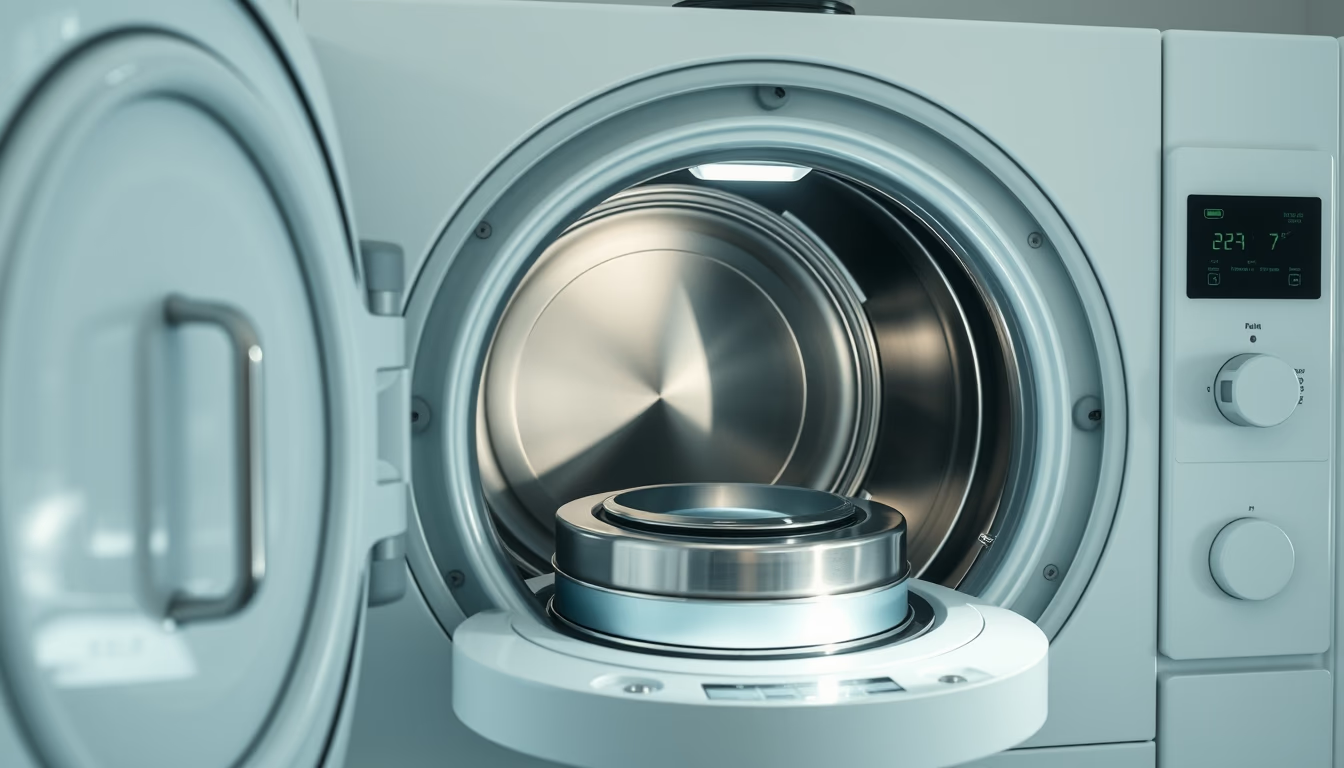
Fume hood chemistry
1344×768 · AVIF · CC BY 4.0

Chemical fume hood: essential safety equipment in laboratories, protecting researchers from toxic vapors and hazardous reactions.
About this subject
The chemical fume hood, also known as a ventilation hood, is one of the most critical safety devices in chemistry, biology, and pharmaceutical laboratories. Its primary function is to remove airborne contaminants such as gases, vapors, dusts, and aerosols generated during experiments or handling of hazardous substances. The fume hood operates through an exhaust system that creates an inward airflow, drawing contaminants away from the workspace and expelling them, typically via ducts to the outside of the building.
There are two main types: ducted fume hoods, which exhaust air to the exterior, and ductless fume hoods, which filter the air before recirculating it back into the room. Ductless hoods use HEPA and activated carbon filters to trap particles and organic vapors, making them suitable for locations where duct installation is impractical. Safety standards, such as those from OSHA (Occupational Safety and Health Administration) in the US and ABNT NBR 16585 in Brazil, specify minimum face velocity and sash height requirements to ensure adequate containment.
Historically, the first fume hoods appeared in the early 20th century, becoming widespread as the use of toxic reagents increased. Before their adoption, chemists worked on open benches, risking inhalation of dangerous fumes. Modern fume hoods feature flow sensors, alarms, and digital controls. Regular maintenance, including airflow checks and filter replacements, is essential for effectiveness. Users must also adjust the sash height correctly to avoid turbulence that could release contaminants into the lab.
Frequently Asked Questions
What is the purpose of a chemical fume hood?
A chemical fume hood protects the user and the laboratory environment by removing toxic vapors, gases, and hazardous particles generated during experiments, preventing inhalation and contamination.
What types of fume hoods exist?
The two main types are ducted fume hoods, which exhaust air outdoors, and ductless fume hoods, which use HEPA and activated carbon filters to purify the air before recirculating it.
What is the difference between a laminar flow hood and a chemical fume hood?
A laminar flow hood protects the sample from external contamination by directing filtered air over the work surface, while a chemical fume hood protects the operator and environment from contaminants generated inside.
Direct URL
https://pub-c7d6a6ea828543ac903a74a341ccb2e1.r2.dev/imagens/fume-hood-chemistry-fish-eye-wide-angle-fresh9.avifHow to credit
Include a visible link back to UtilizAí. Copy one of the snippets below:
<a href="https://xn--utiliza-eza.com/en/midia/imagens/fume-hood-chemistry-fish-eye-wide-angle-fresh9">Fume hood chemistry</a> by <a href="https://xn--utiliza-eza.com">UtilizAí</a>, licensed under <a href="https://creativecommons.org/licenses/by/4.0/">CC BY 4.0</a>.
[Fume hood chemistry](https://xn--utiliza-eza.com/en/midia/imagens/fume-hood-chemistry-fish-eye-wide-angle-fresh9) by [UtilizAí](https://xn--utiliza-eza.com), CC BY 4.0
License: CC-BY-4.0