Fume hood chemistry
1344×768 · AVIF · CC BY 4.0
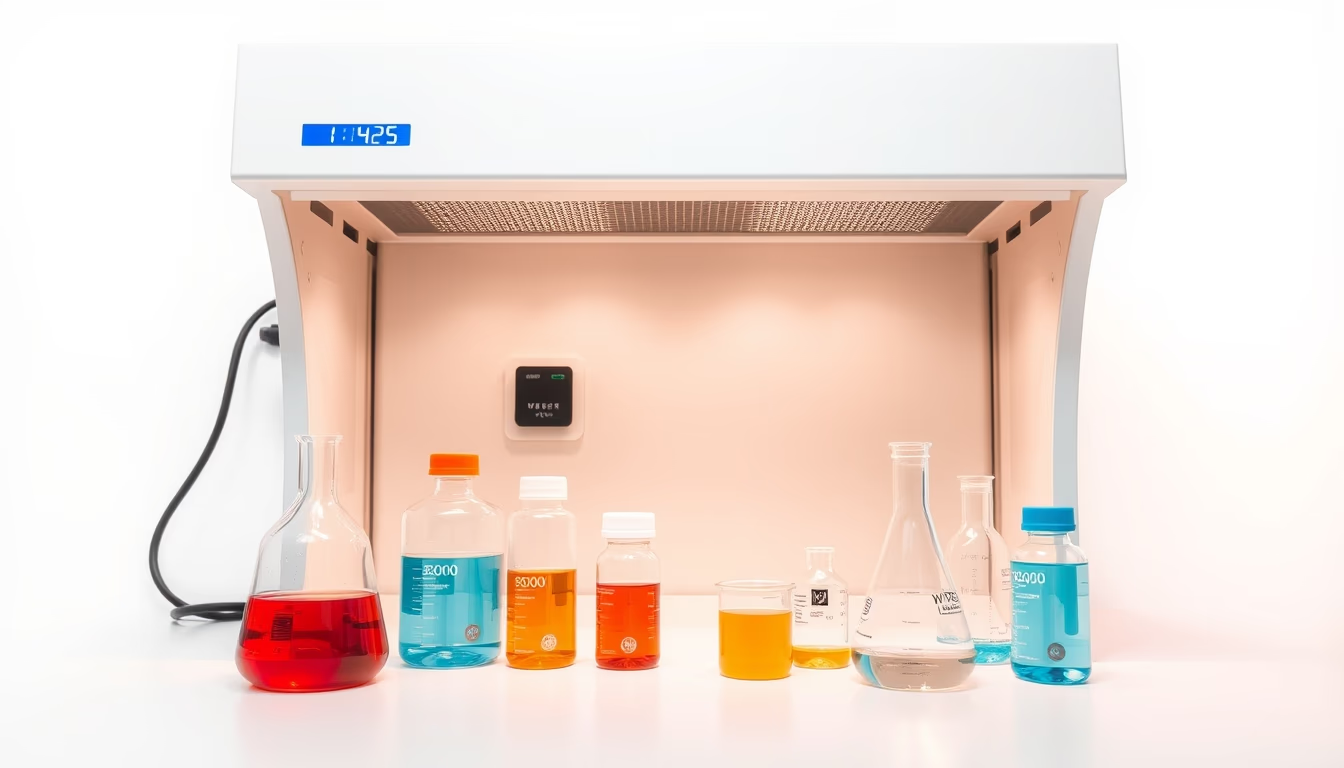
Chemistry fume hood: essential safety equipment in laboratories, designed to protect users from toxic vapors during experiments.
About this subject
A fume hood, also known as a chemical fume cupboard, is one of the most critical safety devices in chemistry, biology, and pharmaceutical laboratories. Its primary function is to remove airborne contaminants, such as vapors, gases, and particulates, generated during procedures involving hazardous substances. The operating principle is based on local exhaust ventilation: a fan creates unidirectional airflow into the hood, capturing pollutants and expelling them outdoors or filtering them before recirculating the air back into the room.
There are two main types: ducted fume hoods (connected to exhaust ducts) and ductless or recirculating hoods (equipped with filters, such as activated carbon or HEPA). Ducted hoods are more common in research laboratories because they offer higher exhaust capacity and do not require frequent filter changes. Ductless hoods are suitable for low-toxicity volatile materials and in spaces without duct infrastructure. Both types must comply with standards such as ANSI/ASHRAE 110 and NBR 14517, which regulate performance tests, minimum airflow, and sash positioning.
Safe operation requires the user to keep the sash at the recommended height (typically between 18 and 20 inches) to ensure adequate airflow. Objects should be placed at least 15 cm from the front edge to avoid turbulence. Additionally, periodic training on proper hood use and scheduled maintenance of exhaust systems are essential. Neglecting these practices can lead to accidental exposure to hazardous chemicals, including organic solvents, concentrated acids, and toxic gases.
Interestingly, modern fume hood designs incorporate visual and audible alarms for low airflow and sash position sensors. Some advanced models automatically adjust airflow based on sash position, maintaining constant face velocity and saving energy when the hood is not in use. The selection of hood type should consider the nature of chemicals, frequency of use, and building infrastructure, making it a fundamental investment for laboratory safety.
Frequently Asked Questions
What is the difference between ducted and ductless fume hoods?
Ducted fume hoods are connected to exhaust ducts that carry contaminants outside the building. Ductless hoods recirculate air after passing it through filters (activated carbon or HEPA). Ducted hoods are better for highly toxic chemicals in large volumes; ductless ones suit low-toxicity solvents and labs without ductwork.
How can I ensure a fume hood is working efficiently?
Keep the sash at the correct height (as per manufacturer instructions), avoid placing objects near the front edge, and minimize sudden movements that disrupt airflow. Perform periodic face velocity tests and inspect alarm and exhaust systems according to technical standards.
What are the main risks of improper fume hood use?
The main risk is inhalation of toxic vapors, which can cause respiratory irritation, acute poisoning, or chronic health damage. Additionally, exposure to flammable solvents without proper ventilation can lead to fires or explosions.
Direct URL
https://pub-c7d6a6ea828543ac903a74a341ccb2e1.r2.dev/imagens/fume-hood-chemistry-commercial-product-photography-fresh0.avifHow to credit
Include a visible link back to UtilizAí. Copy one of the snippets below:
<a href="https://xn--utiliza-eza.com/en/midia/imagens/fume-hood-chemistry-commercial-product-photography-fresh0">Fume hood chemistry</a> by <a href="https://xn--utiliza-eza.com">UtilizAí</a>, licensed under <a href="https://creativecommons.org/licenses/by/4.0/">CC BY 4.0</a>.
[Fume hood chemistry](https://xn--utiliza-eza.com/en/midia/imagens/fume-hood-chemistry-commercial-product-photography-fresh0) by [UtilizAí](https://xn--utiliza-eza.com), CC BY 4.0
License: CC-BY-4.0