Fishing trawler sea
1344×768 · AVIF · CC BY 4.0
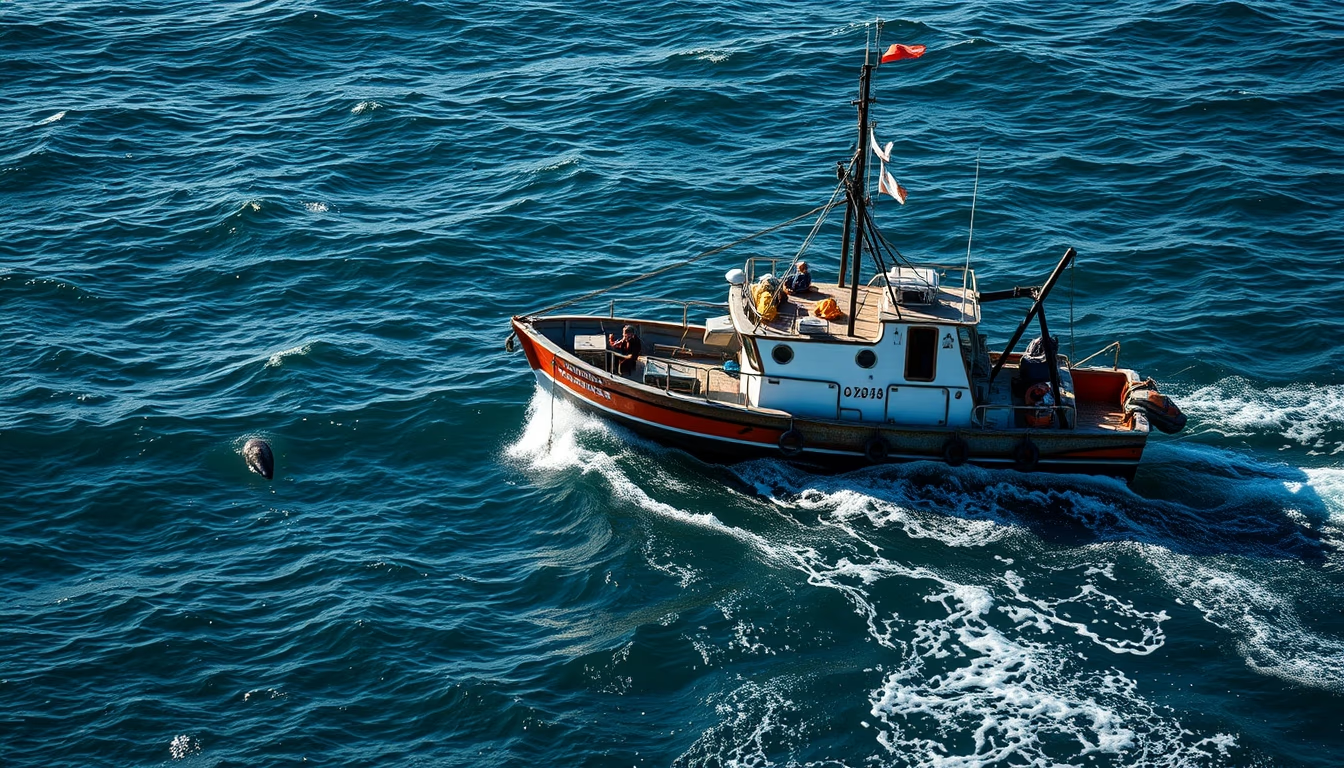
Fishing trawlers at sea are industrial vessels that drag massive nets across the ocean floor, catching tons of fish in a single haul.
About this subject
Fishing trawlers are vessels designed to tow funnel-shaped nets, called trawls, along the seabed or in midwater. This technique, known as trawling, is one of the most productive and controversial fishing methods worldwide. A single trawler can catch hundreds of tons of fish in one operation, making it highly efficient for the fishing industry. However, the method also faces criticism for harming marine ecosystems, such as destroying benthic habitats and catching non-target species, including turtles, dolphins, and corals.
The global trawler fleet operates in all oceans, notably in the North Atlantic, Northwest Pacific, and European seas. In Brazil, trawling is common in the Southeast and South regions, targeting species like Brazilian sardine, pink shrimp, and hake. Shrimp trawling, for instance, uses doors to keep the net open, sweeping long distances across the seafloor, which can remove the top sediment layer and affect local fauna.
Controversy over trawlers has led to stricter regulations in many countries, such as mandatory use of turtle excluder devices (TEDs) to reduce bycatch. Some areas implement trawling exclusion zones near the coast to protect sensitive ecosystems and small-scale fisheries. Yet, the global trawler fleet continues to grow, driven by demand for animal protein and international seafood trade.
Modern trawlers are equipped with sonar and GPS to precisely locate fish schools, plus onboard freezers to process and store catch for weeks. According to the FAO, trawling accounts for about 20% of global fish catch, but also contributes disproportionately to discards of dead, unmarketable fish. The sustainability debate often places trawlers at the center of the tension between productivity and conservation.
Frequently Asked Questions
What is trawling and how does it work?
Trawling is a fishing method that uses a funnel-shaped net towed by a vessel, either along the seabed or in midwater. The net captures everything in its path, including fish, crustaceans, and other organisms, and is then hauled aboard.
What are the main environmental impacts of trawlers?
Trawlers can destroy marine habitats such as corals and sponges, and cause bycatch of endangered species like turtles and dolphins. Bottom trawling also stirs up sediments, releasing nutrients and pollutants.
Are there regulations for trawling in Brazil?
Yes, Brazil has regulations such as banning trawling in certain coastal areas and requiring turtle excluder devices in shrimp nets. However, enforcement remains challenging due to the long coastline.
Direct URL
https://pub-c7d6a6ea828543ac903a74a341ccb2e1.r2.dev/imagens/fishing-trawler-sea-magazine-editorial-p5.avifHow to credit
Include a visible link back to UtilizAí. Copy one of the snippets below:
<a href="https://xn--utiliza-eza.com/en/midia/imagens/fishing-trawler-sea-magazine-editorial-p5">Fishing trawler sea</a> by <a href="https://xn--utiliza-eza.com">UtilizAí</a>, licensed under <a href="https://creativecommons.org/licenses/by/4.0/">CC BY 4.0</a>.
[Fishing trawler sea](https://xn--utiliza-eza.com/en/midia/imagens/fishing-trawler-sea-magazine-editorial-p5) by [UtilizAí](https://xn--utiliza-eza.com), CC BY 4.0
License: CC-BY-4.0