Fish hatchery raceways
1344×768 · AVIF · CC BY 4.0
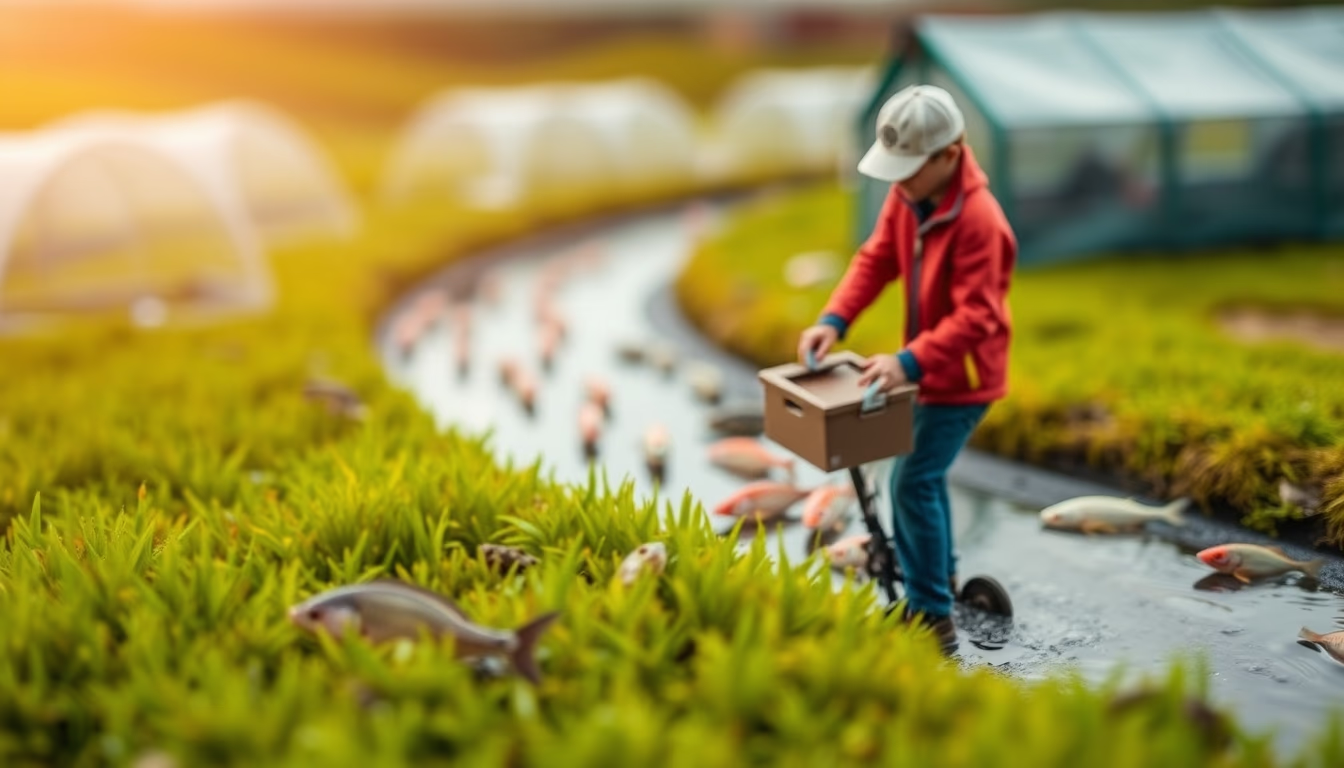
Raceways are long, narrow tanks used in intensive aquaculture for fish rearing in continuous water flow, ensuring high oxygenation and waste removal.
About this subject
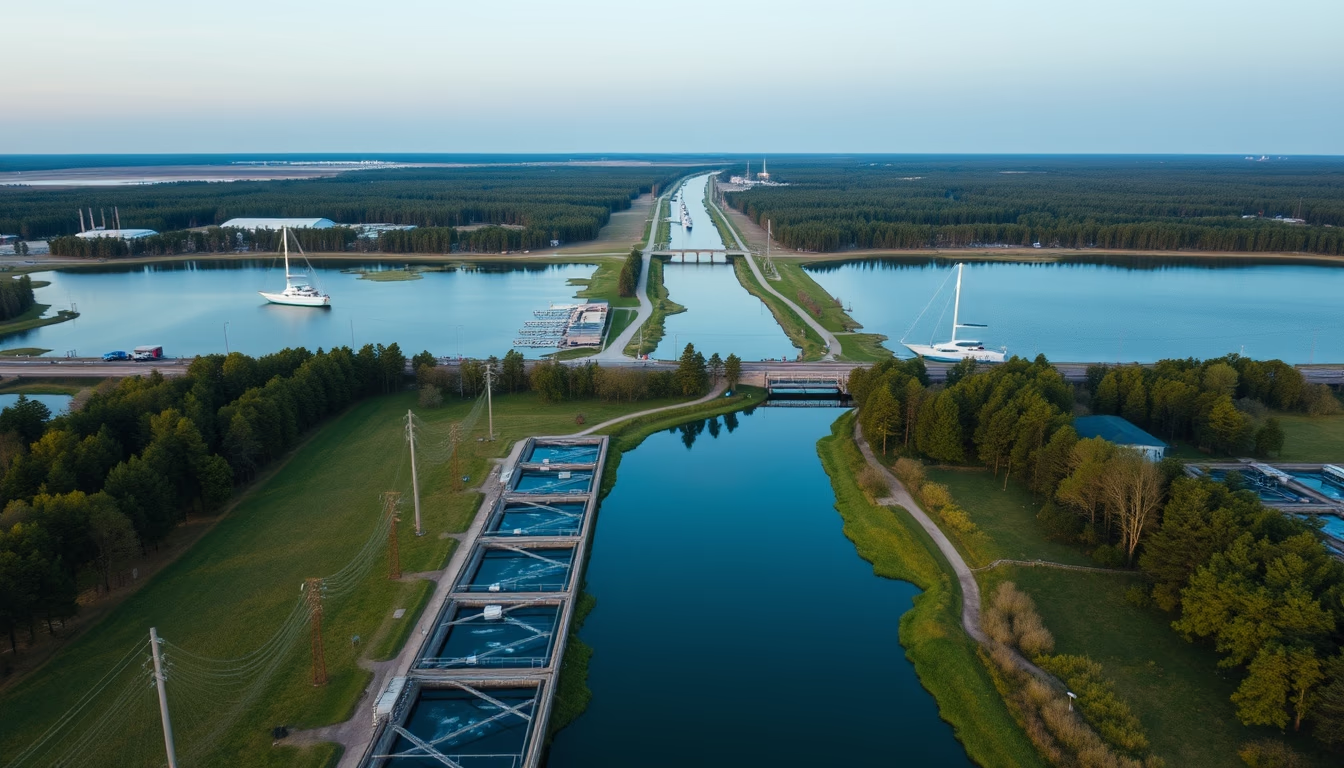
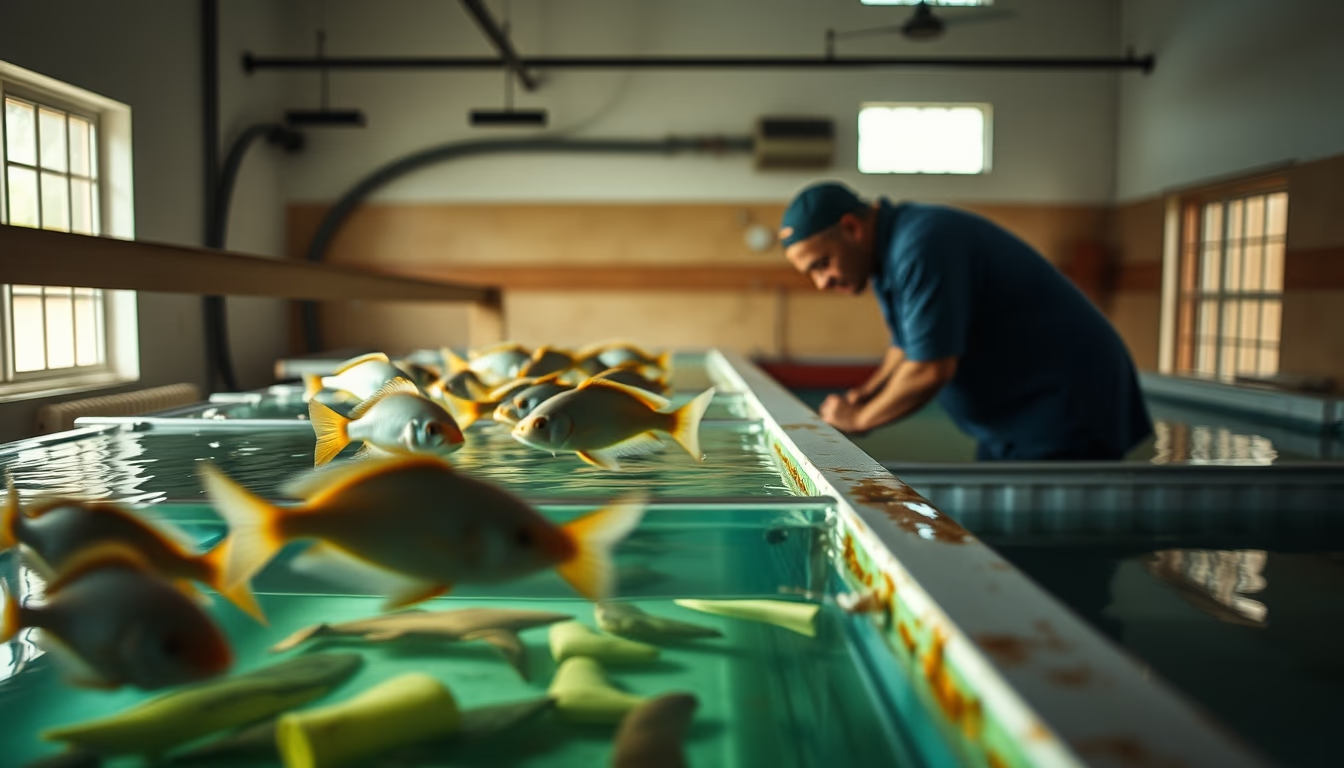
Raceways are fish farming systems consisting of long, narrow rectangular channels, typically made of concrete or fiberglass, with continuous water flow. Water enters at one end and exits at the other, carrying away feces and uneaten feed, maintaining good water quality. Flow rates are adjusted according to species and biomass, often achieving dozens of water exchanges per hour. Common in trout and tilapia farming, raceways are also adapted for salmon, catfish, and other high-value species.
The modern raceway's origins trace back to Roman irrigation channels, but its application in aquaculture began in the United States in the 1950s, driven by research from the U.S. Fish and Wildlife Service. Today, they are widely used in Brazilian fish farms, especially in the South and Southeast regions, where natural slopes enable gravity-fed flow. System efficiency depends on factors like temperature, dissolved oxygen (kept above 5 mg/L), and feeding management, with feed conversion ratios ranging from 1.2 to 1.8 kg of feed per kg of fish produced.
A technical curiosity is that raceways can be operated in series, with water from one tank flowing to the next, reducing water usage by up to 90% in recirculating systems. However, without proper treatment, ammonia accumulation requires biofilters or settling ponds. Typical stocking densities range from 20 to 60 kg/m³, depending on species and system carrying capacity. In many facilities, feeding is automated using demand feeders or pneumatic blowers synchronized with the current to minimize feed loss.
The tilt-shift effect in the image that originated this entry gives a miniature perspective to a real aquaculture scene, highlighting the repetitive geometry of the channels. Aerial photography with special lenses or post-processing emphasizes the spatial arrangement of raceways, which can stretch across hectares in large operations. This visual style, popular on platforms like Instagram and Wikimedia, helps promote sustainable aquaculture practices, showing how technology optimizes water and space for animal protein production.
Frequently Asked Questions
What is the main advantage of raceways over earthen ponds?
Raceways offer better control of water quality, continuous renewal, and higher stocking densities, resulting in higher productivity per area and lower water consumption per kilogram of fish.
Which fish species are most common in raceway systems?
The most cultivated species are rainbow and brown trout, tilapia, followed by salmon, catfish, pacu, and tambaqui. Each species requires specific parameters for flow, temperature, and dissolved oxygen.
How is cleaning done without interrupting production?
Cleaning relies on the water flow itself, which carries waste to a settling or filtration system. Walls are scraped periodically, and disinfection between batches can use quicklime or sodium hypochlorite.
Direct URL
https://pub-c7d6a6ea828543ac903a74a341ccb2e1.r2.dev/imagens/fish-hatchery-raceways-tilt-shift-miniature-fresh13.avifHow to credit
Include a visible link back to UtilizAí. Copy one of the snippets below:
<a href="https://xn--utiliza-eza.com/en/midia/imagens/fish-hatchery-raceways-tilt-shift-miniature-fresh13">Fish hatchery raceways</a> by <a href="https://xn--utiliza-eza.com">UtilizAí</a>, licensed under <a href="https://creativecommons.org/licenses/by/4.0/">CC BY 4.0</a>.
[Fish hatchery raceways](https://xn--utiliza-eza.com/en/midia/imagens/fish-hatchery-raceways-tilt-shift-miniature-fresh13) by [UtilizAí](https://xn--utiliza-eza.com), CC BY 4.0
License: CC-BY-4.0