Fish hatchery raceways
1344×768 · AVIF · CC BY 4.0

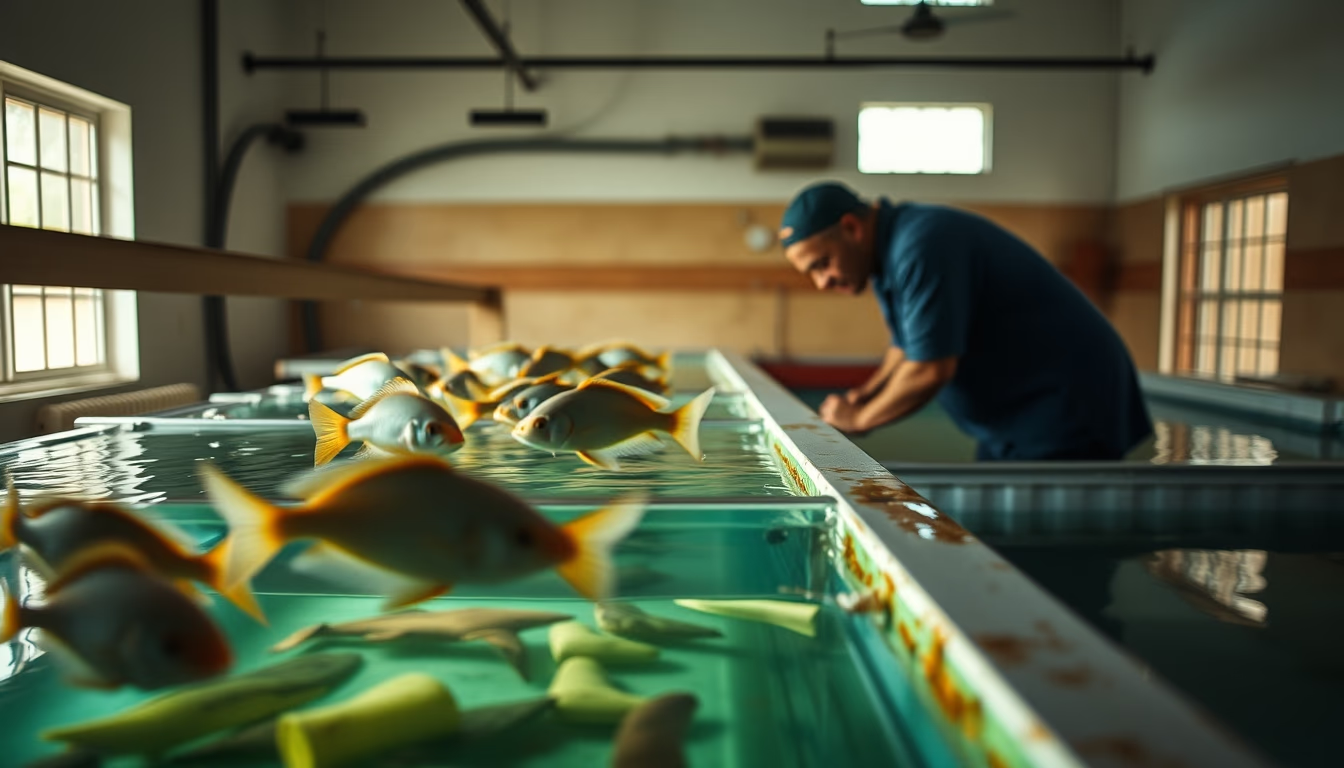
Raceways are elongated channels used in fish farming to rear fish in continuous water flow, simulating natural river conditions.
About this subject
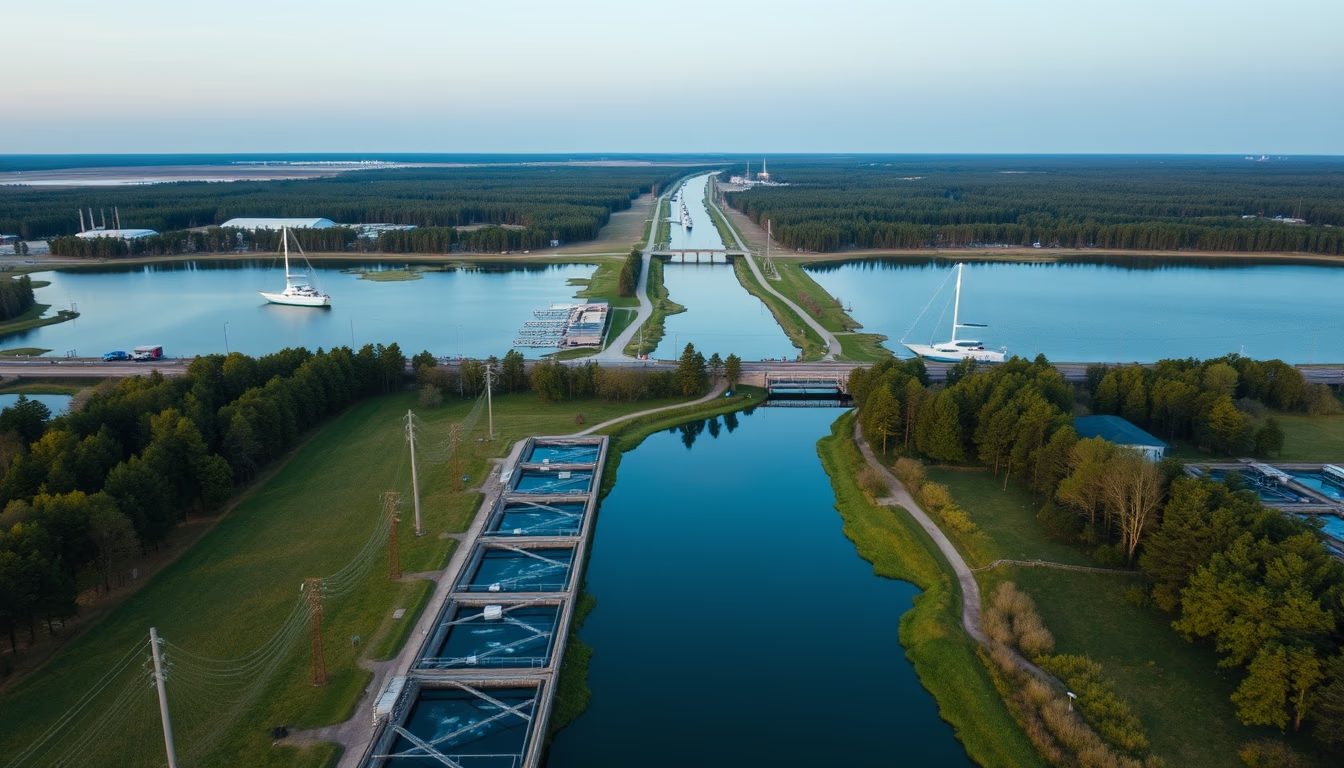
Fish hatchery raceways are linear concrete, fiberglass, or earthen channels designed to maintain a constant water flow. This technique, originated in the United States in the 1950s, allows high stocking densities and easy management. Water, usually sourced from rivers or springs, enters at one end and exits at the other, carrying away wastes and ensuring oxygen renewal.
Species such as rainbow trout (Oncorhynchus mykiss), Nile tilapia (Oreochromis niloticus), and catfish are commonly reared in this system. Flow rate is controlled by gates, and feeding is done manually or with automatic feeders. Raceways occupy less area than earthen ponds and allow intensive production, with up to 100 kg of fish per cubic meter of water.
In Brazil, raceway fish farming is more common in the South and Southeast regions, especially in areas with natural slope to use gravity. Installation requires environmental licensing and water use permit. One challenge is effluent treatment, which must remove suspended solids and nutrients before discharge into the water body.
Interestingly, raceways are also used in genetic research laboratories and larviculture, as they allow precise control of water quality. The technology has evolved with recirculating aquaculture systems (RAS) that reuse up to 95% of water, reducing consumption and environmental impact.
Frequently Asked Questions
What is the main advantage of the raceway system compared to earthen ponds?
The main advantage is higher stocking density per cubic meter, which can reach 100 kg/m³, and easier management and waste removal.
Which fish species are most suitable for raceway culture?
Species that tolerate high densities and water current, such as rainbow trout, Nile tilapia, catfish, and pacu.
Does the raceway system cause environmental impact?
Yes, the main impact is effluent rich in organic matter and nutrients. Treatment such as sedimentation and biological filters is required before discharge.
Direct URL
https://pub-c7d6a6ea828543ac903a74a341ccb2e1.r2.dev/imagens/fish-hatchery-raceways-studio-editorial-portrait-fresh17.avifHow to credit
Include a visible link back to UtilizAí. Copy one of the snippets below:
<a href="https://xn--utiliza-eza.com/en/midia/imagens/fish-hatchery-raceways-studio-editorial-portrait-fresh17">Fish hatchery raceways</a> by <a href="https://xn--utiliza-eza.com">UtilizAí</a>, licensed under <a href="https://creativecommons.org/licenses/by/4.0/">CC BY 4.0</a>.
[Fish hatchery raceways](https://xn--utiliza-eza.com/en/midia/imagens/fish-hatchery-raceways-studio-editorial-portrait-fresh17) by [UtilizAí](https://xn--utiliza-eza.com), CC BY 4.0
License: CC-BY-4.0