Fish hatchery raceways
1344×768 · AVIF · CC BY 4.0
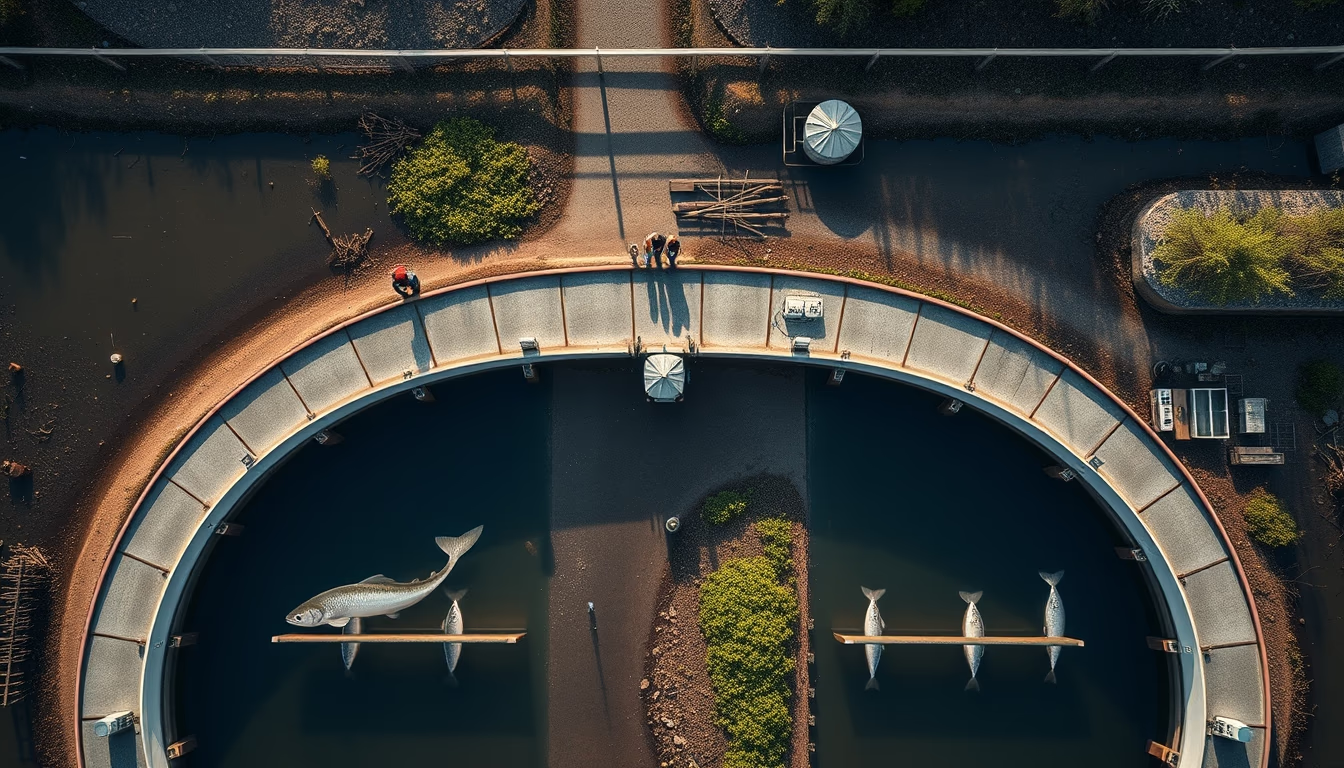
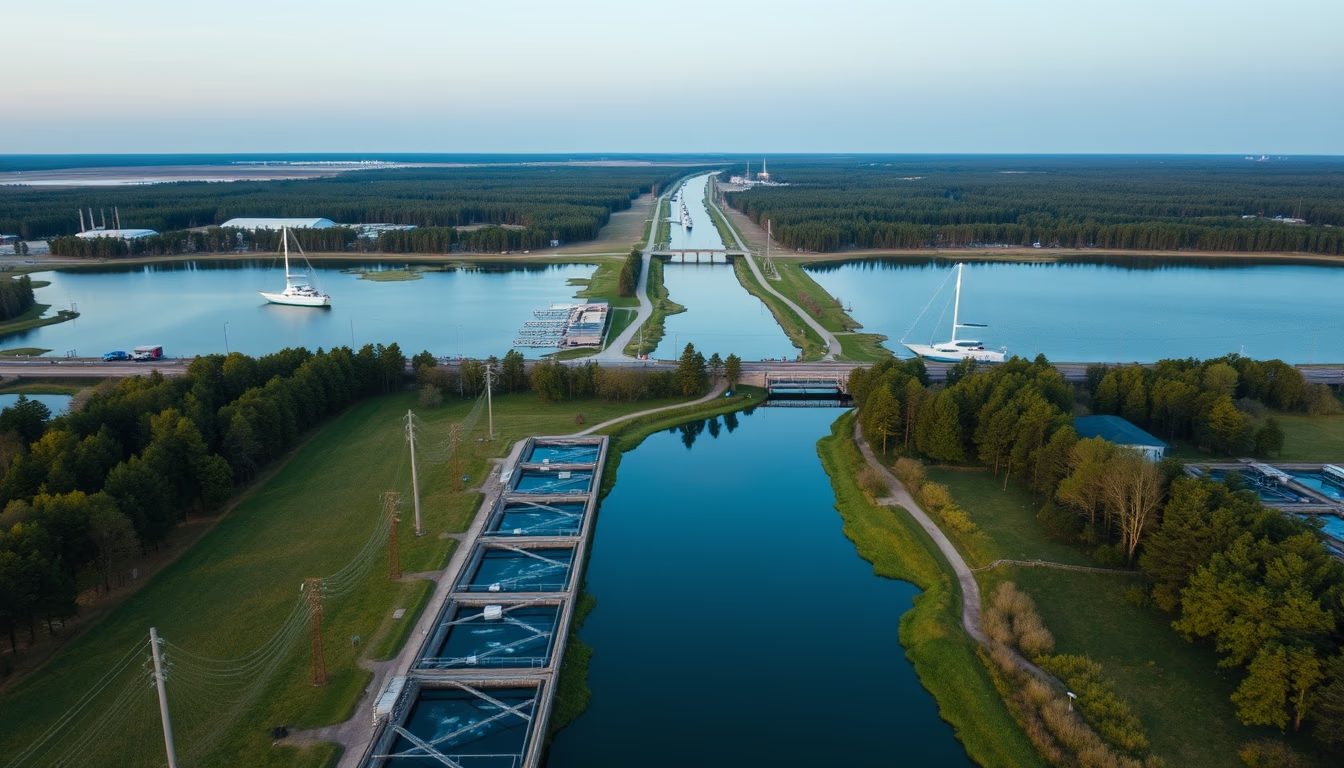
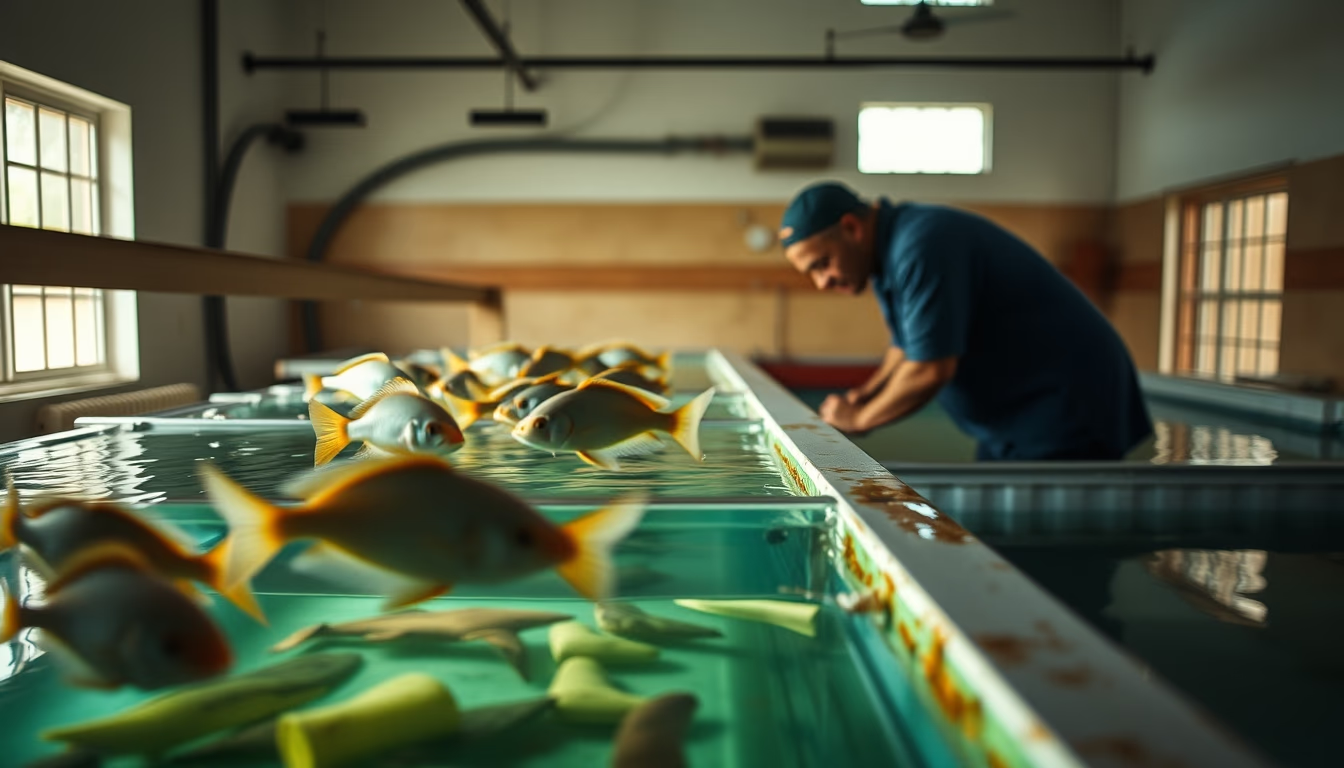
Raceways are rectangular concrete or fiberglass channels used in intensive fish farming, with continuous water flow to raise tilapia, trout, and other fish at high density.
About this subject
Raceways are rectangular concrete or fiberglass channels used in intensive aquaculture, where water flows continuously through long, narrow canals. This constant flow maintains high water quality, proper oxygenation, and waste removal, allowing high stocking densities. Species such as rainbow trout, Nile tilapia, and channel catfish are commonly raised in these systems, especially in regions with ample clean water.
One of the main advantages of raceways is precise environmental control. With continuous water exchange, parameters like temperature, dissolved oxygen, and ammonia can be managed efficiently, reducing fish stress and improving growth and survival rates. Additionally, the rectangular shape facilitates automated feeding, cleaning, and harvesting, optimizing labor.
Design variations include series or parallel raceways. In series systems, water flows from one tank to another, accumulating waste; in parallel systems, each channel receives fresh water. To mitigate environmental impact, many operations integrate raceways with recirculating aquaculture systems (RAS), treating and reusing water. These systems are crucial in regions with water scarcity or strict environmental regulations.
Historically, raceways were popularized in the United States in the 1950s for trout production. Today, they are used globally in hatcheries for producing fry and fingerlings, as well as for grow-out. Compared to circular tanks, raceways offer better space efficiency and lower construction costs, provided a reliable water supply is available.
Frequently Asked Questions
What are raceways in fish farming?
Raceways are long, narrow channels, usually made of concrete or fiberglass, with continuous water flow, used for intensive fish production at high densities.
Which species are most commonly raised in raceways?
Common species include rainbow trout, Nile tilapia, and channel catfish. Other cold-water or warm-water fish can also be adapted.
What are the main advantages of raceways?
They provide precise water quality control, high stocking densities, ease of management and harvesting, and lower construction costs compared to other intensive systems.
Direct URL
https://pub-c7d6a6ea828543ac903a74a341ccb2e1.r2.dev/imagens/fish-hatchery-raceways-isometric-flat-lay-fresh11.avifHow to credit
Include a visible link back to UtilizAí. Copy one of the snippets below:
<a href="https://xn--utiliza-eza.com/en/midia/imagens/fish-hatchery-raceways-isometric-flat-lay-fresh11">Fish hatchery raceways</a> by <a href="https://xn--utiliza-eza.com">UtilizAí</a>, licensed under <a href="https://creativecommons.org/licenses/by/4.0/">CC BY 4.0</a>.
[Fish hatchery raceways](https://xn--utiliza-eza.com/en/midia/imagens/fish-hatchery-raceways-isometric-flat-lay-fresh11) by [UtilizAí](https://xn--utiliza-eza.com), CC BY 4.0
License: CC-BY-4.0