Fish hatchery raceways
1344×768 · AVIF · CC BY 4.0

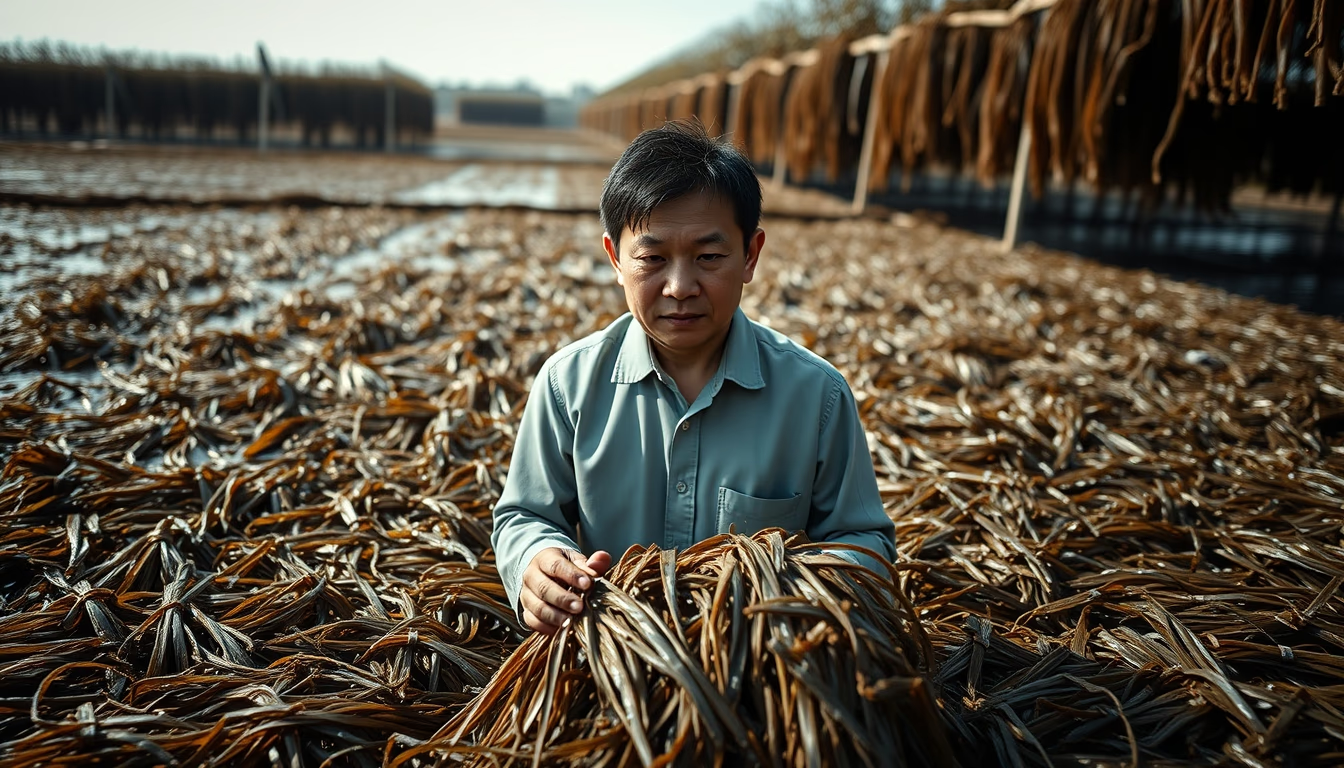
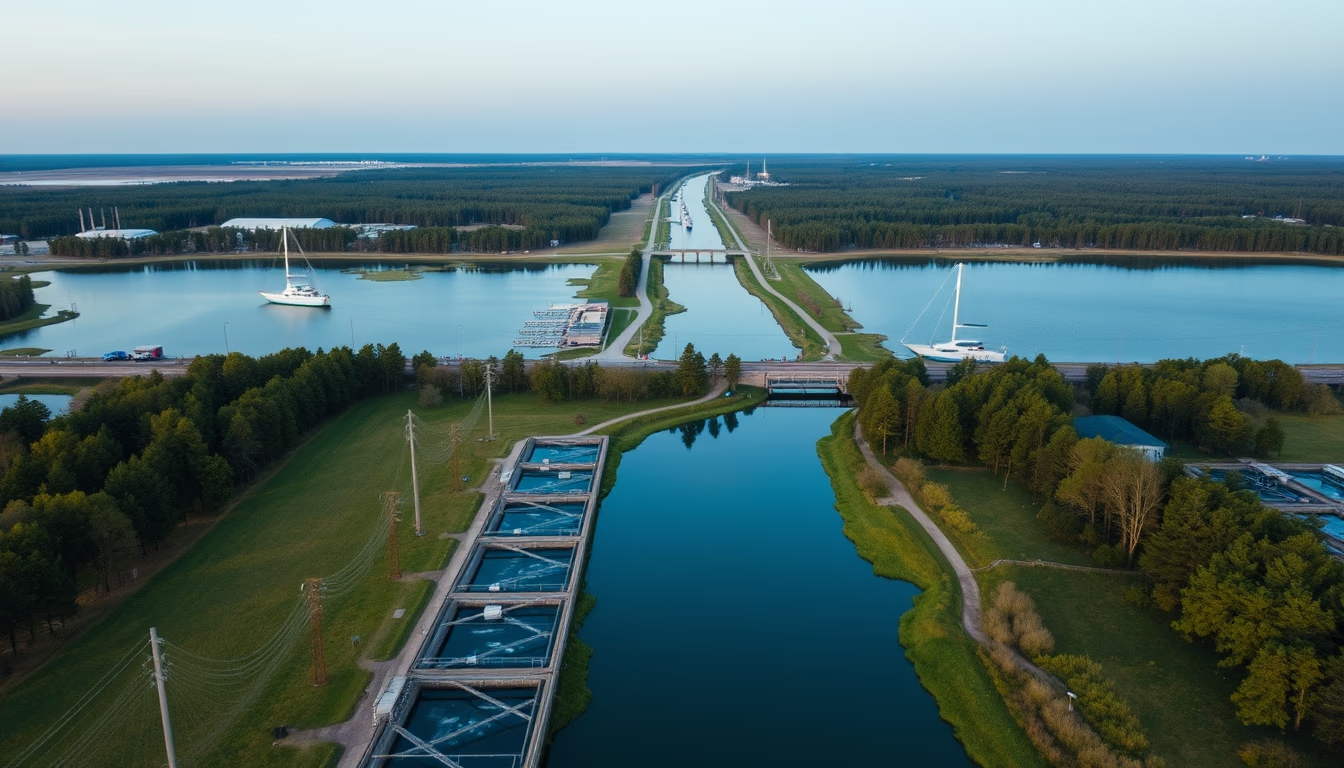
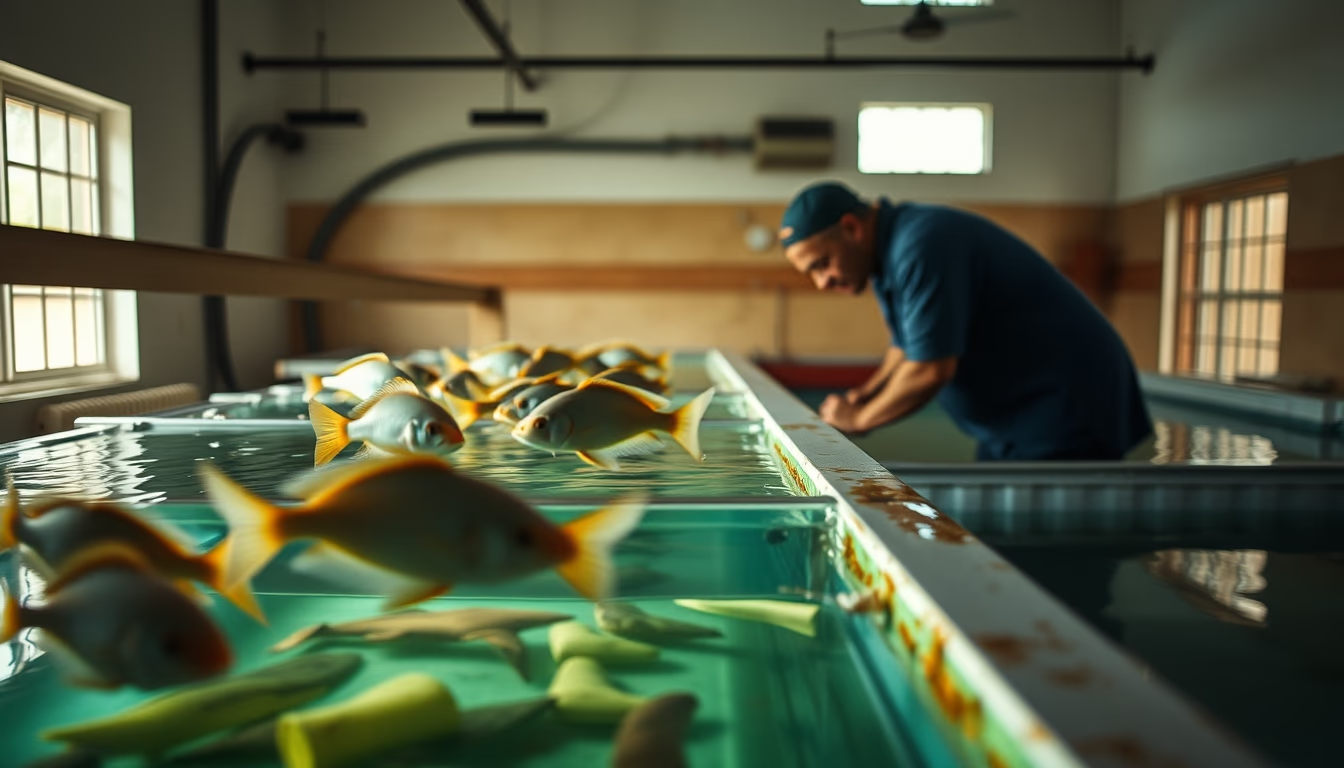
Fish hatchery raceways are flow-through channels used for intensive fish farming, such as trout and salmon, in aquaculture systems.
About this subject
Fish hatchery raceways are linear concrete channels designed to create a constant water flow, simulating river conditions. They are widely used in fish farms for species such as rainbow trout (Oncorhynchus mykiss) and Atlantic salmon (Salmo salar). The system allows high fish density because oxygenated water flows continuously, removing waste and maintaining water quality. Each tank can be 10 to 30 meters long by 2 to 5 meters wide, with controlled depth. Raceways are arranged in series, with water flowing from one tank to the next by gravity.
Historically, raceways were developed in Europe and the United States in the 19th century for trout production to restock rivers and lakes. With the growth of global aquaculture, they became a key technology for intensive cold-water fish farming. In countries like Norway, Chile, and Brazil, raceways are used on trout farms in the southern and southeastern regions. System efficiency depends on water flow and temperature; for trout, the ideal range is 10 to 18°C.
Feeding is a critical aspect: extruded high-protein feed is provided several times a day, with typical feed conversion ratios of 1.2 to 1.5 kg of feed per kg of fish. Management includes size grading to avoid cannibalism and disease control for conditions like furunculosis and Flavobacterium infections. The sustainability of raceways is questioned due to high water consumption and nutrient-rich effluent discharge, but recirculating systems and water treatment are being integrated to mitigate impacts.
Interestingly, the term "raceway" refers to the elongated shape resembling a racing track. In modern facilities, raceways are sometimes covered with greenhouses for thermal control and predator protection. Production in raceways accounts for a significant portion of global trout farming, especially in Europe and South America. The technology continues to evolve with oxygen sensors and automated feeding.
Frequently Asked Questions
What are raceways in fish farming?
Raceways are flow-through channels, usually concrete, used to raise fish at high density, such as trout and salmon. Water flows by gravity, renewing oxygen and removing waste.
Which fish are most commonly raised in raceways?
The most common species are rainbow trout, brown trout, and Atlantic salmon. These cold-water fish adapt well to continuous flow systems.
What is the advantage of raceways over other systems?
They allow high stocking density, easy management and harvesting, and water quality control. However, they consume large amounts of water and produce effluents that require treatment.
Direct URL
https://pub-c7d6a6ea828543ac903a74a341ccb2e1.r2.dev/imagens/fish-hatchery-raceways-high-fashion-editorial-fresh5.avifHow to credit
Include a visible link back to UtilizAí. Copy one of the snippets below:
<a href="https://xn--utiliza-eza.com/en/midia/imagens/fish-hatchery-raceways-high-fashion-editorial-fresh5">Fish hatchery raceways</a> by <a href="https://xn--utiliza-eza.com">UtilizAí</a>, licensed under <a href="https://creativecommons.org/licenses/by/4.0/">CC BY 4.0</a>.
[Fish hatchery raceways](https://xn--utiliza-eza.com/en/midia/imagens/fish-hatchery-raceways-high-fashion-editorial-fresh5) by [UtilizAí](https://xn--utiliza-eza.com), CC BY 4.0
License: CC-BY-4.0