Fish hatchery raceways
1344×768 · AVIF · CC BY 4.0
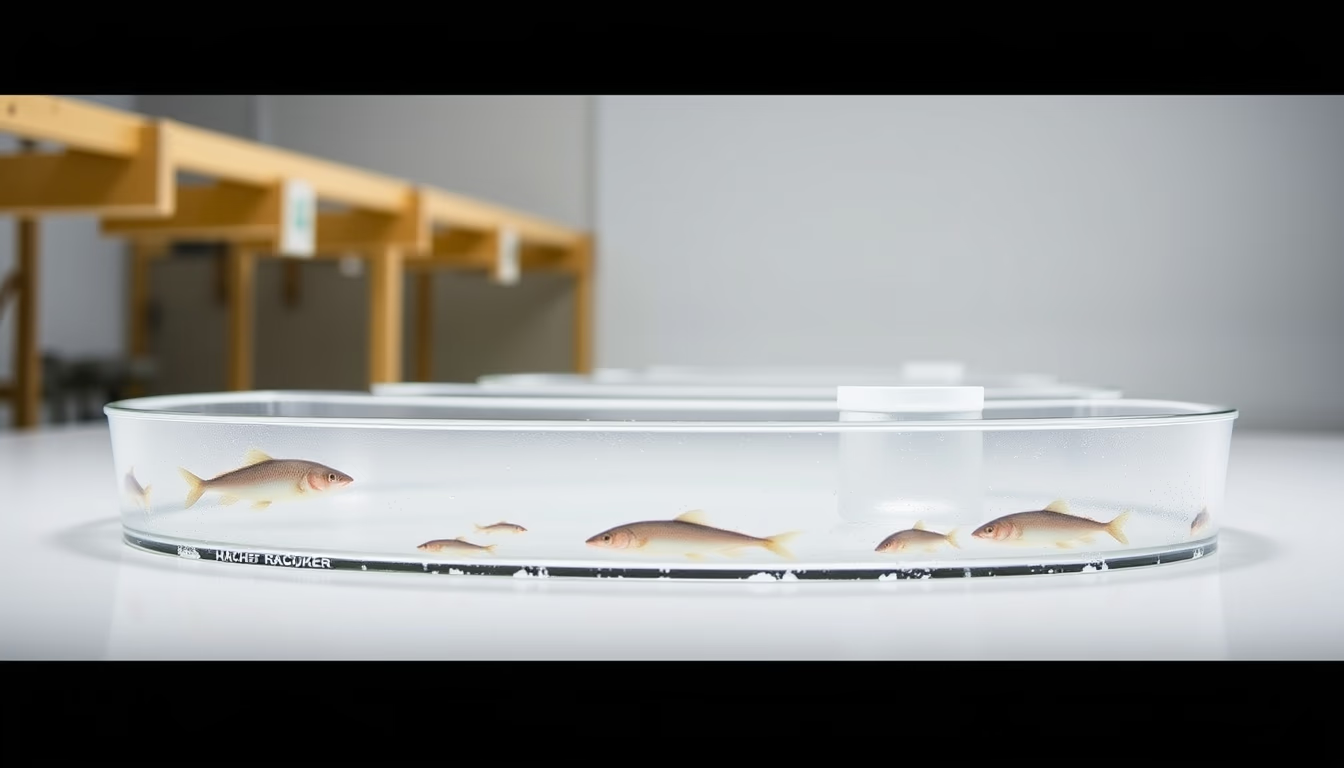
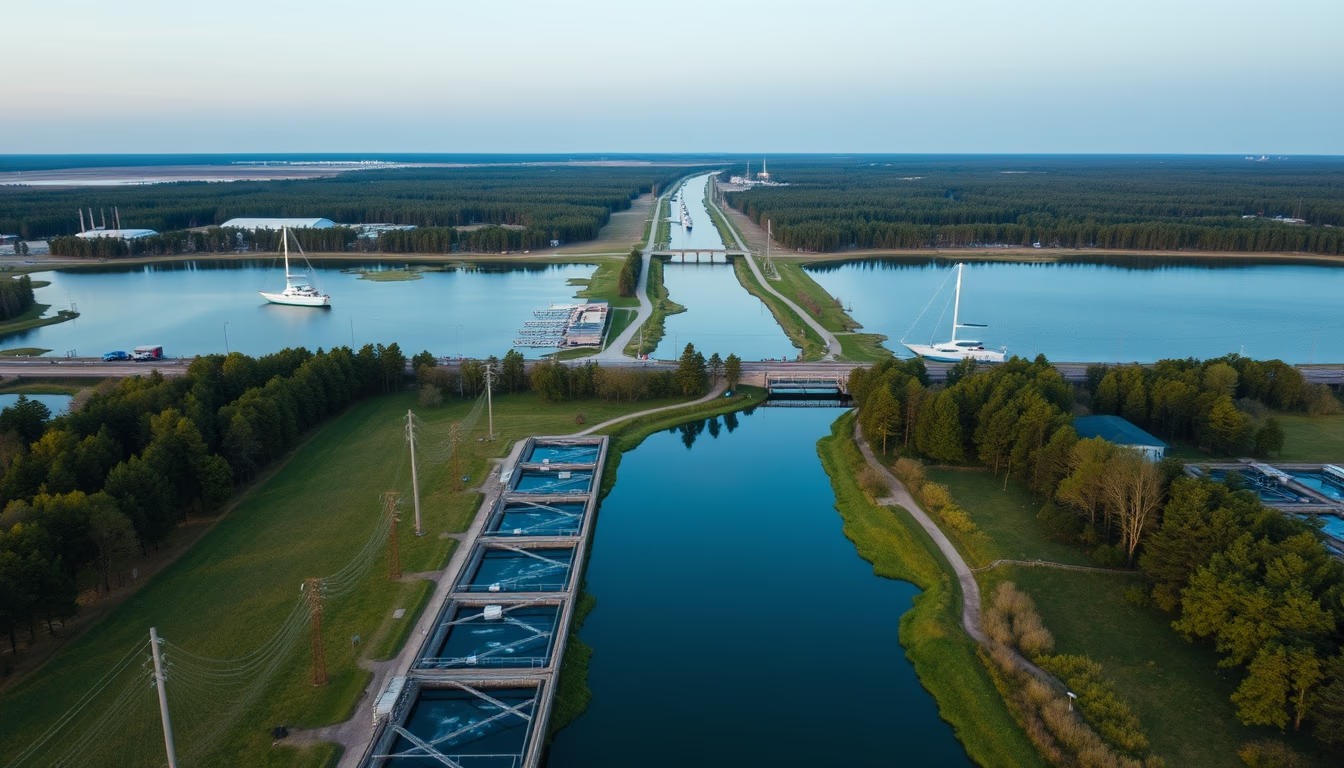
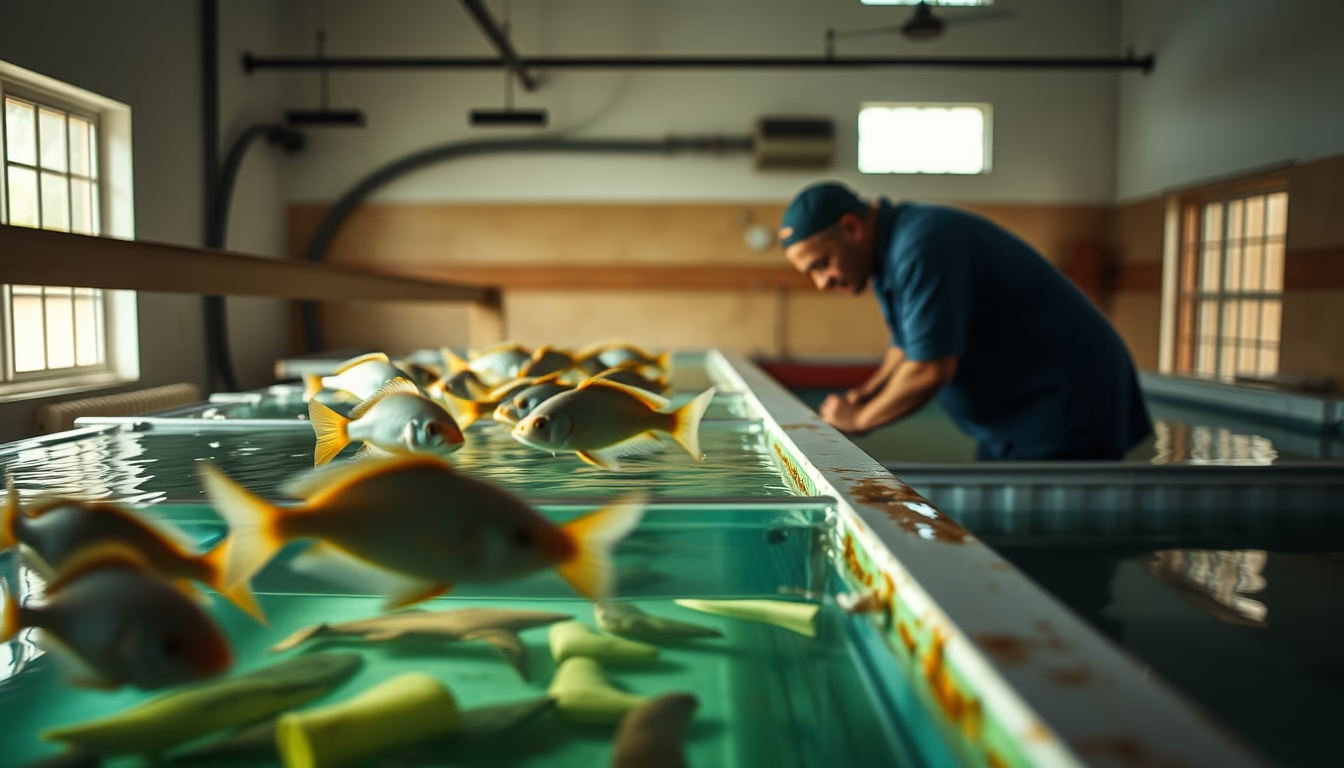
Raceways are rectangular channels used in fish farming for intensive fish rearing, with continuous water flow and high stocking density.
About this subject
Raceways are intensive fish rearing systems consisting of long, narrow channels, typically made of concrete or fiberglass. Water flows continuously from one end to the other, providing oxygenation and waste removal. These tanks are widely used in hatcheries for growing fry and juveniles, especially cold-water species such as trout and salmon. Water flow can be adjusted to meet the metabolic demands of the fish, and stocking densities can range from 20 to 50 kg/m³, depending on species and life stage.
Commonly reared species include rainbow trout, Atlantic salmon, and tilapia. The system allows precise health monitoring and feeding management, with feed provided manually or by automatic feeders. Regular cleaning is done by brushing or water jets, and fish are graded using screens or mechanical graders. Raceways are prevalent in regions with abundant good-quality water, such as southern Brazil (Santa Catarina and Rio Grande do Sul states).
A major advantage of raceways is ease of handling. Because channels are narrow, harvesting, vaccinating, or grading fish is much simpler than in earthen ponds. Furthermore, continuous flow reduces accumulation of nitrogenous compounds, improving water quality. However, the system requires constant water flow and may have higher operational costs due to pumping. Despite this, raceways are an efficient choice for commercial hatcheries seeking high productivity in a small footprint.
Frequently Asked Questions
What are raceways in fish farming?
Raceways are rectangular channels with continuous water flow used for intensive fish rearing at high densities, common in trout and salmon hatcheries.
Which species are raised in raceways?
The main species are rainbow trout, Atlantic salmon, and tilapia. They are also used for fry of other freshwater species.
What are the advantages of raceways over earthen ponds?
Advantages include higher stocking density, easier fish capture and grading, better water quality control, and reduced land use.
Direct URL
https://pub-c7d6a6ea828543ac903a74a341ccb2e1.r2.dev/imagens/fish-hatchery-raceways-commercial-product-photography-fresh3.avifHow to credit
Include a visible link back to UtilizAí. Copy one of the snippets below:
<a href="https://xn--utiliza-eza.com/en/midia/imagens/fish-hatchery-raceways-commercial-product-photography-fresh3">Fish hatchery raceways</a> by <a href="https://xn--utiliza-eza.com">UtilizAí</a>, licensed under <a href="https://creativecommons.org/licenses/by/4.0/">CC BY 4.0</a>.
[Fish hatchery raceways](https://xn--utiliza-eza.com/en/midia/imagens/fish-hatchery-raceways-commercial-product-photography-fresh3) by [UtilizAí](https://xn--utiliza-eza.com), CC BY 4.0
License: CC-BY-4.0