Ferry crossing strait
1344×768 · AVIF · CC BY 4.0
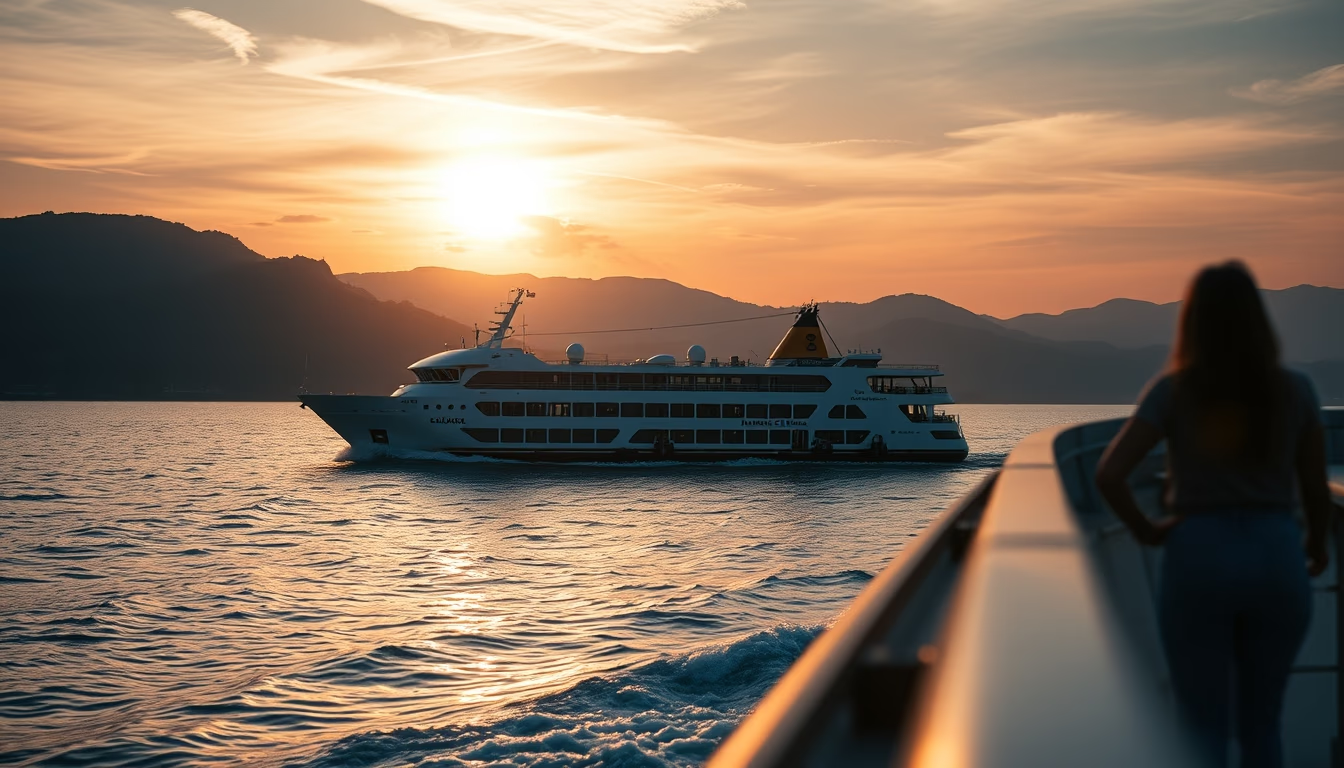
Ferries connect shores separated by straits, essential for transporting people and vehicles in coastal and island regions.
About this subject
Ferries are vessels designed to transport passengers, vehicles, and cargo across relatively short bodies of water such as straits, bays, and rivers. Historically, ferry use dates back to antiquity, with simple rafts or boats crossing rivers. However, the modernization of ferries began in the 19th century with the introduction of steamships, such as those operating in the Bosphorus Strait in Istanbul, connecting Europe and Asia. Today, ferries range from small local boats to huge cruise ferries carrying hundreds of cars and thousands of passengers.
The importance of ferries is particularly evident in regions with many straits and islands, such as the Mediterranean, the North Sea, the Caribbean, and Southeast Asia. In Brazil, notable ferry crossings include the Salvador to Itaparica link in Bahia and the Rio de Janeiro to Niterói crossings, handled by modern ferries that transport thousands of people daily. In areas without bridges or tunnels, ferries are the main transportation link, reducing distances and avoiding long road detours.
From a technical standpoint, ferries face challenges such as adverse weather, strong currents, and the need for quick and safe docking. Many ferries are double-ended, allowing them to operate efficiently in both directions without turning around. Adjustable ramp systems and bow thrusters facilitate port maneuvers. Additionally, energy efficiency has become a growing concern, with the adoption of hybrid or fully electric ferries on short routes, such as in Norway, reducing carbon emissions.
Interestingly, the term "ferry" derives from Old English "ferian," meaning "to carry." Some ferry crossings are world-famous, like the Dover Strait crossing linking England to France, or the Gibraltar Strait crossings (though no regular ferry service exists, tunnel projects are discussed). In places like Venice, ferries (vaporettos) are the main public transport on the canals. Thus, these vessels play a vital cultural and economic role, connecting water-separated communities.
Frequently Asked Questions
What is the difference between a ferry and a boat?
A ferry is a type of boat specifically designed for transporting passengers and vehicles on short-distance routes, often with scheduled service.
Are ferries safe in bad weather?
Modern ferries are built with stability and advanced navigation systems to operate safely in poor weather, but trips may be canceled in severe storms.
Where are the world's busiest ferry routes?
The busiest include the Dover Strait (UK-France), Tsugaru Strait (Japan), Bosphorus (Turkey), and Baltic Sea routes like Helsinki-Stockholm.
Direct URL
https://pub-c7d6a6ea828543ac903a74a341ccb2e1.r2.dev/imagens/ferry-crossing-strait-travel-photography-p10.avifHow to credit
Include a visible link back to UtilizAí. Copy one of the snippets below:
<a href="https://xn--utiliza-eza.com/en/midia/imagens/ferry-crossing-strait-travel-photography-p10">Ferry crossing strait</a> by <a href="https://xn--utiliza-eza.com">UtilizAí</a>, licensed under <a href="https://creativecommons.org/licenses/by/4.0/">CC BY 4.0</a>.
[Ferry crossing strait](https://xn--utiliza-eza.com/en/midia/imagens/ferry-crossing-strait-travel-photography-p10) by [UtilizAí](https://xn--utiliza-eza.com), CC BY 4.0
License: CC-BY-4.0