Ferry crossing strait
1344×768 · AVIF · CC BY 4.0
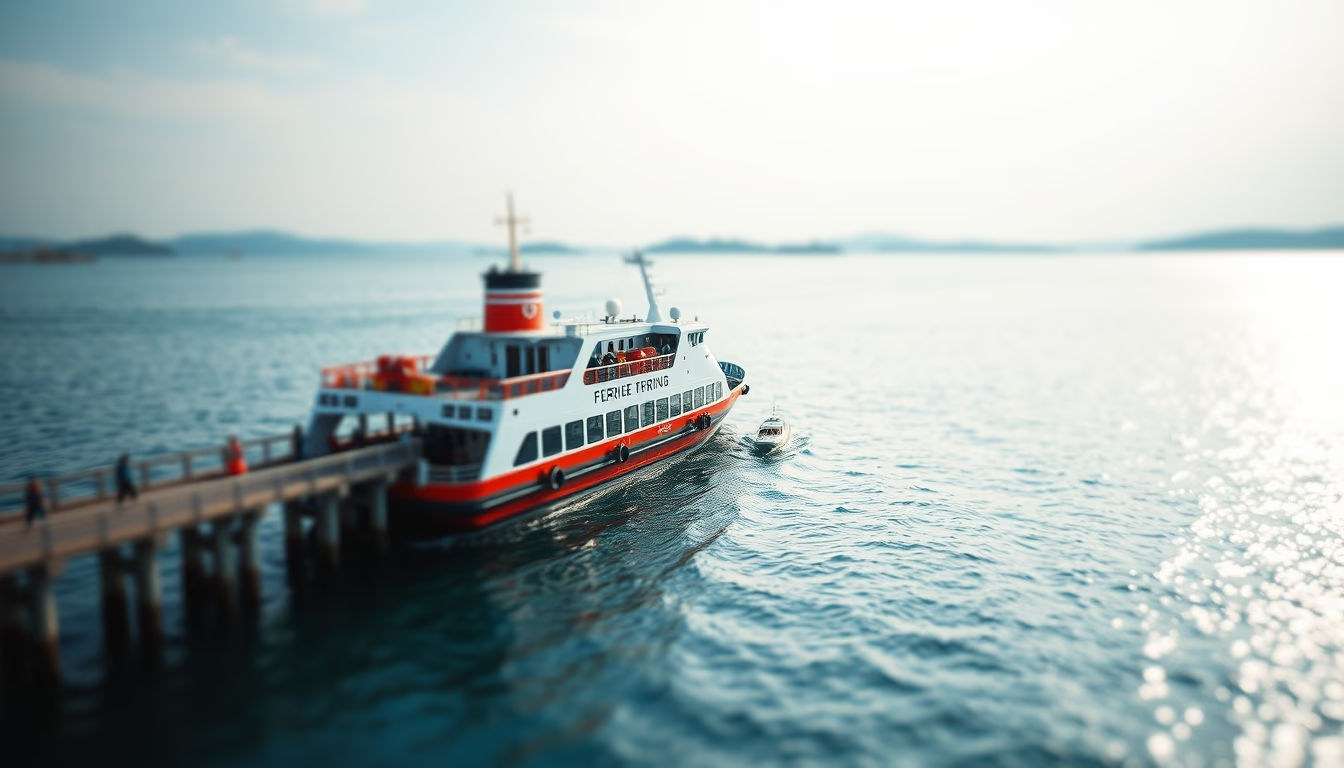
Ferries crossing straits connect regions separated by narrow stretches of sea, playing a vital role in transport and tourism.
About this subject
Ferries are vessels designed to transport passengers, vehicles, and cargo across relatively short water bodies, such as straits and bays. Straits like the Bosphorus, separating Europe from Asia, or the Strait of Gibraltar, between Europe and Africa, heavily rely on ferry services for mobility and trade. In Brazil, the Salvador-Itaparica ferry in Bahia carries thousands of people and vehicles daily between the capital and Itaparica Island, shortening distances that would otherwise require long road detours. Another example is the Rio-Niterói crossing, which, before the construction of the Rio-Niterói Bridge, was served exclusively by ferries handling intense passenger flow.
Operating ferries in straits involves complex logistics: scheduling must be synchronized, vehicle queues managed, and safety ensured under adverse sea conditions. Many straits have strong currents and heavy ship traffic, requiring experienced crews and robust vessels. The Strait of Messina in Italy is famous for its ferries connecting Sicily to the mainland, challenging winds and tides. In Asia, the Strait of Malacca is one of the busiest in the world, with ferries linking Sumatra to Malaysia, alongside enormous cargo traffic.
Interestingly, photography of ferries in straits has become popular among enthusiasts, capturing the scale of vessels against the landscape. The tilt-shift effect, used to simulate a miniature scene, is often applied to these images, making the ferry appear like a toy. However, these ferries are essential pieces of transport infrastructure, moving millions of people annually. In Brazil, the Salvador-Itaparica ferry is a tourist symbol, offering views of the Bay of All Saints.
The importance of ferries goes beyond transportation: they drive regional integration and tourism development. Islands like Fernando de Noronha in Brazil depend on ferries for supplies, while on the coast of São Paulo, ferries link cities such as Santos and Guarujá. Globally, the busiest ferry is the Staten Island Ferry in New York, carrying millions of passengers annually free of charge. The Øresund Strait, between Denmark and Sweden, once reliant on ferries, now features a bridge-tunnel, though ferries still provide complementary connections.
Frequently Asked Questions
What is the busiest ferry in Brazil?
The busiest ferry in Brazil is the Salvador-Itaparica crossing in Bahia, carrying thousands of vehicles and passengers daily, connecting the capital to Itaparica Island.
Which famous straits are served by ferries?
Famous straits include the Bosphorus (Turkey), Gibraltar (Europe-Africa), Messina (Italy), Malacca (Southeast Asia), and Øresund (Denmark-Sweden).
What is the difference between a ferry and a barge?
A ferry typically provides scheduled passenger and vehicle service across a water body, while a barge is usually a flat-bottomed vessel for cargo, often towed. In Brazil, 'balsa' can refer to both simple rafts and ferries.
Direct URL
https://pub-c7d6a6ea828543ac903a74a341ccb2e1.r2.dev/imagens/ferry-crossing-strait-tilt-shift-miniature-p0.avifHow to credit
Include a visible link back to UtilizAí. Copy one of the snippets below:
<a href="https://xn--utiliza-eza.com/en/midia/imagens/ferry-crossing-strait-tilt-shift-miniature-p0">Ferry crossing strait</a> by <a href="https://xn--utiliza-eza.com">UtilizAí</a>, licensed under <a href="https://creativecommons.org/licenses/by/4.0/">CC BY 4.0</a>.
[Ferry crossing strait](https://xn--utiliza-eza.com/en/midia/imagens/ferry-crossing-strait-tilt-shift-miniature-p0) by [UtilizAí](https://xn--utiliza-eza.com), CC BY 4.0
License: CC-BY-4.0