Ferry crossing strait
1344×768 · AVIF · CC BY 4.0
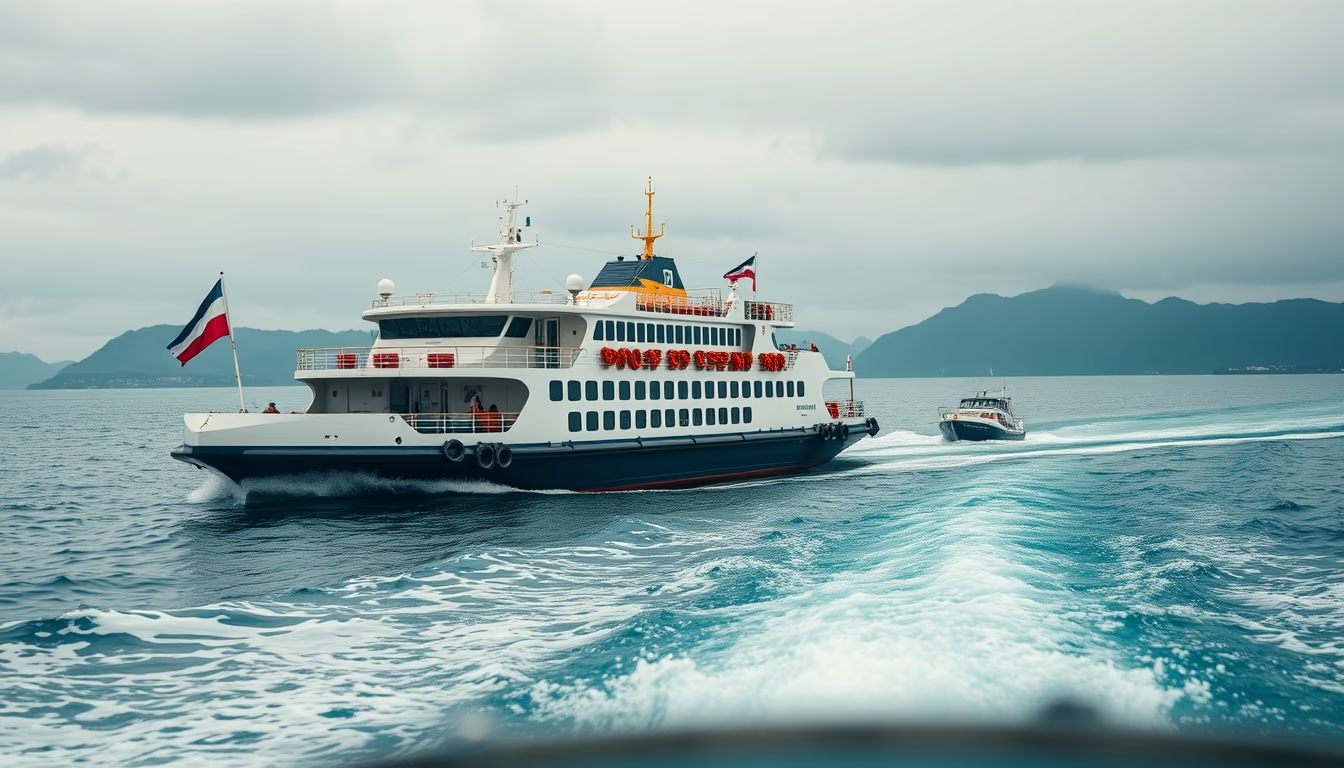
Ferries crossing straits are vital for connecting regions separated by water, shortening distances and boosting local economies.
About this subject
Ferries crossing straits play a crucial role in transporting people and vehicles between nearby landmasses. Straits such as the Bosphorus in Istanbul and the Strait of Messina in Italy are classic examples where ferries have operated for centuries. These crossings significantly reduce travel time compared to alternative land routes, often bypassing long overland detours or missing bridges.
The operation of ferries in straits involves logistical and engineering challenges. Sea currents, depth, and ship traffic require robust vessels and experienced crews. Some straits, like the Strait of Gibraltar, connect oceans and continents, making crossings essential for international trade. Additionally, many ferries are designed to carry not only passengers but also cars, trucks, and trains, integrating transport modes.
Historically, strait crossings were strategic points for ancient civilizations. The Dardanelles Strait, for example, witnessed important battles and trade routes. Today, modern ferries with diesel or electric propulsion offer frequent services, often with capacities for hundreds of passengers. In some places, like the Tsugaru Strait in Japan, underwater trains have replaced ferries, but ferries remain a flexible and economical option.
Interestingly, ferry crossings of straits also attract tourists seeking panoramic views and maritime experiences. Services like the ferry between Helsingør in Denmark and Helsingborg in Sweden are so quick that they feel like an extension of the road. The frequency and reliability of these operations are essential for the daily lives of thousands of people who depend on them for work, study, or leisure.
Frequently Asked Questions
What is the busiest strait for ferry crossings?
The Bosphorus Strait in Istanbul, Turkey, is one of the busiest, with thousands of daily ferry crossings connecting Europe and Asia.
How long does a typical ferry crossing in a strait take?
It depends on the strait's width. For example, the Strait of Messina crossing takes about 20 to 30 minutes, while the Strait of Gibraltar crossing can take 35 to 60 minutes.
Are ferries in straits safe?
Yes, generally they are safe, with modern navigation systems and adherence to strict safety regulations. However, adverse weather conditions can occasionally cause disruptions.
Direct URL
https://pub-c7d6a6ea828543ac903a74a341ccb2e1.r2.dev/imagens/ferry-crossing-strait-macro-closeup-p5.avifHow to credit
Include a visible link back to UtilizAí. Copy one of the snippets below:
<a href="https://xn--utiliza-eza.com/en/midia/imagens/ferry-crossing-strait-macro-closeup-p5">Ferry crossing strait</a> by <a href="https://xn--utiliza-eza.com">UtilizAí</a>, licensed under <a href="https://creativecommons.org/licenses/by/4.0/">CC BY 4.0</a>.
[Ferry crossing strait](https://xn--utiliza-eza.com/en/midia/imagens/ferry-crossing-strait-macro-closeup-p5) by [UtilizAí](https://xn--utiliza-eza.com), CC BY 4.0
License: CC-BY-4.0