Electric grid substation
1344×768 · AVIF · CC BY 4.0
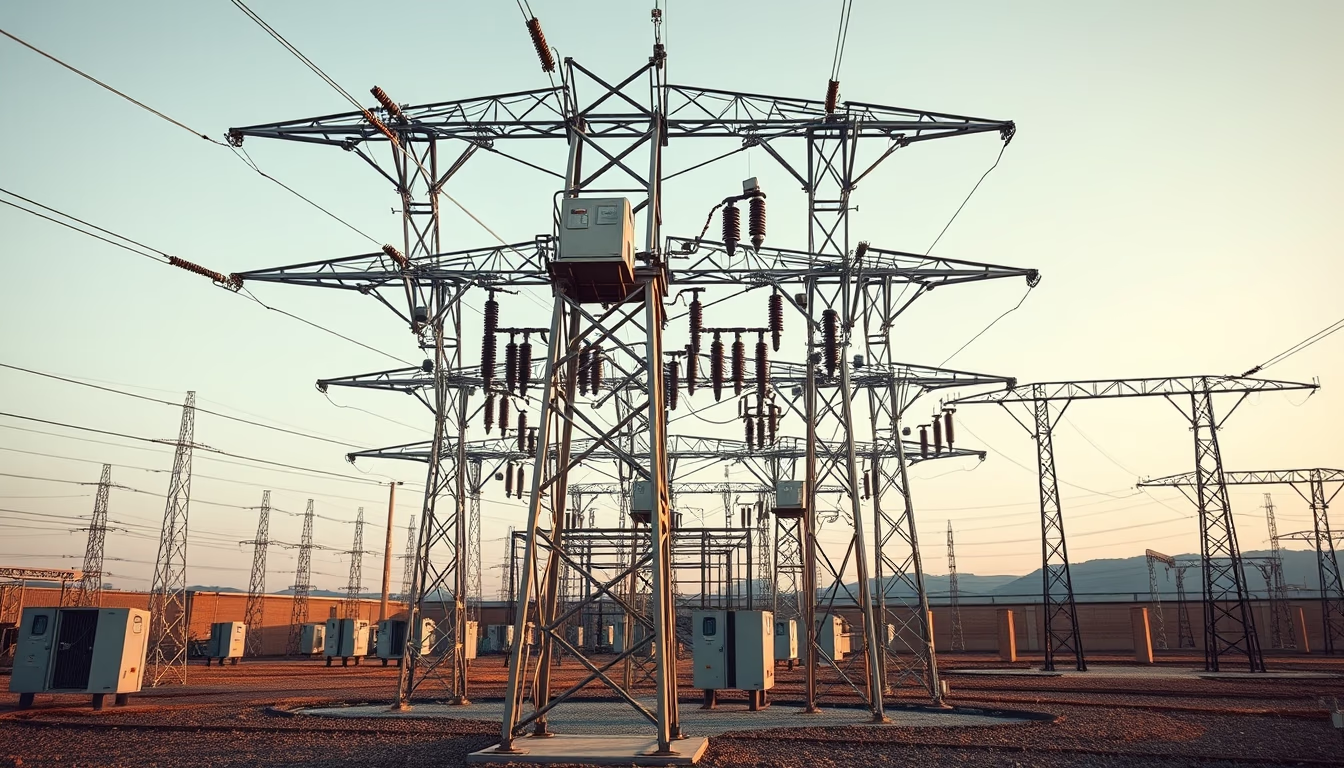
Electrical substations are critical nodes in the power transmission grid, stepping down high voltages to safe levels for urban and industrial distribution.
About this subject
Electrical substations play a fundamental role in the power system, acting as intermediaries between generation and consumption. They receive electricity at high voltage from transmission lines and transform it to medium or low levels suitable for distribution to homes, businesses, and industries. This transformation is performed by large transformers, which step down voltages from hundreds of thousands of volts to values between 13.8 kV and 138 kV, depending on the application.
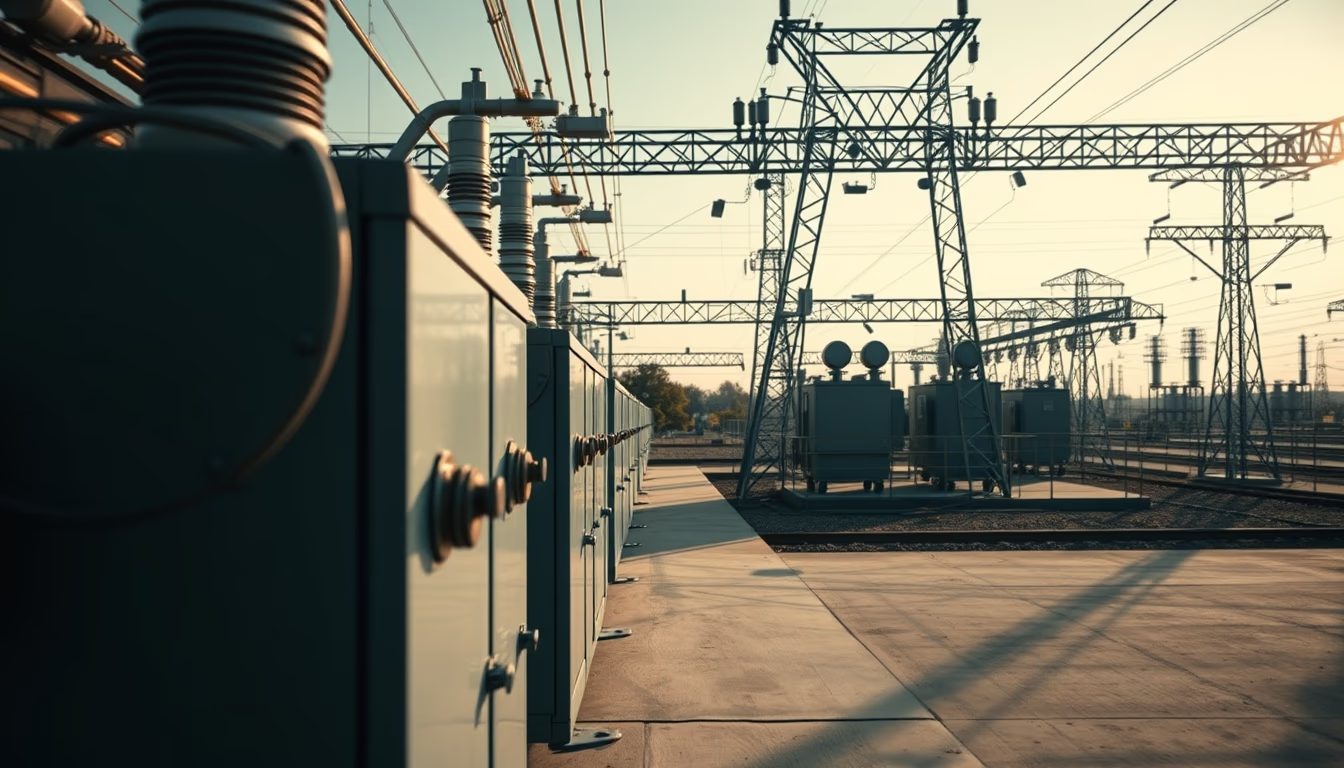
Inside a substation, equipment such as circuit breakers, disconnect switches, busbars, surge arresters, and control and protection systems are housed. Circuit breakers interrupt current flow in case of faults, while switches isolate sections for maintenance. Modern automation uses digital relays and SCADA systems to monitor and operate these devices remotely, ensuring higher reliability and fast response to disturbances.
There are different types of substations: transmission substations, which connect high-voltage lines; distribution substations, which supply local networks; and conversion substations, used in direct current systems. In Brazil, the North-South interconnection is a notable example, where substations at Teles Pires and Estreito enable the flow of hydroelectric power from the Amazon to the Southeast. These facilities also incorporate technologies like synchronous compensators and capacitor banks to stabilize voltage.
Preventive maintenance is crucial to avoid outages, especially in areas with high demand or adverse weather. With the increasing integration of renewable sources like solar and wind, substations must adapt to bidirectional flows and generation variability. Digitalization and the use of gas-insulated transformers (GIS) have reduced space requirements and increased efficiency, while operational safety remains a top priority.
Frequently Asked Questions
What is the main function of an electrical substation?
The main function is to transform voltage levels, stepping up or down as needed for safe and efficient transmission and distribution.
What are the key pieces of equipment found in a substation?
Transformers, circuit breakers, disconnect switches, busbars, surge arresters, protection relays, and control systems like SCADA.
How do substations contribute to the stability of the electrical grid?
They regulate voltage, quickly isolate faults, and allow rerouting of power flows, preventing blackouts and maintaining power quality.
Direct URL
https://pub-c7d6a6ea828543ac903a74a341ccb2e1.r2.dev/imagens/electric-grid-substation-national-geographic-style-p0.avifHow to credit
Include a visible link back to UtilizAí. Copy one of the snippets below:
<a href="https://xn--utiliza-eza.com/en/midia/imagens/electric-grid-substation-national-geographic-style-p0">Electric grid substation</a> by <a href="https://xn--utiliza-eza.com">UtilizAí</a>, licensed under <a href="https://creativecommons.org/licenses/by/4.0/">CC BY 4.0</a>.
[Electric grid substation](https://xn--utiliza-eza.com/en/midia/imagens/electric-grid-substation-national-geographic-style-p0) by [UtilizAí](https://xn--utiliza-eza.com), CC BY 4.0
License: CC-BY-4.0