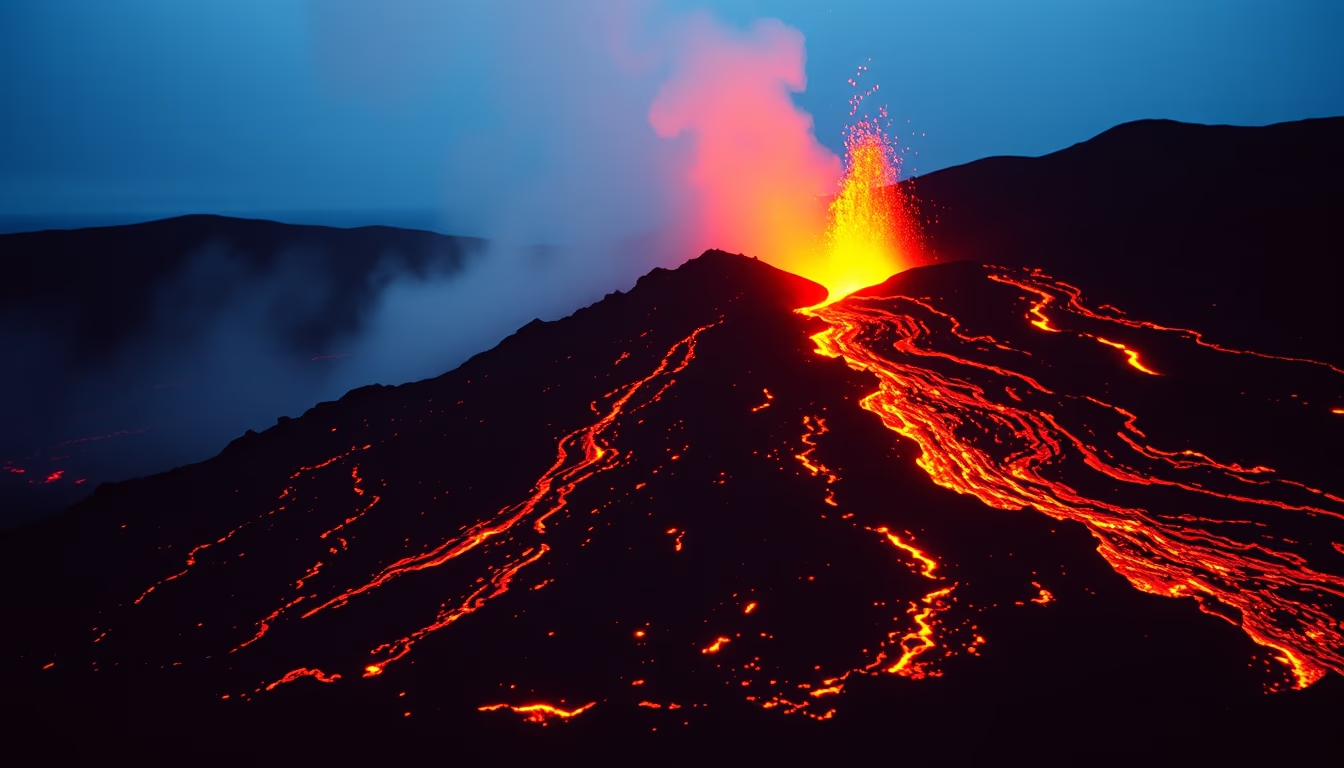
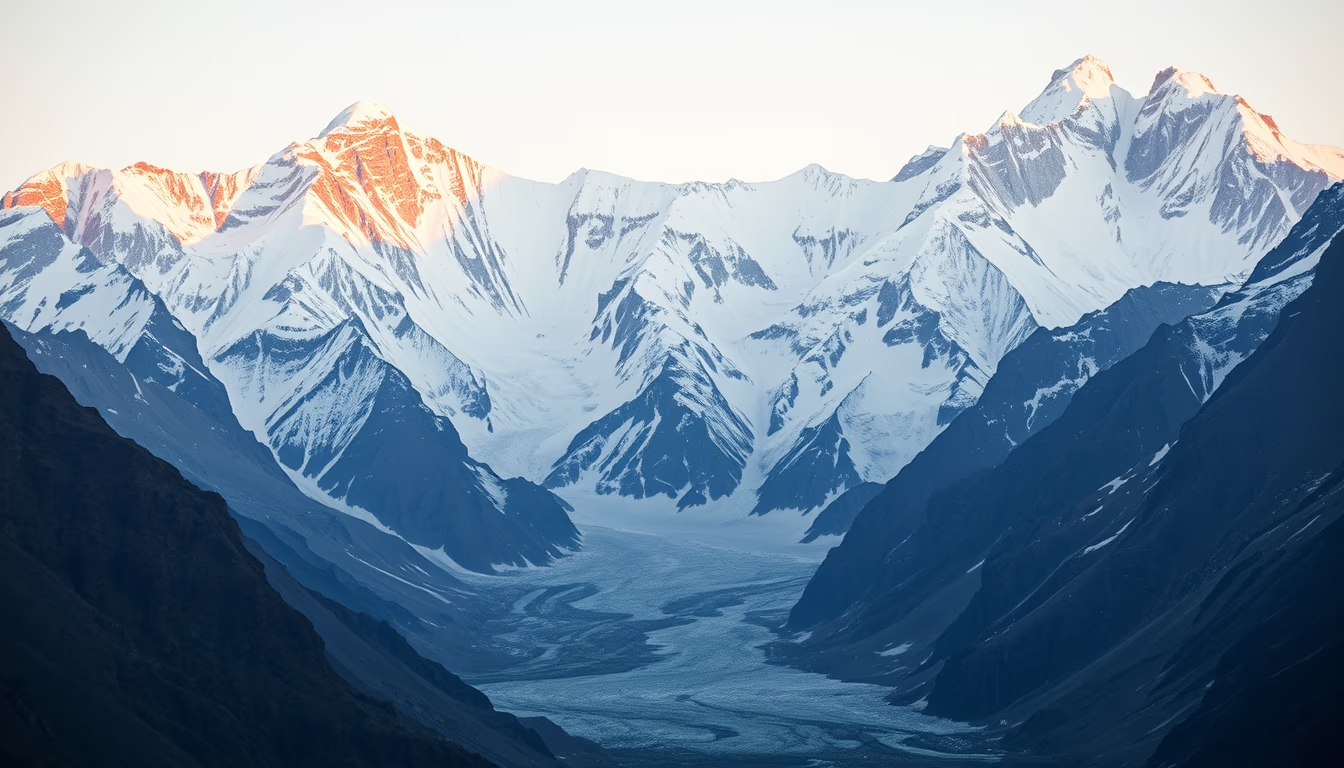
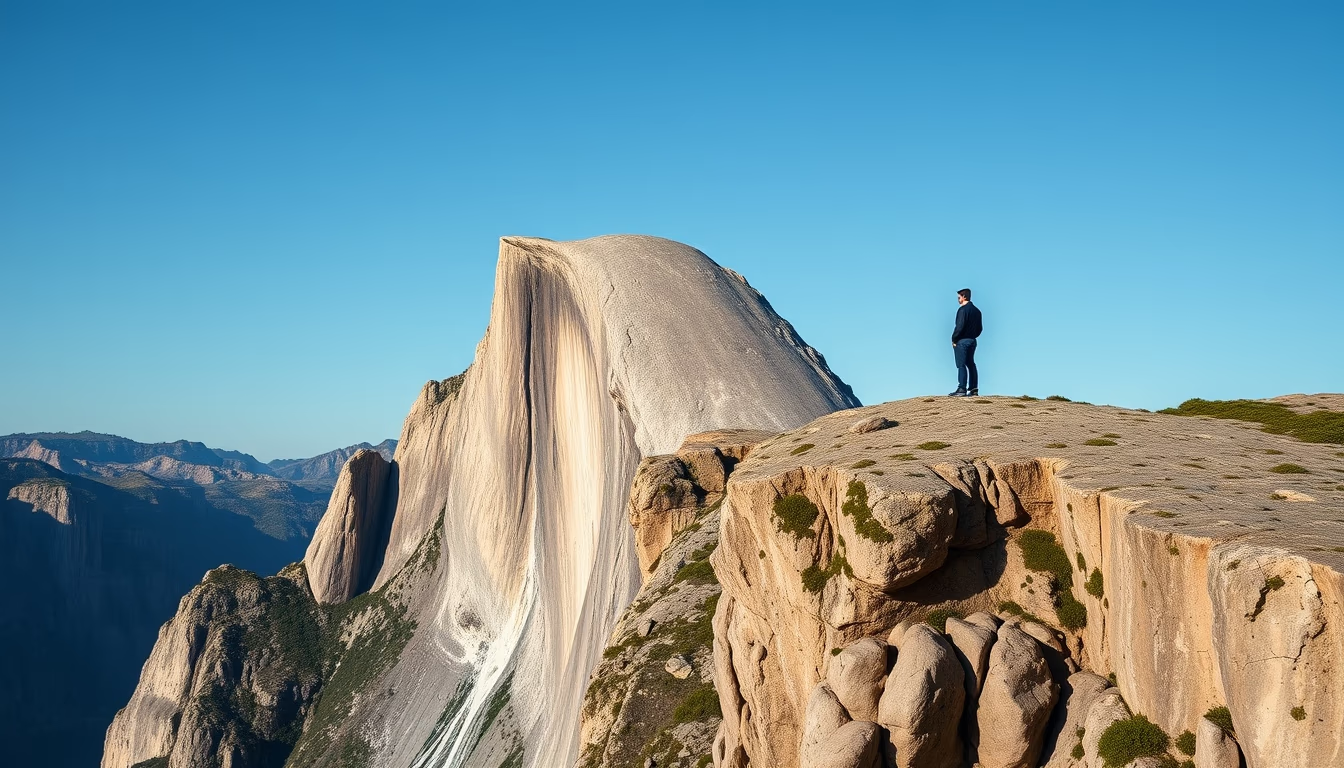
El capitan cliff
1344×768 · AVIF · CC BY 4.0
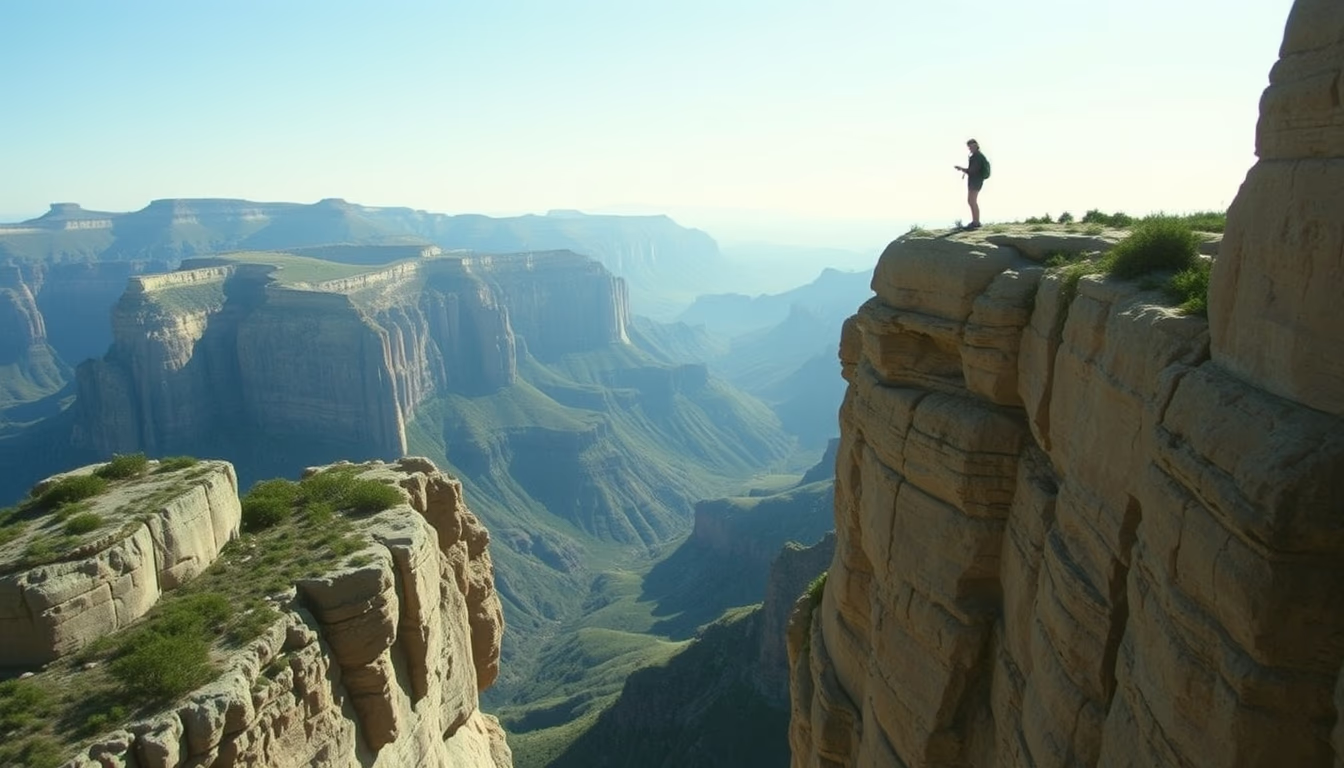
El Capitan, an imposing granite monolith in Yosemite National Park, rises over 900 meters above the Yosemite Valley.
About this subject
El Capitan is a granite rock formation located in Yosemite National Park, California, United States. Standing at 2,307 meters (7,569 feet) above sea level with a vertical face of about 1,000 meters (3,300 feet), it is one of the world's largest granite monoliths. Geologically, it belongs to the Sierra Nevada batholith, formed about 100 million years ago by magma intrusion and later sculpted by glacial erosion during the last ice age. Its light-gray granite, rich in quartz and feldspar, offers a rough, crack-laden surface ideal for climbing.
The first successful ascent to El Capitan's summit was achieved in 1958 by Warren Harding, using artificial climbing techniques over 47 days to complete the "The Nose" route. Since then, the monolith has become a global mecca for big wall climbers, featuring over 100 documented routes. Notable ascents include "The Nose" (900 meters, grade 5.9 A0) and the infamous "Dawn Wall", climbed by Tommy Caldwell and Kevin Jorgeson in 2015 during a 19-day expedition that received worldwide media coverage. Climbing demands not only technical strength but also complex logistics, including food and water supplies for multiple days.
Culturally, El Capitan is an icon of Yosemite National Park, attracting millions of visitors annually. It has been immortalized in photographs by Ansel Adams and in films such as "Free Solo", which documented Alex Honnold's rope-free ascent in 2017. The name "El Capitan" was given by the Mariposa Battalion expedition in 1851, referring to the Native American chief Tenaya. The formation also hosts natural phenomena like the "firefall" in February, when the setting sun illuminates Horsetail Fall, creating a lava-like glow cascading down the rock.
Frequently Asked Questions
What is the exact height of El Capitan?
El Capitan is 2,307 meters (7,569 feet) above sea level, with a vertical rise of approximately 1,000 meters (3,300 feet) from base to summit.
When was the first climb of El Capitan?
The first successful ascent was in 1958 by Warren Harding, Wayne Merry, and George Whitmore via the 'The Nose' route, taking 47 days.
Why is El Capitan important for geology?
El Capitan is a prime example of exposed granite from the Sierra Nevada batholith, formed 100 million years ago and shaped by glaciation, providing insights into geological processes.
Direct URL
https://pub-c7d6a6ea828543ac903a74a341ccb2e1.r2.dev/imagens/el-capitan-cliff-lo-fi-disposable-camera-p0.avifHow to credit
Include a visible link back to UtilizAí. Copy one of the snippets below:
<a href="https://xn--utiliza-eza.com/en/midia/imagens/el-capitan-cliff-lo-fi-disposable-camera-p0">El capitan cliff</a> by <a href="https://xn--utiliza-eza.com">UtilizAí</a>, licensed under <a href="https://creativecommons.org/licenses/by/4.0/">CC BY 4.0</a>.
[El capitan cliff](https://xn--utiliza-eza.com/en/midia/imagens/el-capitan-cliff-lo-fi-disposable-camera-p0) by [UtilizAí](https://xn--utiliza-eza.com), CC BY 4.0
License: CC-BY-4.0