Distributed ledger multiple servers in data center
1344×768 · AVIF · CC BY 4.0

Distributed ledgers are databases replicated across multiple data center servers, ensuring transparency and security in blockchain networks.
About this subject
A distributed ledger is a shared database synchronized across multiple participants, each maintaining an identical copy of the record. Unlike centralized databases, it does not rely on a single entity to validate transactions, reducing risks of fraud and censorship. This technology underpins blockchain but is also used in systems like R3 Corda or Hyperledger Fabric, in sectors such as finance, logistics, and healthcare.
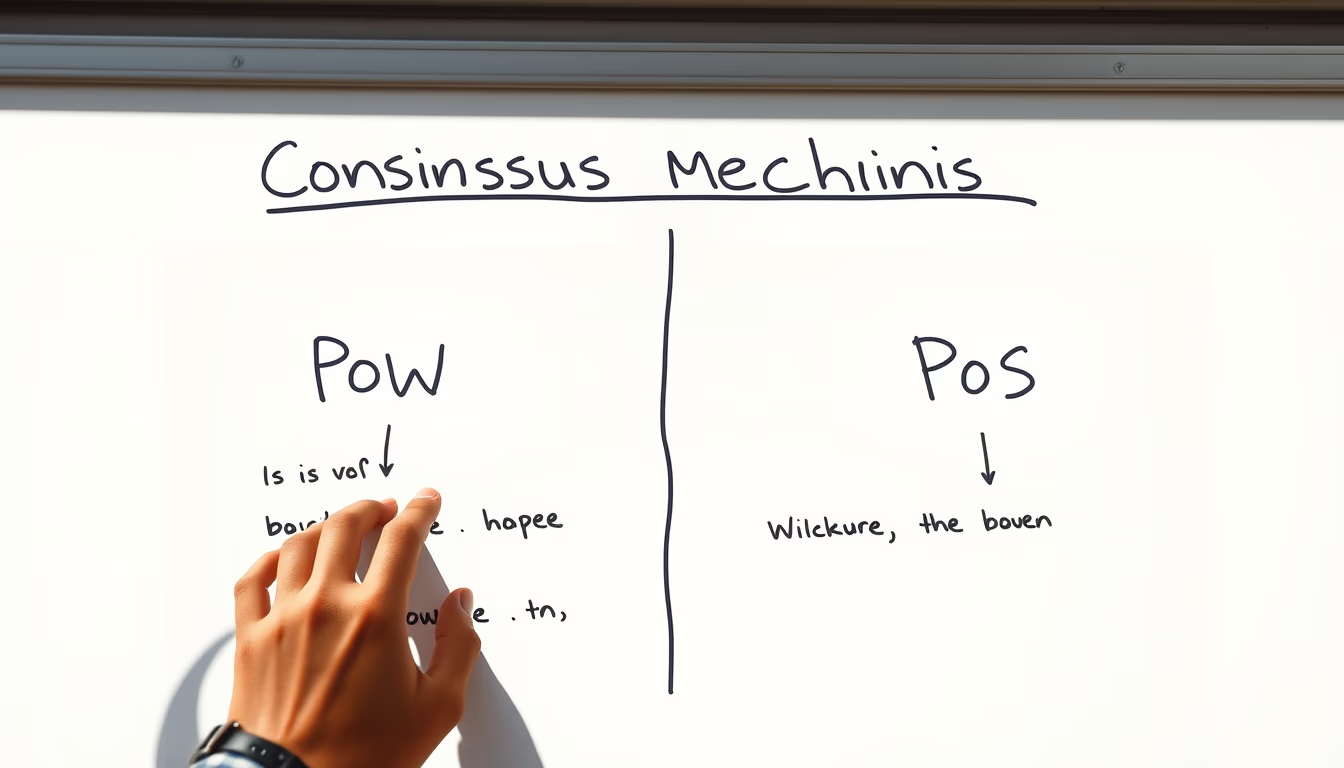
In a data center, servers hosting a distributed ledger operate in a network, often using consensus algorithms like Proof of Work (PoW) or Proof of Stake (PoS) to agree on the ledger's state. Each server, or node, processes and validates transactions, and changes are propagated to all other nodes. Redundancy ensures that even if some servers fail, the system continues without data loss.
Scalability is a key technical challenge: more nodes increase latency and energy consumption. Solutions like sharding (splitting the ledger into smaller parts) or more efficient consensus protocols (e.g., PBFT, Raft) aim to mitigate these issues. Modern data centers use specialized hardware, such as GPUs for mining or high-speed SSDs, to optimize performance.
Fun fact: the first distributed ledger was Bitcoin, launched in 2009. Since then, the technology has evolved to support smart contracts (Ethereum) and enterprise applications. In Brazil, institutions like the Central Bank are testing the Digital Real using distributed ledger, aiming for faster and more secure transactions.
Frequently Asked Questions
What differentiates a distributed ledger from a blockchain?
Every blockchain is a type of distributed ledger, but not every distributed ledger is a blockchain. Blockchains organize data in chained blocks, while other distributed ledgers (e.g., DAG) may use different structures.
What are the advantages of using multiple servers in a distributed ledger?
Multiple servers increase resilience and security: if one server fails or is compromised, others maintain system integrity. They also eliminate single points of failure and reduce manipulation risk.
How is consensus reached among servers in data centers?
Consensus algorithms, such as Proof of Work (mining) or Proof of Stake (validation by stake), ensure all servers agree on the correct ledger version. In enterprise data centers, faster protocols like Raft or PBFT are used.
Direct URL
https://pub-c7d6a6ea828543ac903a74a341ccb2e1.r2.dev/imagens/distributed-ledger-multiple-servers-in-data-center-closeup-macro-shot-golden-hour-late-afternoon.avifHow to credit
Include a visible link back to UtilizAí. Copy one of the snippets below:
<a href="https://xn--utiliza-eza.com/en/midia/imagens/distributed-ledger-multiple-servers-in-data-center-closeup-macro-shot-golden-hour-late-afternoon">Distributed ledger multiple servers in data center</a> by <a href="https://xn--utiliza-eza.com">UtilizAí</a>, licensed under <a href="https://creativecommons.org/licenses/by/4.0/">CC BY 4.0</a>.
[Distributed ledger multiple servers in data center](https://xn--utiliza-eza.com/en/midia/imagens/distributed-ledger-multiple-servers-in-data-center-closeup-macro-shot-golden-hour-late-afternoon) by [UtilizAí](https://xn--utiliza-eza.com), CC BY 4.0
License: CC-BY-4.0
Tags
Related images
 Smart contract code on monitor with solidity syntax highlighted
 Consensus mechanism diagram on whiteboard showing PoW vs PoS
 Distributed ledger multiple servers in data center
 Hash function visualization cryptographic equations on glass screen
 Hash function visualization cryptographic equations on glass screen
 Hash function visualization cryptographic equations on glass screen