Distributed ledger multiple servers in data center
1344×768 · AVIF · CC BY 4.0

A distributed ledger is a shared, synchronized record across multiple servers in data centers, ensuring transparency and security without a central authority.
About this subject
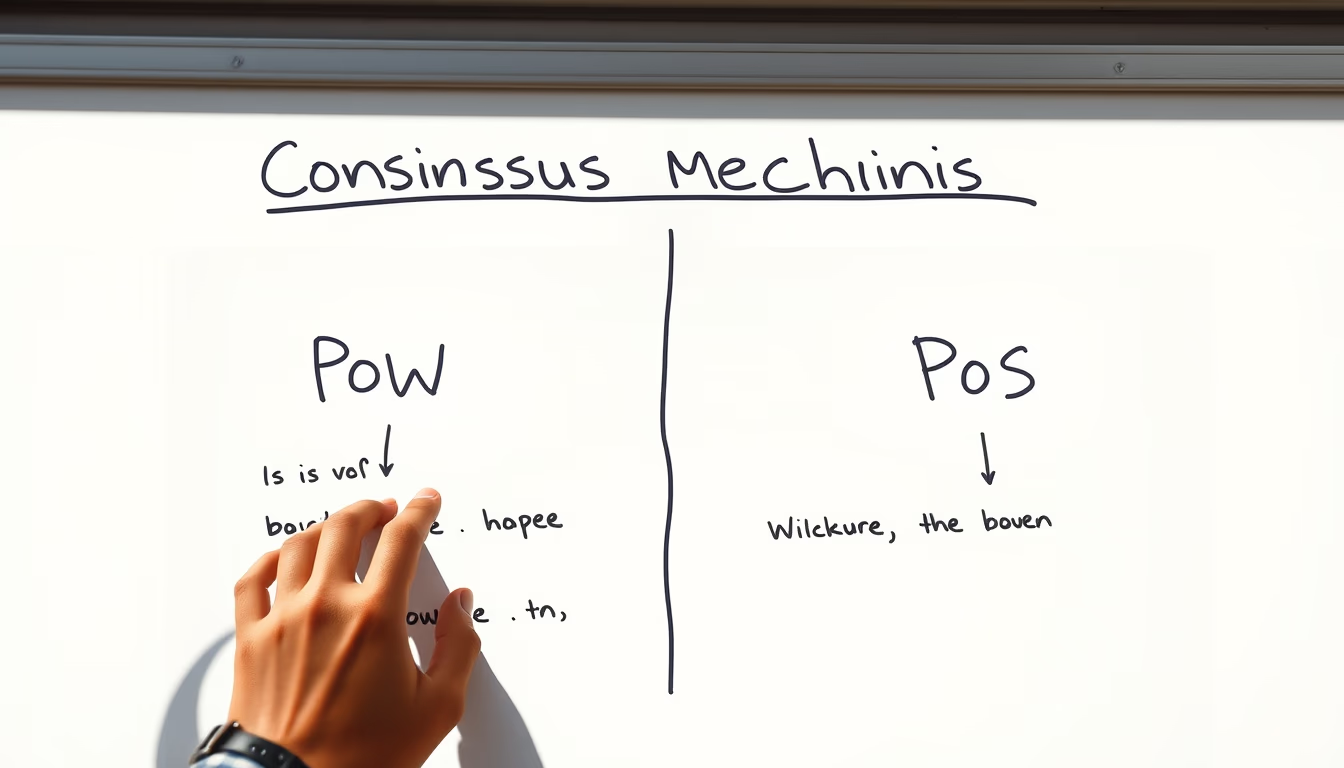
A distributed ledger is a decentralized database that maintains an immutable record of transactions replicated across multiple servers, typically housed in geographically dispersed data centers. Unlike traditional databases where a single entity controls changes, in a distributed ledger each participating node holds an identical copy of the history and validates new entries through consensus algorithms such as Proof of Work (PoW) or Proof of Stake (PoS). This architecture eliminates single points of failure and reduces fraud risks, as any attempt to alter a node is immediately rejected by the others.
The technology gained prominence with Bitcoin in 2009, but its applications extend far beyond cryptocurrencies. Companies like IBM, Microsoft, and Amazon offer cloud-based distributed ledger services, enabling organizations to implement customized solutions without managing underlying infrastructure. Modern data centers use specialized hardware, such as high-processing servers and solid-state drives, to ensure low latency and high availability in block synchronization.
A critical aspect is scalability. Public networks like Ethereum process thousands of transactions per second, while private or consortium networks can achieve even higher rates by restricting the number of validators. Server location also impacts performance: data centers close to internet hubs reduce block propagation time, essential for financial and IoT applications. In 2023, the global distributed ledger market was valued at over US$ 12 billion, with an annual growth projection exceeding 50% until 2030, driven by sectors such as logistics, healthcare, and governance.
Frequently Asked Questions
What is the difference between a distributed ledger and a traditional database?
A distributed ledger is decentralized and immutable, with identical copies across multiple servers, while a traditional database is centralized and allows changes controlled by a single entity.
How is consensus achieved in a distributed ledger?
Consensus is reached through algorithms like Proof of Work (PoW) or Proof of Stake (PoS), where nodes validate and agree on new transactions before adding them to the record.
Which sectors benefit most from using distributed ledgers?
Sectors such as finance, logistics, healthcare, and governance benefit from the transparency, traceability, and security offered by this technology.
Direct URL
https://pub-c7d6a6ea828543ac903a74a341ccb2e1.r2.dev/imagens/distributed-ledger-multiple-servers-in-data-center-cinematic-wide-shot-overcast-soft-daylight.avifHow to credit
Include a visible link back to UtilizAí. Copy one of the snippets below:
<a href="https://xn--utiliza-eza.com/en/midia/imagens/distributed-ledger-multiple-servers-in-data-center-cinematic-wide-shot-overcast-soft-daylight">Distributed ledger multiple servers in data center</a> by <a href="https://xn--utiliza-eza.com">UtilizAí</a>, licensed under <a href="https://creativecommons.org/licenses/by/4.0/">CC BY 4.0</a>.
[Distributed ledger multiple servers in data center](https://xn--utiliza-eza.com/en/midia/imagens/distributed-ledger-multiple-servers-in-data-center-cinematic-wide-shot-overcast-soft-daylight) by [UtilizAí](https://xn--utiliza-eza.com), CC BY 4.0
License: CC-BY-4.0
Tags
Related images
 Smart contract code on monitor with solidity syntax highlighted
 Consensus mechanism diagram on whiteboard showing PoW vs PoS
 Distributed ledger multiple servers in data center
 Hash function visualization cryptographic equations on glass screen
 Hash function visualization cryptographic equations on glass screen
 Hash function visualization cryptographic equations on glass screen