Distributed ledger multiple servers in data center
1344×768 · AVIF · CC BY 4.0

Blockchain is not just cloud-based: data centers house servers that maintain copies of the distributed ledger, ensuring consensus and security.
About this subject
The distributed ledger, the backbone of blockchain, is not stored in a single location but replicated across thousands of servers in data centers worldwide. Each network node maintains a full or partial copy of the transaction record, and consensus is achieved through algorithms like Proof of Work (PoW) or Proof of Stake (PoS). This decentralized architecture eliminates the need for a central authority but relies on robust physical infrastructure: the data centers hosting these servers consume significant electricity, estimated at about 0.3% of global electricity consumption, according to the International Energy Agency. In 2023, Bitcoin alone consumed approximately 150 TWh, equivalent to Argentina's annual consumption. To mitigate environmental impact, many data centers are shifting to renewable sources and adopting efficient cooling techniques. Physical security of these servers is critical: cameras, biometric access control, and backup generators protect against failures and attacks. Geographic redundancy ensures that even if an entire data center goes offline, the network continues operating. Interestingly, server location influences network latency: the closer geographically, the faster consensus is reached. Therefore, major blockchain networks like Ethereum and Solana incentivize global node distribution, rewarding operators in underrepresented regions.
Frequently Asked Questions
What is a distributed ledger?
It is a shared database synchronized across multiple participants (nodes) in a network, without a central authority. Each node holds an identical copy of the record, and transactions are validated by consensus.
Why are data centers important for blockchain?
They provide the physical infrastructure (servers, power, cooling, security) needed to host blockchain network nodes. Without reliable data centers, the decentralization and security of the system would be compromised.
Does blockchain consume a lot of energy?
Yes, especially networks using Proof of Work (like Bitcoin). Global mining energy consumption rivals that of entire countries. However, newer blockchains (like Solana) use Proof of Stake, which is much more efficient.
Direct URL
https://pub-c7d6a6ea828543ac903a74a341ccb2e1.r2.dev/imagens/distributed-ledger-multiple-servers-in-data-center-aerial-drone-shot-overcast-soft-daylight.avifHow to credit
Include a visible link back to UtilizAí. Copy one of the snippets below:
<a href="https://xn--utiliza-eza.com/en/midia/imagens/distributed-ledger-multiple-servers-in-data-center-aerial-drone-shot-overcast-soft-daylight">Distributed ledger multiple servers in data center</a> by <a href="https://xn--utiliza-eza.com">UtilizAí</a>, licensed under <a href="https://creativecommons.org/licenses/by/4.0/">CC BY 4.0</a>.
[Distributed ledger multiple servers in data center](https://xn--utiliza-eza.com/en/midia/imagens/distributed-ledger-multiple-servers-in-data-center-aerial-drone-shot-overcast-soft-daylight) by [UtilizAí](https://xn--utiliza-eza.com), CC BY 4.0
License: CC-BY-4.0
Tags
Related images
 Smart contract code on monitor with solidity syntax highlighted
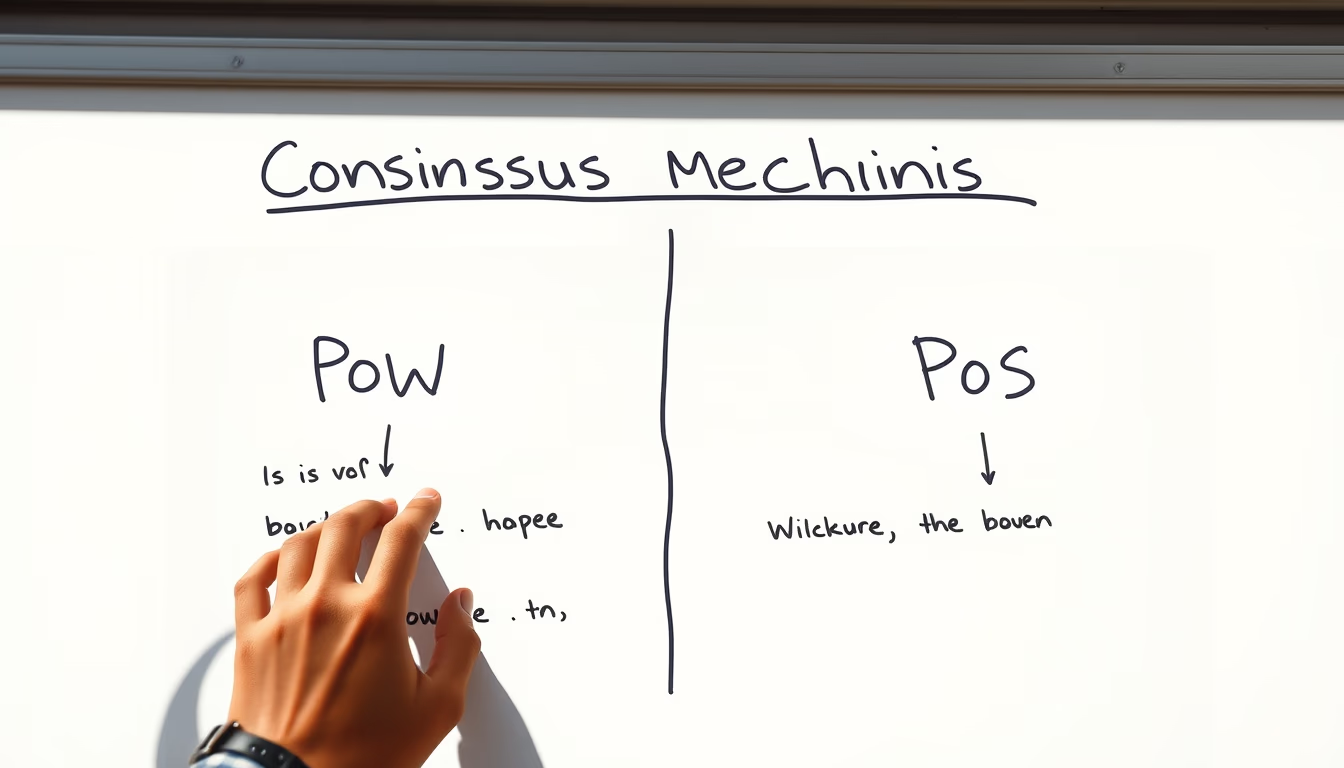 Consensus mechanism diagram on whiteboard showing PoW vs PoS
 Distributed ledger multiple servers in data center
 Hash function visualization cryptographic equations on glass screen
 Hash function visualization cryptographic equations on glass screen
 Hash function visualization cryptographic equations on glass screen