Cyberpunk neon street
1344×768 · AVIF · CC BY 4.0
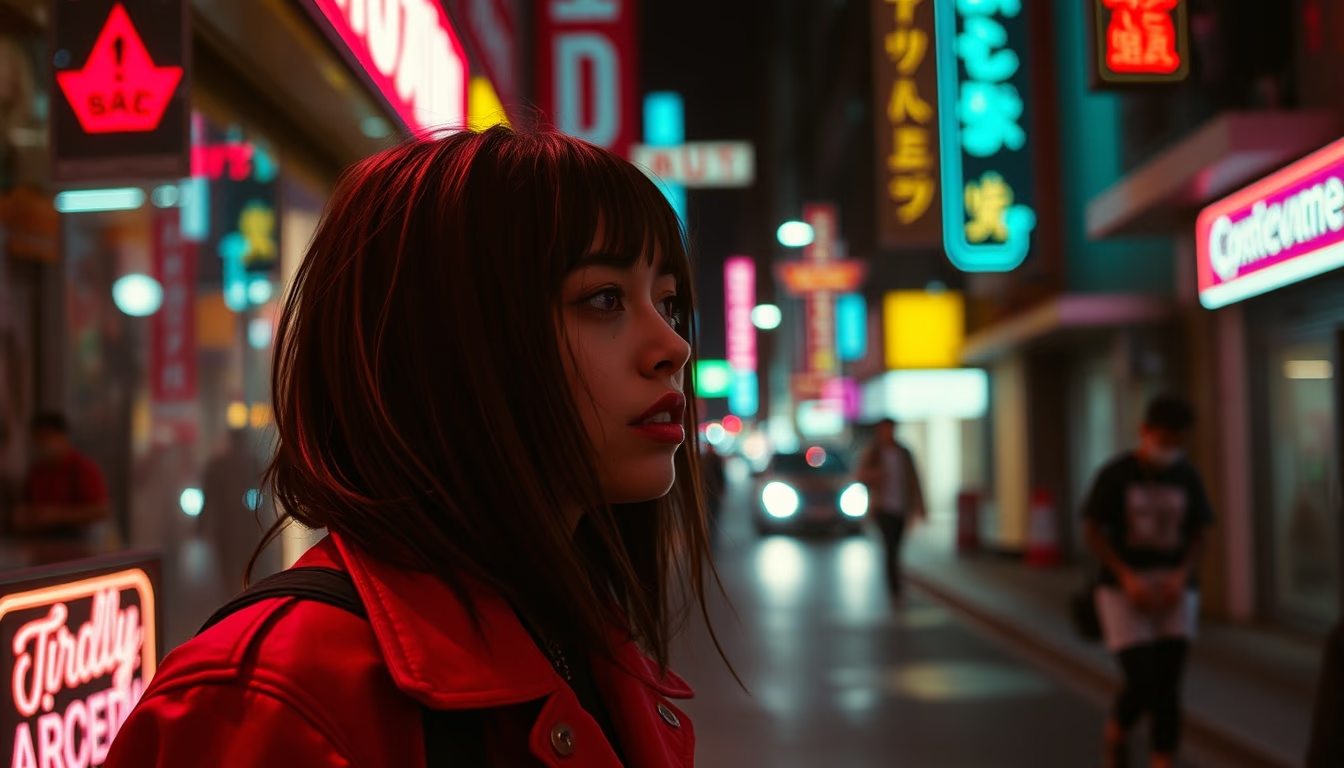
Neon-lit streets and holographic signs define the cyberpunk aesthetic, a science fiction subgenre blending high-tech with urban decay.
About this subject
The setting of a cyberpunk street is defined by vertical megacities, where corporate skyscrapers contrast with dark, decayed alleys. Neon signs in pink, blue, and green dominate the nightscape, often accompanied by holographic advertisements and LED screens covering entire facades. Constant rain and exhaust fumes create a dense, reflective atmosphere, while flying vehicles soar above elevated walkways. This environment is a visual staple of cyberpunk, inspiring works like Blade Runner (1982) and Ghost in the Shell (1995).
The aesthetic origins of cyberpunk streets trace back to 1980s literature, especially William Gibson's Neuromancer (1984), which depicted a future dominated by corporations and invasive technology. The visual style drew heavily from Japanese culture, notably Tokyo's Shibuya and Shinjuku districts, where an excess of illuminated signs and dense architecture served as models. Hong Kong and Shanghai also contributed, with their narrow alleys and street markets coexisting with ultramodern skyscrapers. This blend of Western and Eastern influences created a unique imaginary.
Culturally, the cyberpunk street serves as a metaphor for social inequality and surveillance. The intense artificial light represents corporate control, while shadows and alleys harbor outcasts and hackers. This contrast reflects contemporary anxieties about privacy, artificial intelligence, and the power of big companies. In fashion and design, elements like sunglasses, leather jackets, and cybernetic implants are common, along with graffiti and tags challenging authority. Thus, the cyberpunk street is not just a backdrop but a character narrating future dilemmas.
Despite being a speculative subgenre, cyberpunk influences real architecture. Projects like Shanghai's Pudong district or Singapore's Marina Bay complex incorporate illuminated facades and futuristic structures. Pop culture and gaming festivals, such as BlizzCon, use cyberpunk aesthetics in set design. In Brazil, São Paulo's Avenida Paulista at night and the 25 de Março street area have been compared to cyberpunk scenes due to the profusion of lights and informal commerce. This intersection between fiction and reality keeps the theme relevant and constantly evolving.
Frequently Asked Questions
What characterizes a cyberpunk street?
Neon signs, intense artificial lighting, dense vertical architecture, a nocturnal or rainy atmosphere, and a blend of high technology with urban decay.
What are real-world references for cyberpunk streets?
Cities like Tokyo (Shibuya, Shinjuku), Hong Kong, and Shanghai, with their night landscapes full of luminous signs and social contrasts.
Why does cyberpunk use so much neon?
Neon evokes the 1980s and noir aesthetics, creating visual contrast between technological brightness and darkness, symbolizing technical progress amid social decay.
Direct URL
https://pub-c7d6a6ea828543ac903a74a341ccb2e1.r2.dev/imagens/cyberpunk-neon-street-film-grain-authentic-fresh15.avifHow to credit
Include a visible link back to UtilizAí. Copy one of the snippets below:
<a href="https://xn--utiliza-eza.com/en/midia/imagens/cyberpunk-neon-street-film-grain-authentic-fresh15">Cyberpunk neon street</a> by <a href="https://xn--utiliza-eza.com">UtilizAí</a>, licensed under <a href="https://creativecommons.org/licenses/by/4.0/">CC BY 4.0</a>.
[Cyberpunk neon street](https://xn--utiliza-eza.com/en/midia/imagens/cyberpunk-neon-street-film-grain-authentic-fresh15) by [UtilizAí](https://xn--utiliza-eza.com), CC BY 4.0
License: CC-BY-4.0