Cuneiform sumerian tablet
1344×768 · AVIF · CC BY 4.0
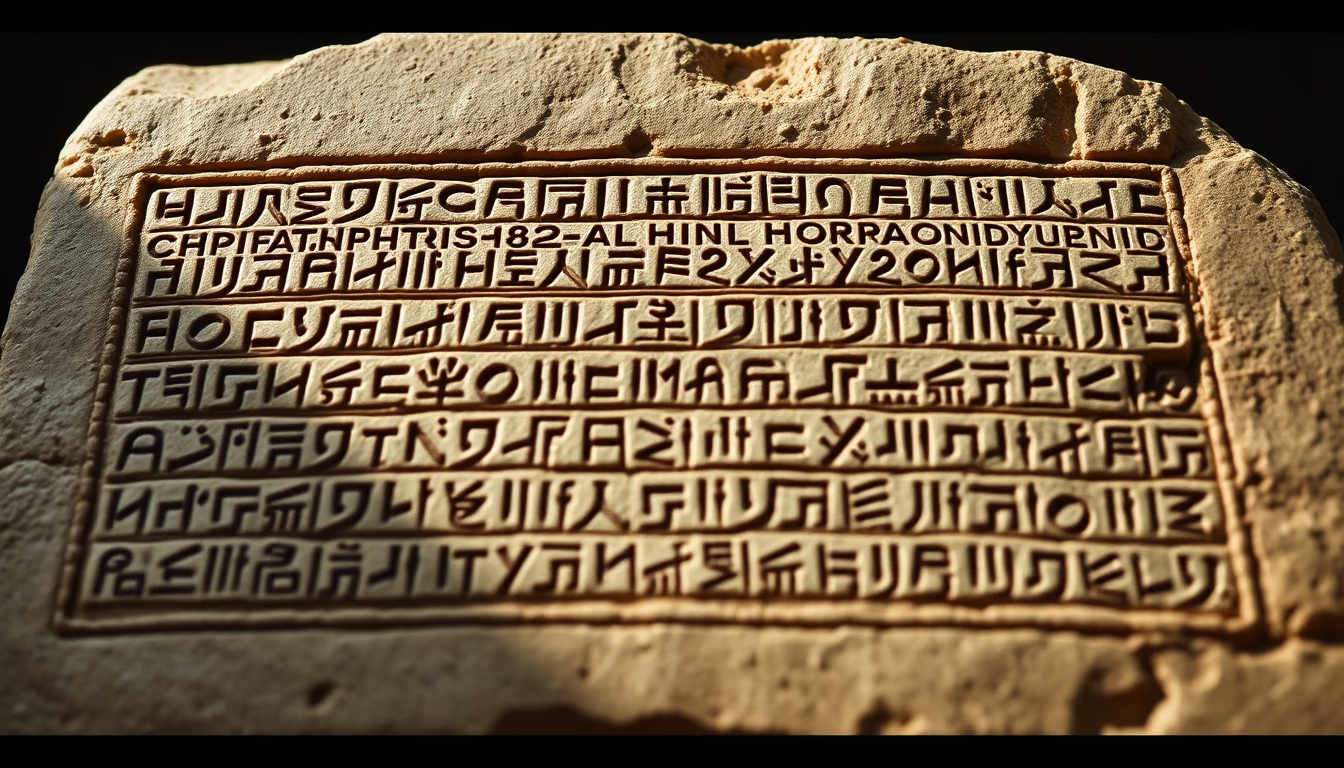
Clay tablet with Sumerian cuneiform script, one of the oldest writing systems in human history, dating back over 5,000 years.
About this subject
Cuneiform script was developed by the Sumerians in Mesopotamia, corresponding to modern-day Iraq, around 3400 BCE. Initially used for administrative and accounting records, such as counting grain and livestock, it evolved to record laws, literature, and trade transactions. Clay tablets were the primary writing surface: while the clay was still damp, a scribe used a reed stylus to impress wedge-shaped signs, hence the name "cuneiform" (from Latin "cuneus," wedge). After writing, tablets were dried in the sun or fired in kilns for preservation.
The Sumerian civilization flourished between 4500 and 1900 BCE in city-states like Ur, Uruk, and Lagash. Cuneiform tablets provide a detailed record of daily life, including marriage contracts, medical prescriptions, and even love songs. One of the most famous examples is the Epic of Gilgamesh, an epic narrative inscribed on clay tablets that influenced later mythologies. Sumerian writing also influenced subsequent systems, such as Akkadian and Elamite.
Deciphering cuneiform was a long process that began in the 19th century, with scholars like Henry Rawlinson and Georg Friedrich Grotefend. The Behistun Inscription, trilingual in Old Persian, Elamite, and Akkadian, was crucial for decipherment. Today, thousands of tablets are in museums around the world, such as the British Museum and the Louvre, offering a window into one of the earliest literate civilizations in history.
Interestingly, many Sumerian tablets are actually school records: students copied texts from master scribes to learn writing. These tablets reveal educational patterns in antiquity, showing that the teaching system was strict and focused on memorizing lists of signs and words.
Frequently Asked Questions
What does the word cuneiform mean?
Cuneiform comes from Latin "cuneus," meaning wedge. The name refers to the wedge-shaped marks impressed into clay with a reed stylus.
What did the Sumerians use cuneiform writing for?
Originally for administrative and accounting records, such as commercial transactions and inventories. Later it was used for laws, literature (like the Epic of Gilgamesh), letters, and religious documents.
How did cuneiform tablets survive to the present day?
Most tablets were accidentally fired in building fires or intentionally baked in kilns, making the clay durable. Buried for millennia, many were preserved in good condition.
Direct URL
https://pub-c7d6a6ea828543ac903a74a341ccb2e1.r2.dev/imagens/cuneiform-sumerian-tablet-documentary-photography-fresh4.avifHow to credit
Include a visible link back to UtilizAí. Copy one of the snippets below:
<a href="https://xn--utiliza-eza.com/en/midia/imagens/cuneiform-sumerian-tablet-documentary-photography-fresh4">Cuneiform sumerian tablet</a> by <a href="https://xn--utiliza-eza.com">UtilizAí</a>, licensed under <a href="https://creativecommons.org/licenses/by/4.0/">CC BY 4.0</a>.
[Cuneiform sumerian tablet](https://xn--utiliza-eza.com/en/midia/imagens/cuneiform-sumerian-tablet-documentary-photography-fresh4) by [UtilizAí](https://xn--utiliza-eza.com), CC BY 4.0
License: CC-BY-4.0