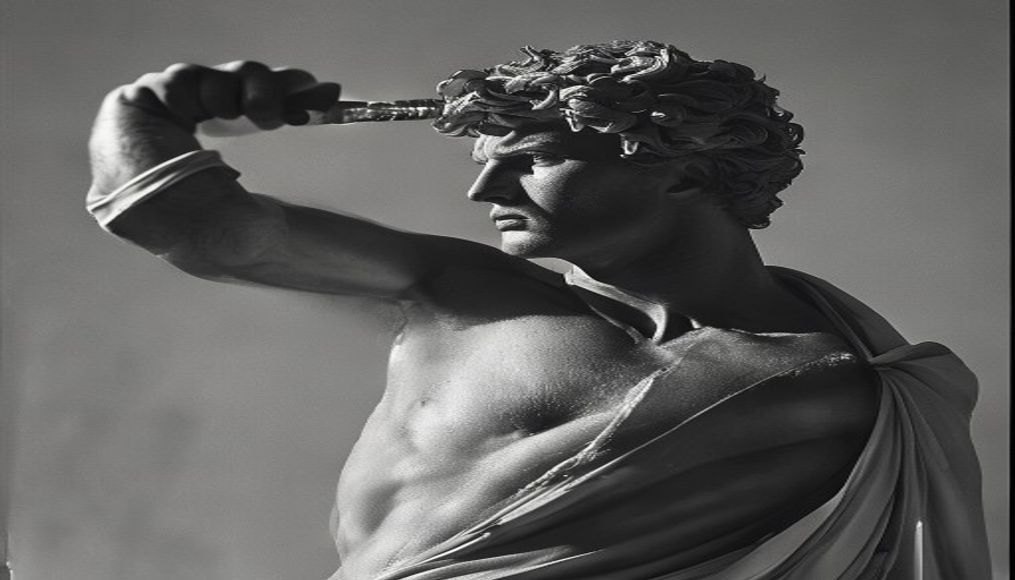
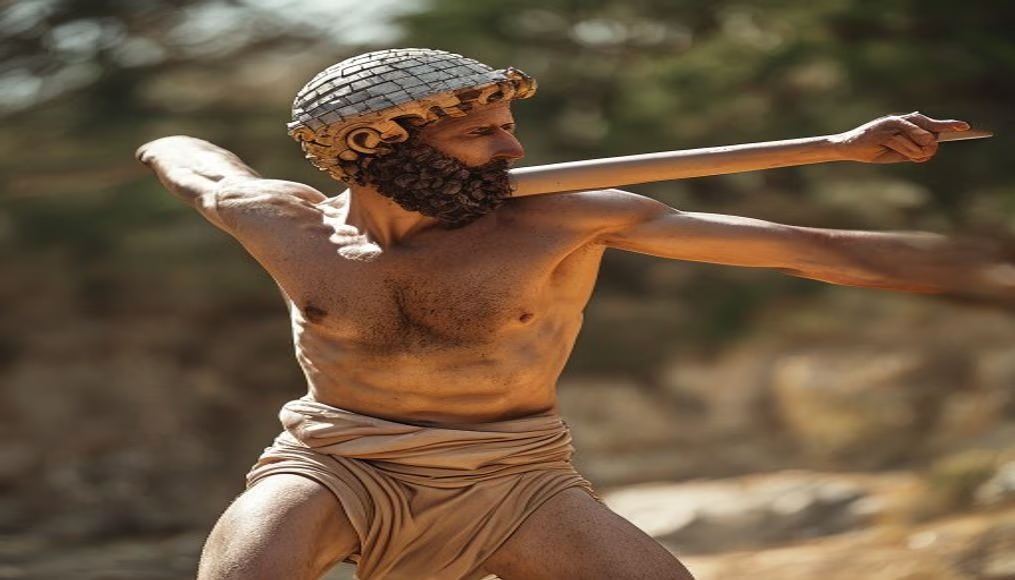
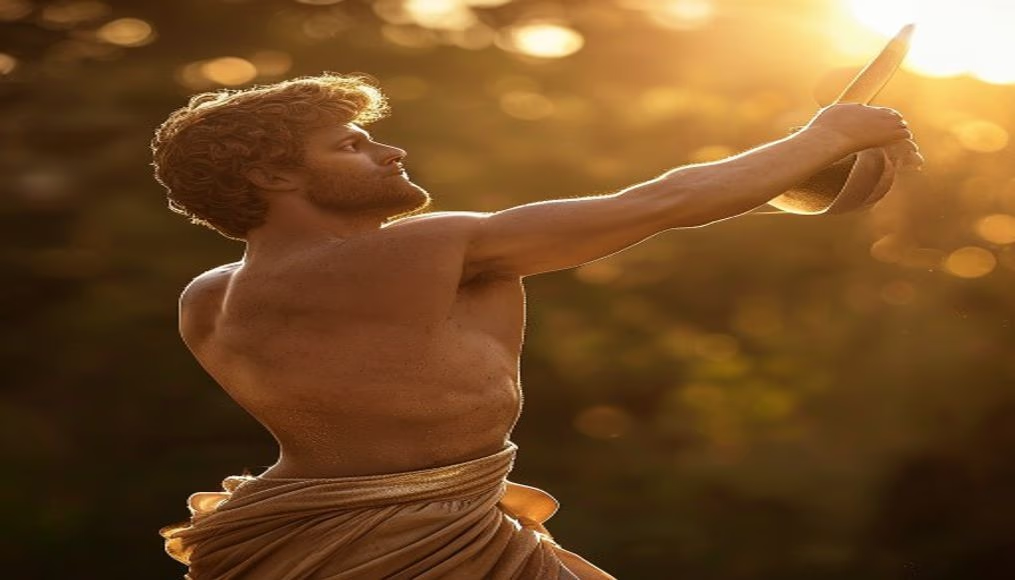
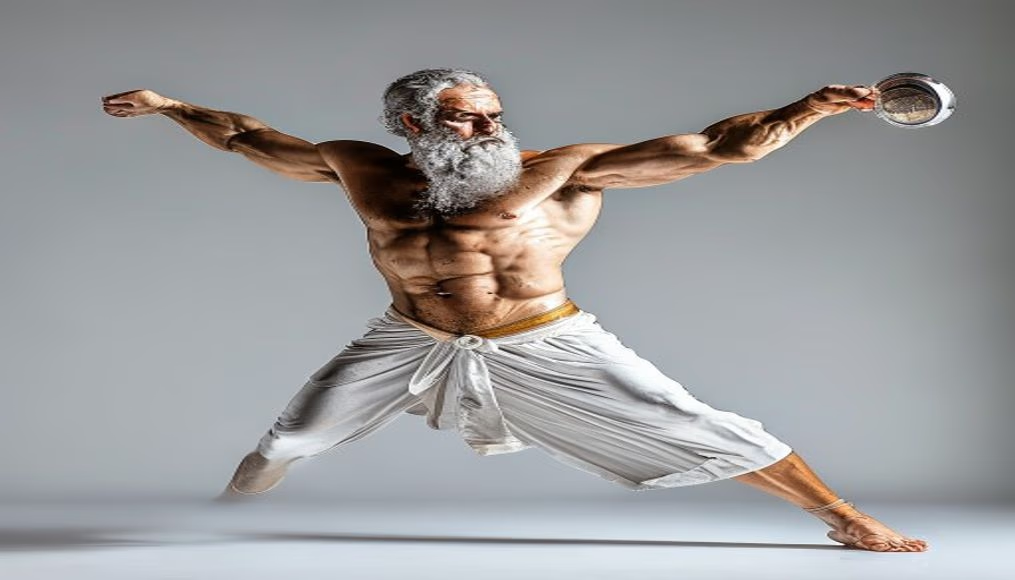
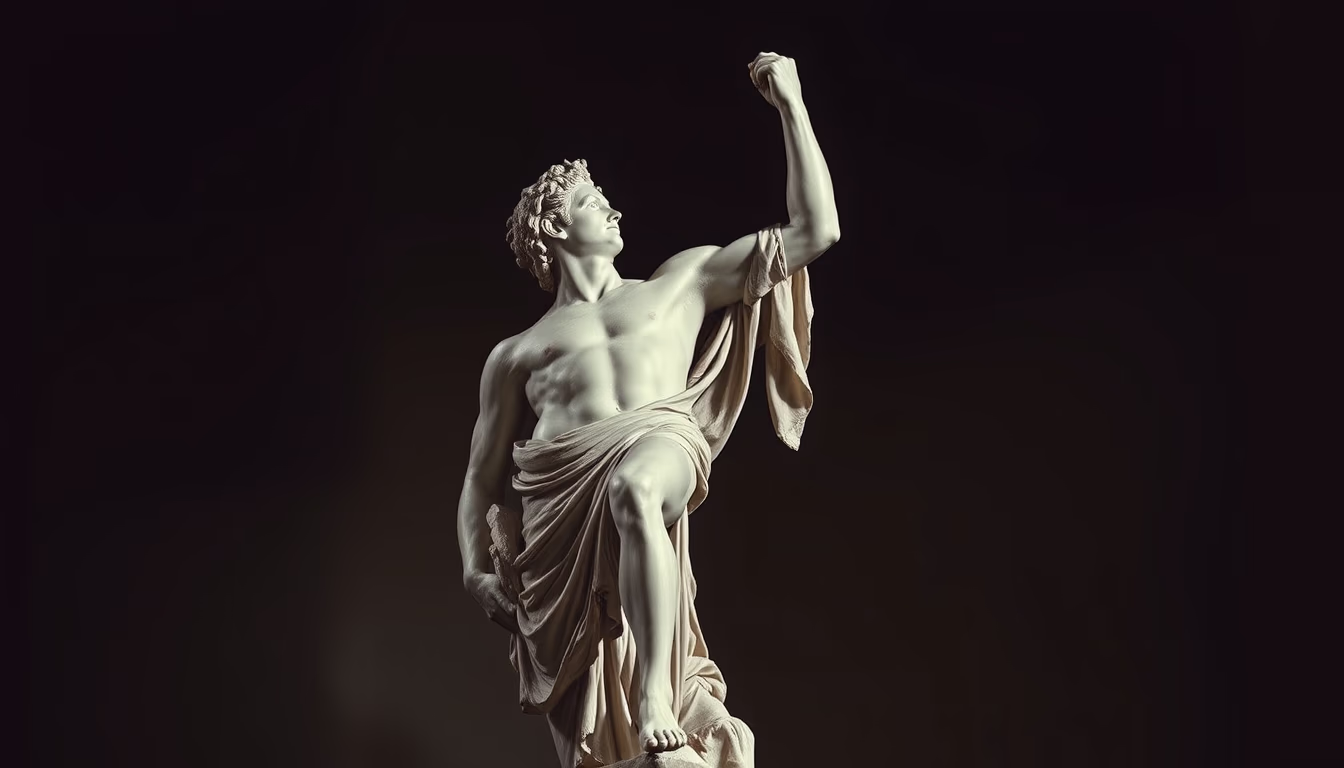
Creation adam michelangelo
1344×768 · AVIF · CC BY 4.0

The Creation of Adam, Michelangelo's masterpiece in the Sistine Chapel, depicts the divine moment when God gives life to the first man.
About this subject
The Creation of Adam is one of the most iconic frescoes in art history, painted by Michelangelo between 1508 and 1512 on the ceiling of the Sistine Chapel in Vatican City. The scene depicts a bearded God, wrapped in a mantle and surrounded by angels, extending his right arm toward Adam, who lies inert on a mound of earth. Their fingers almost touch, symbolizing the crucial moment of the divine spark of life. Michelangelo innovated by portraying God not as a static figure, but as a dynamic, flowing form, contrasting with Adam's relaxed pose. The composition achieves a masterful balance between heaven and earth, divine and human.
Anatomical studies suggest that the red mantle around God and the angels may be a stylized representation of the human brain, with God positioned over the prefrontal cortex, associated with consciousness and creativity. This theory, proposed by doctors in the 1990s, adds a layer of complexity to the artwork. Michelangelo, who dissected cadavers to improve his understanding of human anatomy, might have hidden this brain imagery as a reflection on the origin of intelligence.
The painting is part of a cycle of nine scenes from Genesis adorning the chapel ceiling. Commissioned by Pope Julius II, the work required Michelangelo to lie on scaffolding for four years, resulting in permanent health issues. Despite the hardships, The Creation of Adam has become a universal symbol of the Renaissance, influencing everything from sacred art to pop culture, such as in the logo of The Criterion Collection and countless parodies.
The fresco technique, painting on wet plaster, demanded speed and precision. Michelangelo left no room for error: each brushstroke was final. The choice of vibrant colors, like the blue sky and green landscape, contrasts with Adam's earthy skin, reinforcing the duality between the material and the spiritual. God's slightly bent finger and Adam's inert one create a visual tension that captivates viewers to this day.
Frequently Asked Questions
Why don't God's and Adam's fingers touch in The Creation of Adam?
Michelangelo deliberately left a gap between the fingers to create visual tension and symbolize that the divine spark is about to be transmitted. This void represents the still-incomplete moment of creation, keeping the viewer in suspense.
What is the meaning of the figures surrounding God in the fresco?
God is wrapped in a red mantle and accompanied by wingless angels. One theory suggests the group forms a map of the human brain, with God over the prefrontal cortex. Others interpret the figures as representations of unborn souls or an allusion to the creation of humanity.
How long did Michelangelo take to paint the Sistine Chapel ceiling?
Michelangelo worked on the Sistine Chapel ceiling for four years, from 1508 to 1512. He painted over 300 figures across approximately 500 square meters, often lying on scaffolding with a twisted neck, which caused lasting physical damage.
Direct URL
https://pub-c7d6a6ea828543ac903a74a341ccb2e1.r2.dev/imagens/creation-adam-michelangelo-cinematic-wide-shot-p6.avifHow to credit
Include a visible link back to UtilizAí. Copy one of the snippets below:
<a href="https://xn--utiliza-eza.com/en/midia/imagens/creation-adam-michelangelo-cinematic-wide-shot-p6">Creation adam michelangelo</a> by <a href="https://xn--utiliza-eza.com">UtilizAí</a>, licensed under <a href="https://creativecommons.org/licenses/by/4.0/">CC BY 4.0</a>.
[Creation adam michelangelo](https://xn--utiliza-eza.com/en/midia/imagens/creation-adam-michelangelo-cinematic-wide-shot-p6) by [UtilizAí](https://xn--utiliza-eza.com), CC BY 4.0
License: CC-BY-4.0