Crampons mountaineering
1344×768 · AVIF · CC BY 4.0

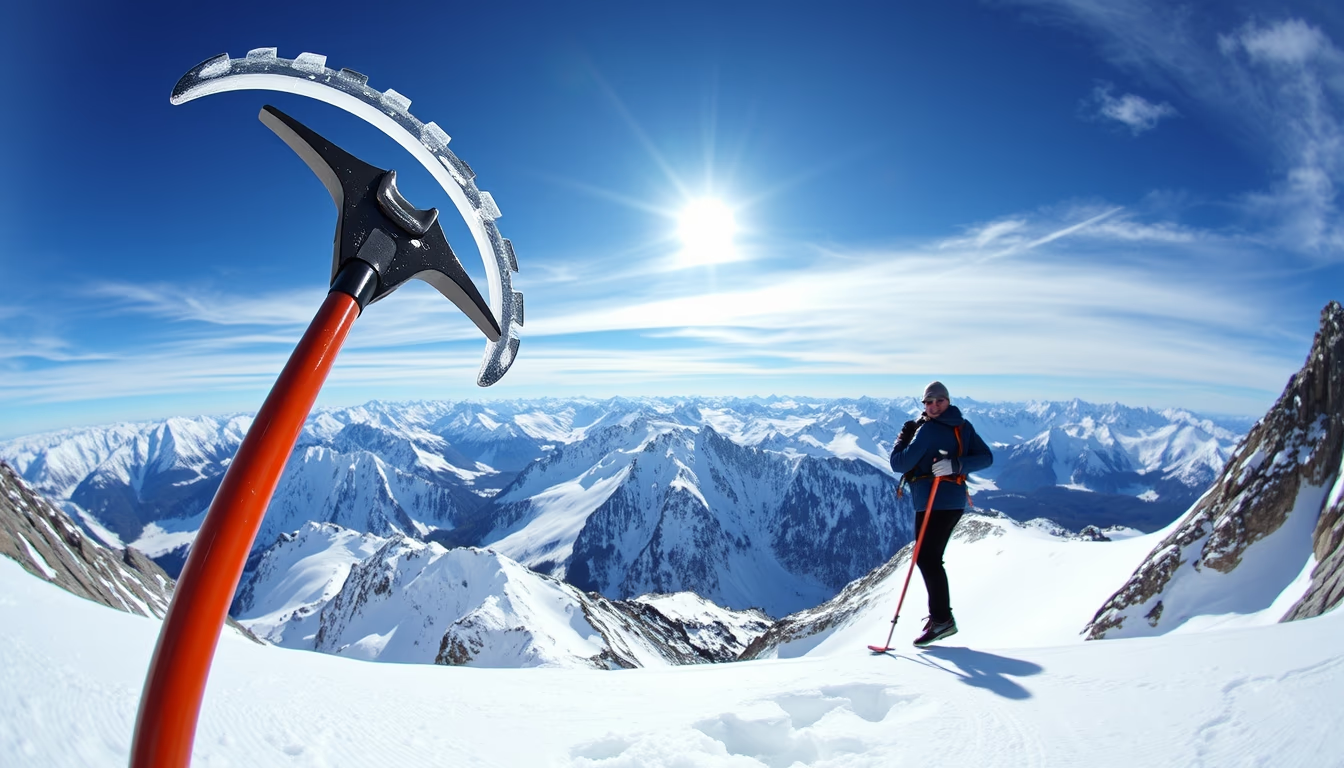
Crampons are essential equipment for ice and snow climbing, providing traction and safety in mountainous terrain.
About this subject
Crampons are metallic devices attached to the soles of mountaineering boots, designed to provide traction on ice and snow. They prevent slips and falls by biting into frozen surfaces. Types vary by number of points (10, 12, 14 points are common), rigidity, and binding system. Flexible crampons suit snow hiking, while rigid ones with front points are for technical ice climbing.
The modern crampon is credited to Italian mountaineer Oscar Eckenstein, who created a 10-point design in 1908. Earlier climbers used nails or makeshift chains. In the 1960s, crampons evolved with angled front points for vertical ice climbing. Today, materials like stainless steel and aluminum alloys balance weight and durability.
In global mountaineering, crampons are standard for expeditions on peaks like Everest, Denali, and the Alps. They are essential for crossing glaciers and ascending ice falls. Proper fit and adjustment are critical; loose crampons can cause accidents. Crampons must match boot stiffness and sole shape (e.g., welted vs. non-welted boots).
Interesting facts: Crampons can feature adjustable forward points for different ice angles. Rescue teams use them for safe access on frozen terrain. Maintenance involves sharpening points and anti-rust care. Some models include anti-balling plates to prevent snow buildup. The term 'crampon' comes from French, meaning 'cramp' or 'clamp'.
Frequently Asked Questions
What are the main uses of crampons in mountaineering?
Crampons provide traction on ice and snow, preventing slips and enabling safe travel on glaciers, snow slopes, and ice climbs.
How do I choose the right crampons?
Consider the terrain (snow hiking vs. ice climbing) and boot compatibility. Flexible crampons are for walking, rigid ones for technical climbing. Pay attention to number of points and binding system.
Are crampons used in Brazil?
Yes, mainly for expeditions to the Andes (Peru, Argentina) and occasional training on Pico da Bandeira when snow appears. They are also used in mountaineering courses and rescue operations.
Direct URL
https://pub-c7d6a6ea828543ac903a74a341ccb2e1.r2.dev/imagens/crampons-mountaineering-studio-still-life-fresh16.avifHow to credit
Include a visible link back to UtilizAí. Copy one of the snippets below:
<a href="https://xn--utiliza-eza.com/en/midia/imagens/crampons-mountaineering-studio-still-life-fresh16">Crampons mountaineering</a> by <a href="https://xn--utiliza-eza.com">UtilizAí</a>, licensed under <a href="https://creativecommons.org/licenses/by/4.0/">CC BY 4.0</a>.
[Crampons mountaineering](https://xn--utiliza-eza.com/en/midia/imagens/crampons-mountaineering-studio-still-life-fresh16) by [UtilizAí](https://xn--utiliza-eza.com), CC BY 4.0
License: CC-BY-4.0