Crampons mountaineering
1344×768 · AVIF · CC BY 4.0
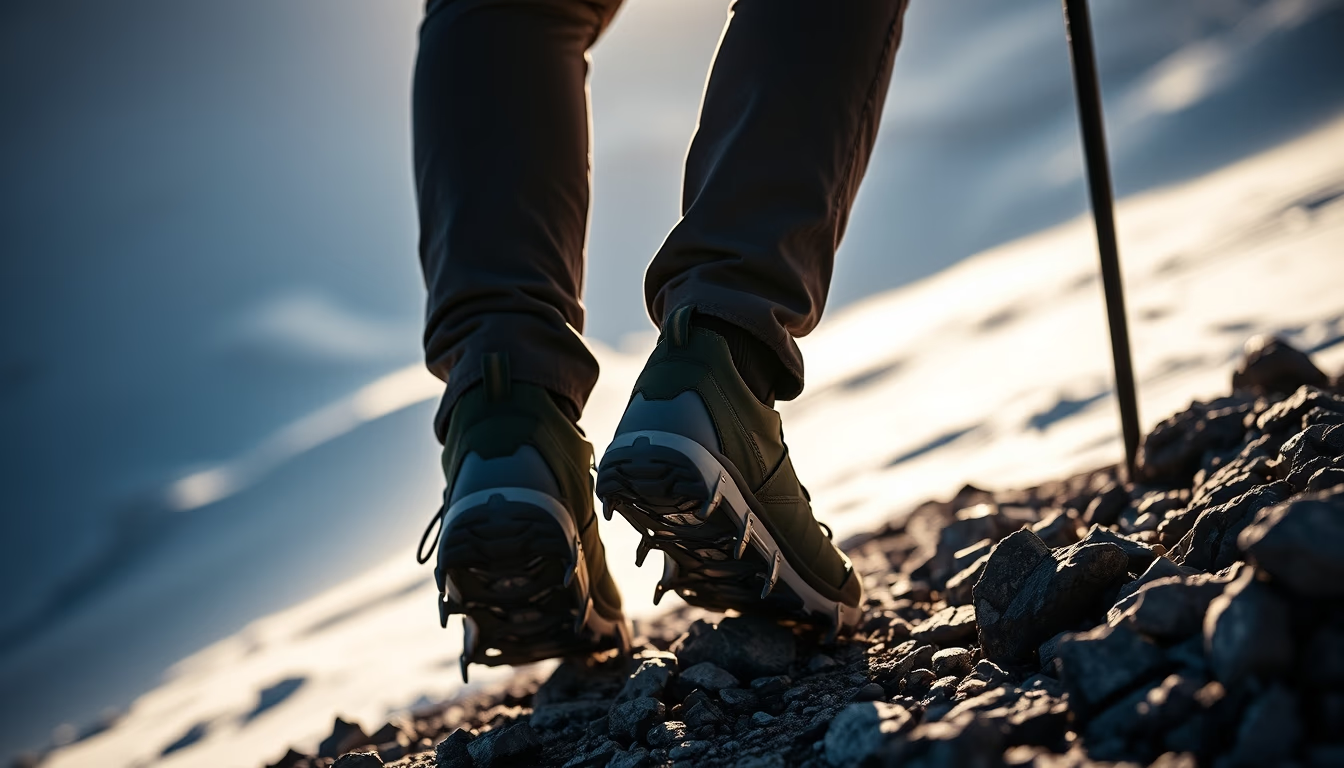
Crampons are essential equipment for ice and snow climbing, consisting of metal spikes attached to boots for traction on slippery surfaces.
About this subject
Crampons are traction devices used by mountaineers and climbers to walk or climb on ice and compacted snow. They consist of a metal frame with sharp spikes, usually made of steel, attached to the sole of boots. The basic design includes two main parts: the platform that fits the boot and the spikes (or points) that penetrate the icy surface. There are two main types: step-in crampons, which require boots with compatible notches, and strap-on crampons, which adapt to any boot via straps. Modern models often have front points for technical ice climbing, allowing the climber to balance on steep terrain.
The use of crampons dates back to the 19th century, when rudimentary models were created by blacksmiths in the Alps. Austrian mountaineer Oscar Eckenstein patented a 10-point design in 1908, which became standard. Since then, evolution has included lighter materials like aluminum alloys and quick-release systems. Crampons are crucial for safety on glacier crossings, preventing slips that can lead to fatal falls. They are also indispensable in high-altitude expeditions, such as Mount Everest, where snow and ice demand maximum grip.
Choosing the right crampon depends on the activity. For hiking on gentle snow, 10- or 12-point models suffice. For ice waterfalls or vertical walls, adjustable front-point versions are recommended. Proper attachment is vital: a poorly fitted crampon can come loose, causing accidents. Walking techniques with crampons must be learned, such as the 'duck step' to avoid spikes catching on clothing. Maintenance includes sharpening points and checking strap tension.
Interestingly, crampons are also used in sports like dry-tooling, where rock climbing is done with ice tools and crampons. In Brazil, the practice is less common, but mountaineers train at Pico da Neblina or Serra do Imeri, where similar conditions exist. Globally, the crampon market reflects the growing popularity of mountaineering, with brands like Petzl, Black Diamond, and Grivel dominating. Environmental impact studies warn of damage to the cryosphere if used in sensitive areas, but with ethical use, crampons remain an essential ally.
Frequently Asked Questions
What is the difference between step-in and strap-on crampons?
Step-in crampons require boots with specific notches, providing faster and more secure attachment. Strap-on crampons adapt to any boot via straps, offering versatility but less stability on technical terrain.
How many points should a crampon have for ice climbing?
For technical ice climbing, recommend 12 to 14 points, including front points that allow traction on steep surfaces and aid balance.
How can I check if my crampons are properly fitted?
The crampon should not shift laterally on the boot, and the points should be centered. Test by lifting your foot: the crampon should stay in place without slipping. If loose, adjust straps or notches.
Direct URL
https://pub-c7d6a6ea828543ac903a74a341ccb2e1.r2.dev/imagens/crampons-mountaineering-rembrandt-lighting-dramatic-shadows-fresh1.avifHow to credit
Include a visible link back to UtilizAí. Copy one of the snippets below:
<a href="https://xn--utiliza-eza.com/en/midia/imagens/crampons-mountaineering-rembrandt-lighting-dramatic-shadows-fresh1">Crampons mountaineering</a> by <a href="https://xn--utiliza-eza.com">UtilizAí</a>, licensed under <a href="https://creativecommons.org/licenses/by/4.0/">CC BY 4.0</a>.
[Crampons mountaineering](https://xn--utiliza-eza.com/en/midia/imagens/crampons-mountaineering-rembrandt-lighting-dramatic-shadows-fresh1) by [UtilizAí](https://xn--utiliza-eza.com), CC BY 4.0
License: CC-BY-4.0