Container ship cargo ocean
1344×768 · AVIF · CC BY 4.0
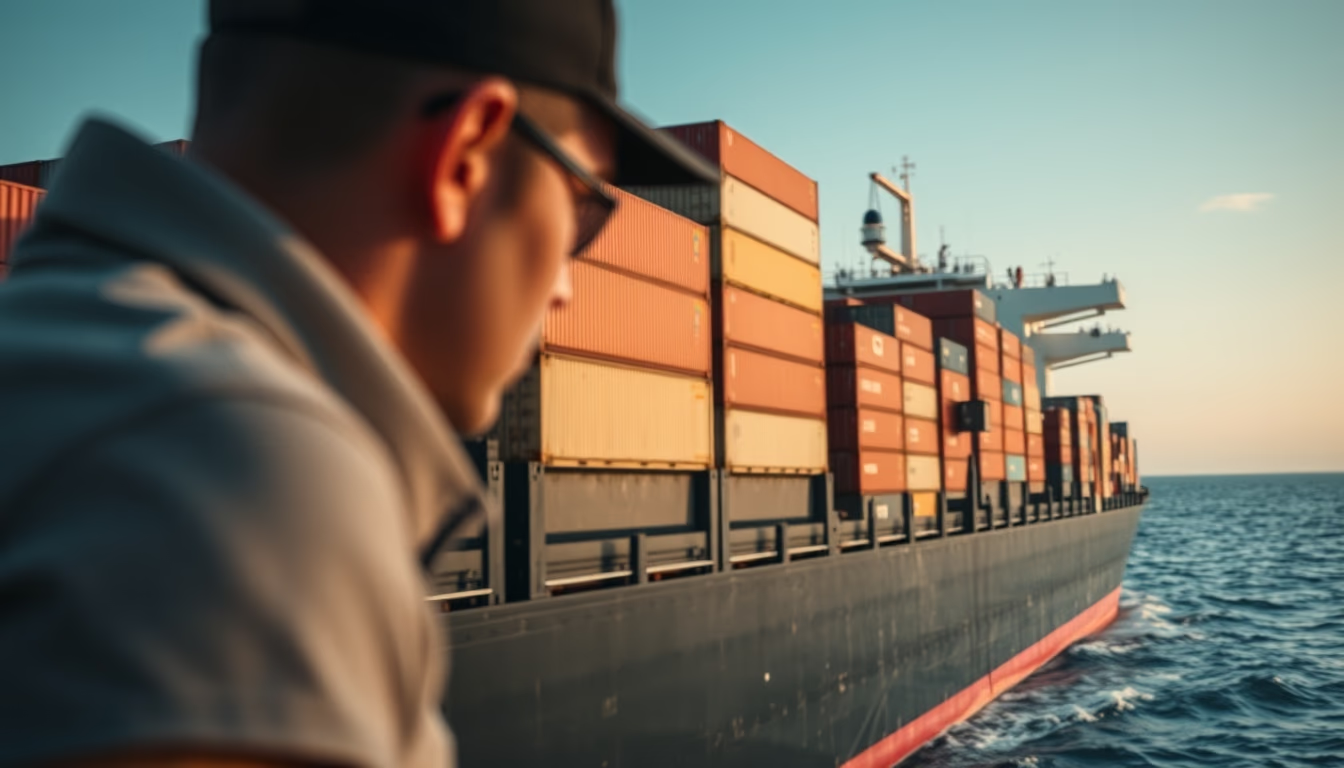
Container ship carrying goods across oceans, vital for global trade and the world economy.
About this subject
Container ships are the backbone of international trade, responsible for transporting about 80% of the volume of goods traded globally. These massive vessels, some with capacity exceeding 20,000 TEUs (twenty-foot equivalent units), connect ports on every continent, moving everything from electronics and clothing to food and raw materials. The busiest route is Asia-Europe, passing through strategic points like the Suez Canal, which significantly reduces travel time between East and West.
Operating a cargo ship involves complex logistics: port terminals equipped with gantry cranes, satellite tracking systems, and highly trained crews. Ship modernization includes more efficient engines and designs that reduce carbon emissions, complying with environmental regulations such as the sulfur cap on marine fuels set by the International Maritime Organization (IMO). However, the industry faces challenges like port congestion, fuel price fluctuations, and the need for decarbonization.
Interestingly, the largest container ship in operation, the MSC Irina, can carry up to 24,346 TEUs. Brazil, with its extensive coastline, has important ports such as Santos, Paranaguá, and Itajaí, which handle a large part of national exports, especially commodities like soybeans, iron ore, and oil. The reliance on maritime transport makes these ships essential for the Brazilian economy, directly influencing the cost of imported and exported goods.
Frequently Asked Questions
What is the cargo capacity of a typical container ship?
Container ships range from small feeders with a capacity of 1,000 TEUs to giants like MSC Irina, which can carry over 24,000 TEUs. Most long-distance vessels have between 10,000 and 20,000 TEUs.
How are containers loaded and unloaded from ships?
The process uses gantry cranes at port terminals, which lift containers and place them into specific cells on the deck or in the holds, following a stowage plan to balance the vessel.
What are the main Brazilian ports for cargo ships?
The main ports are Santos (SP), Paranaguá (PR), Itajaí (SC), Rio de Janeiro (RJ), and Suape (PE). They handle most of the country's commodity exports and manufactured imports.
Direct URL
https://pub-c7d6a6ea828543ac903a74a341ccb2e1.r2.dev/imagens/container-ship-cargo-ocean-documentary-photography-p1.avifHow to credit
Include a visible link back to UtilizAí. Copy one of the snippets below:
<a href="https://xn--utiliza-eza.com/en/midia/imagens/container-ship-cargo-ocean-documentary-photography-p1">Container ship cargo ocean</a> by <a href="https://xn--utiliza-eza.com">UtilizAí</a>, licensed under <a href="https://creativecommons.org/licenses/by/4.0/">CC BY 4.0</a>.
[Container ship cargo ocean](https://xn--utiliza-eza.com/en/midia/imagens/container-ship-cargo-ocean-documentary-photography-p1) by [UtilizAí](https://xn--utiliza-eza.com), CC BY 4.0
License: CC-BY-4.0