Consensus mechanism diagram on whiteboard showing PoW vs PoS
1344×768 · AVIF · CC BY 4.0
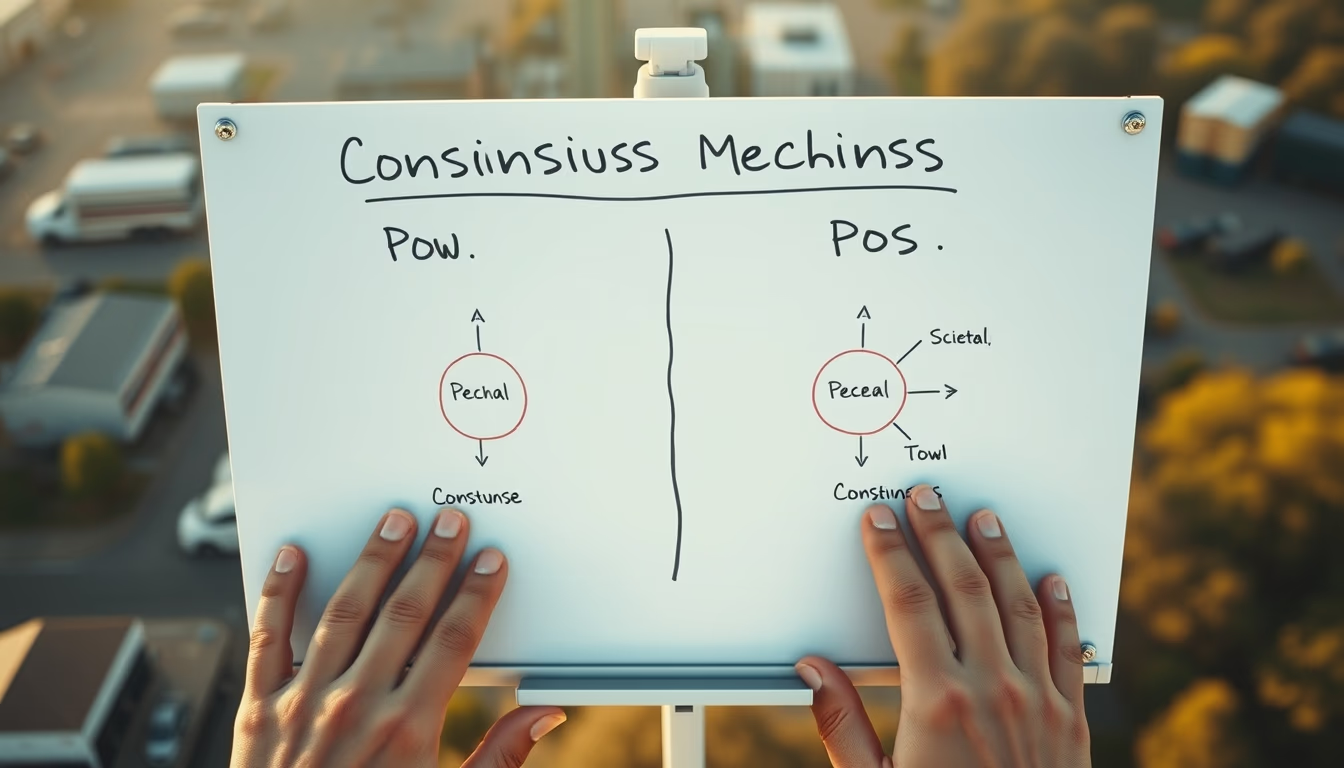
Whiteboard diagram comparing Proof of Work and Proof of Stake, the main consensus mechanisms in blockchains, highlighting differences in efficiency and security.
About this subject
Consensus mechanisms are fundamental protocols that ensure all nodes in a blockchain network agree on the state of the distributed ledger without a central authority. Proof of Work (PoW), introduced by Bitcoin in 2009, requires miners to solve complex mathematical problems (hashing) to validate transactions and create new blocks. This process consumes enormous amounts of electricity, the Bitcoin network is estimated to use more energy annually than countries like Argentina or the Netherlands. Proof of Stake (PoS), first proposed in 2012 for the cryptocurrency Peercoin, selects validators based on the amount of coins they “stake” as collateral. Ethereum, the second-largest blockchain, officially migrated to PoS in September 2022 (the “Merge”), reducing its energy consumption by approximately 99.95%. In PoS, validators are chosen randomly but with higher probability based on stake size, and they can lose part of their funds if they act dishonestly (slashing). The choice between PoW and PoS involves trade-offs: PoW offers proven security over years of operation but is slow and energy-intensive; PoS is faster and more scalable but critics point to centralization risks (rich get richer) and security issues like the “nothing at stake” attack. Other mechanisms include Delegated Proof of Stake (DPoS), Proof of Authority (PoA), and Practical Byzantine Fault Tolerance (PBFT), each with specific applications in public or private blockchains. The evolution of consensus mechanisms reflects the search for decentralized systems that balance security, efficiency, and accessibility.
Frequently Asked Questions
Which consensus mechanism is more secure: PoW or PoS?
PoW is considered more secure due to the high energy cost of 51% attacks, but PoS has mechanisms like slashing that deter malicious behavior. Both have pros and cons.
Why did Ethereum migrate to Proof of Stake?
To drastically reduce energy consumption (99.95% lower), improve scalability, and prepare for future upgrades like sharding, which increase transaction capacity.
What is the 'nothing at stake' attack in PoS?
It is a scenario where validators can vote on multiple forks at no cost, potentially compromising consensus. Solutions like finality and economic penalties mitigate this risk.
Direct URL
https://pub-c7d6a6ea828543ac903a74a341ccb2e1.r2.dev/imagens/consensus-mechanism-diagram-on-whiteboard-showing-pow-vs-pos-aerial-drone-shot-morning-natural-light.avifHow to credit
Include a visible link back to UtilizAí. Copy one of the snippets below:
<a href="https://xn--utiliza-eza.com/en/midia/imagens/consensus-mechanism-diagram-on-whiteboard-showing-pow-vs-pos-aerial-drone-shot-morning-natural-light">Consensus mechanism diagram on whiteboard showing PoW vs PoS</a> by <a href="https://xn--utiliza-eza.com">UtilizAí</a>, licensed under <a href="https://creativecommons.org/licenses/by/4.0/">CC BY 4.0</a>.
[Consensus mechanism diagram on whiteboard showing PoW vs PoS](https://xn--utiliza-eza.com/en/midia/imagens/consensus-mechanism-diagram-on-whiteboard-showing-pow-vs-pos-aerial-drone-shot-morning-natural-light) by [UtilizAí](https://xn--utiliza-eza.com), CC BY 4.0
License: CC-BY-4.0
Tags
Related images
 Smart contract code on monitor with solidity syntax highlighted
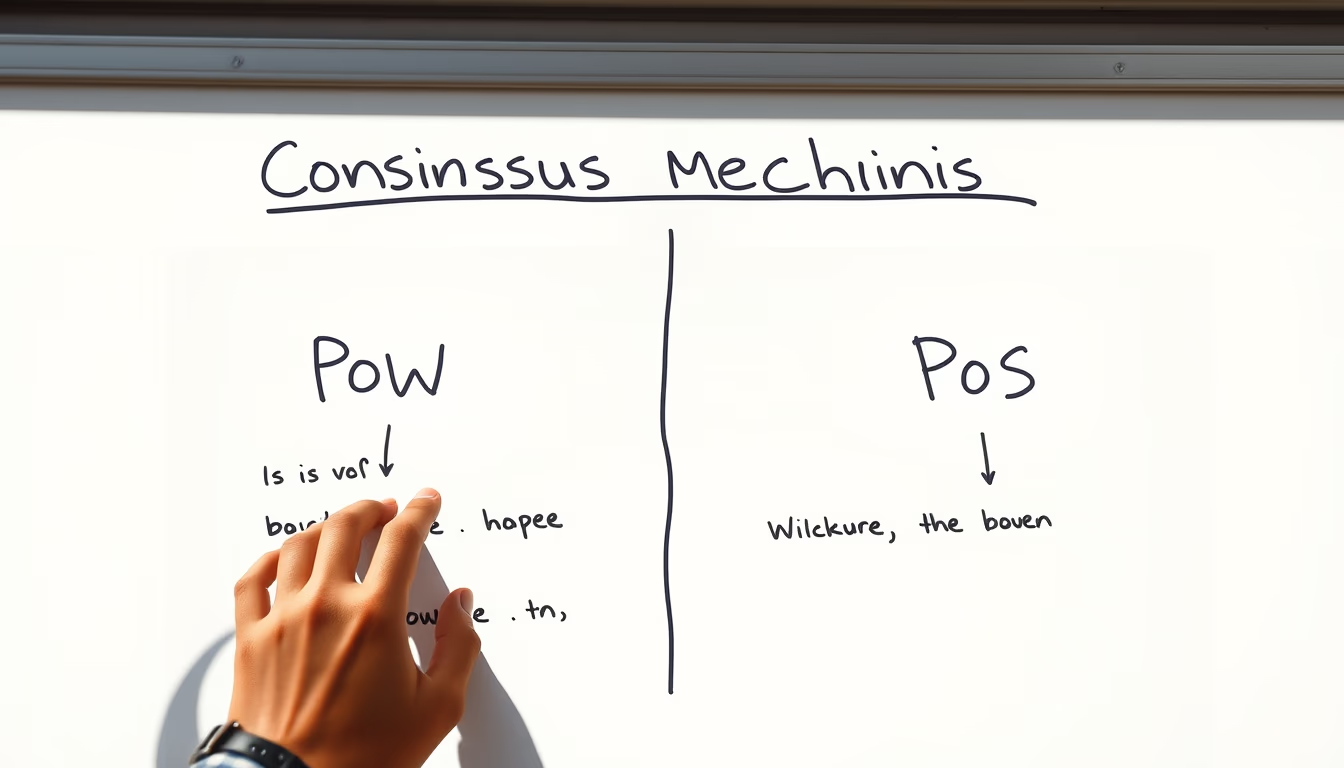 Consensus mechanism diagram on whiteboard showing PoW vs PoS
 Distributed ledger multiple servers in data center
 Hash function visualization cryptographic equations on glass screen
 Hash function visualization cryptographic equations on glass screen
 Hash function visualization cryptographic equations on glass screen