Chinese calligraphy brush stroke
1344×768 · AVIF · CC BY 4.0
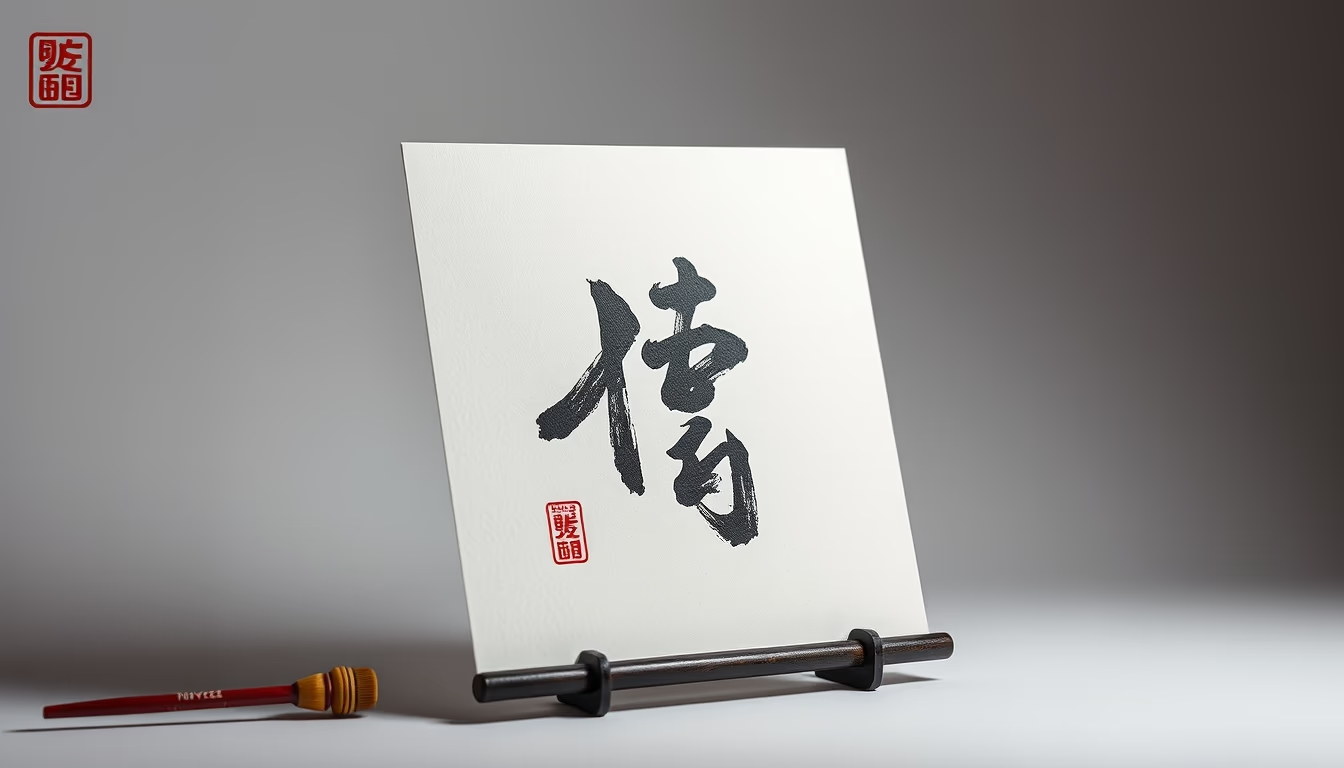
The Chinese calligraphy brush stroke is the fundamental unit of the ancient art, combining technique, expression, and philosophy.
About this subject
In Chinese calligraphy, every brush stroke carries centuries of tradition and meaning. Unlike Western writing, which uses combined letters, Chinese calligraphy is built from individual strokes that form characters. These strokes are not mere lines; each has a specific name, direction, and technique, reflecting the calligrapher's personality.
The classic system of eight basic strokes, known as the Eight Principles of Yong (永字八法), is the foundation of learning. They include the dot (丶), horizontal stroke (一), vertical stroke (丨), hook (亅), rising stroke (丿), descending stroke (㇏), curved stroke (㇇), and broken stroke (㇆). Mastering these movements is essential for any beginner.
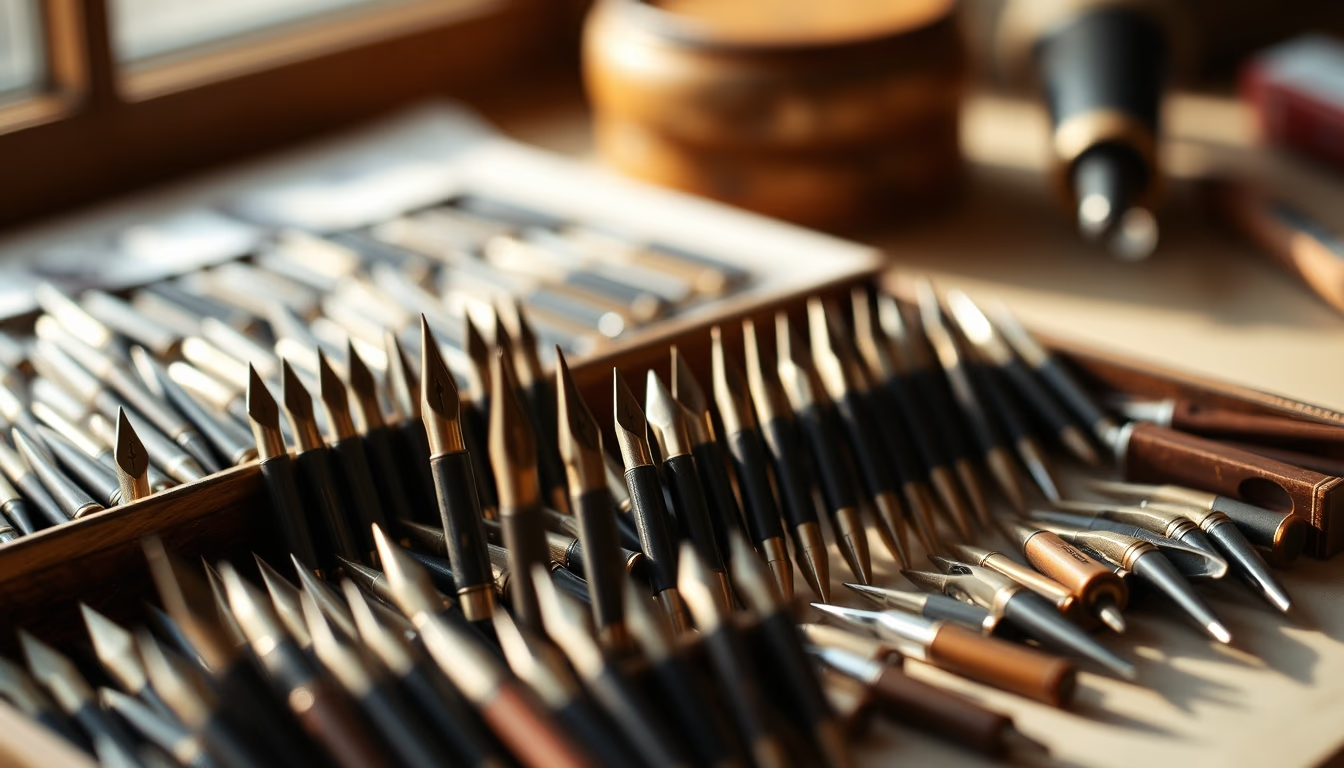
The main tool is a natural-bristle brush, often made from goat or wolf hair, combined with ink stick and rice paper. Brush pressure, speed, and angle determine the thickness and flow of the stroke. A single movement can express energy, softness, or strength, making each piece unique.
Culturally, Chinese calligraphy is more than writing: it is a visual and meditative art. During the Tang Dynasty (618, 907), artists like Wang Xizhi elevated calligraphy to high art, influencing poets and painters. Today, the practice remains valued in China and globally, taught in schools and displayed in museums.
Frequently Asked Questions
What are the eight basic strokes of Chinese calligraphy?
The eight strokes are: dot, horizontal, vertical, hook, rising, descending, curved, and broken. They form the character 永 (yong), used to practice all variations.
How is Chinese calligraphy different from Western calligraphy?
Western calligraphy focuses on the beauty of individual letters, while Chinese calligraphy emphasizes stroke composition within characters, incorporating balance, rhythm, and personal expression.
What materials are used in Chinese calligraphy?
The four treasures of the study are: brush (animal hair), ink stick, rice paper (xuan), and ink stone. Each material affects the stroke outcome.
Direct URL
https://pub-c7d6a6ea828543ac903a74a341ccb2e1.r2.dev/imagens/chinese-calligraphy-brush-stroke-studio-still-life-fresh17.avifHow to credit
Include a visible link back to UtilizAí. Copy one of the snippets below:
<a href="https://xn--utiliza-eza.com/en/midia/imagens/chinese-calligraphy-brush-stroke-studio-still-life-fresh17">Chinese calligraphy brush stroke</a> by <a href="https://xn--utiliza-eza.com">UtilizAí</a>, licensed under <a href="https://creativecommons.org/licenses/by/4.0/">CC BY 4.0</a>.
[Chinese calligraphy brush stroke](https://xn--utiliza-eza.com/en/midia/imagens/chinese-calligraphy-brush-stroke-studio-still-life-fresh17) by [UtilizAí](https://xn--utiliza-eza.com), CC BY 4.0
License: CC-BY-4.0