Chinese calligraphy brush stroke
1344×768 · AVIF · CC BY 4.0
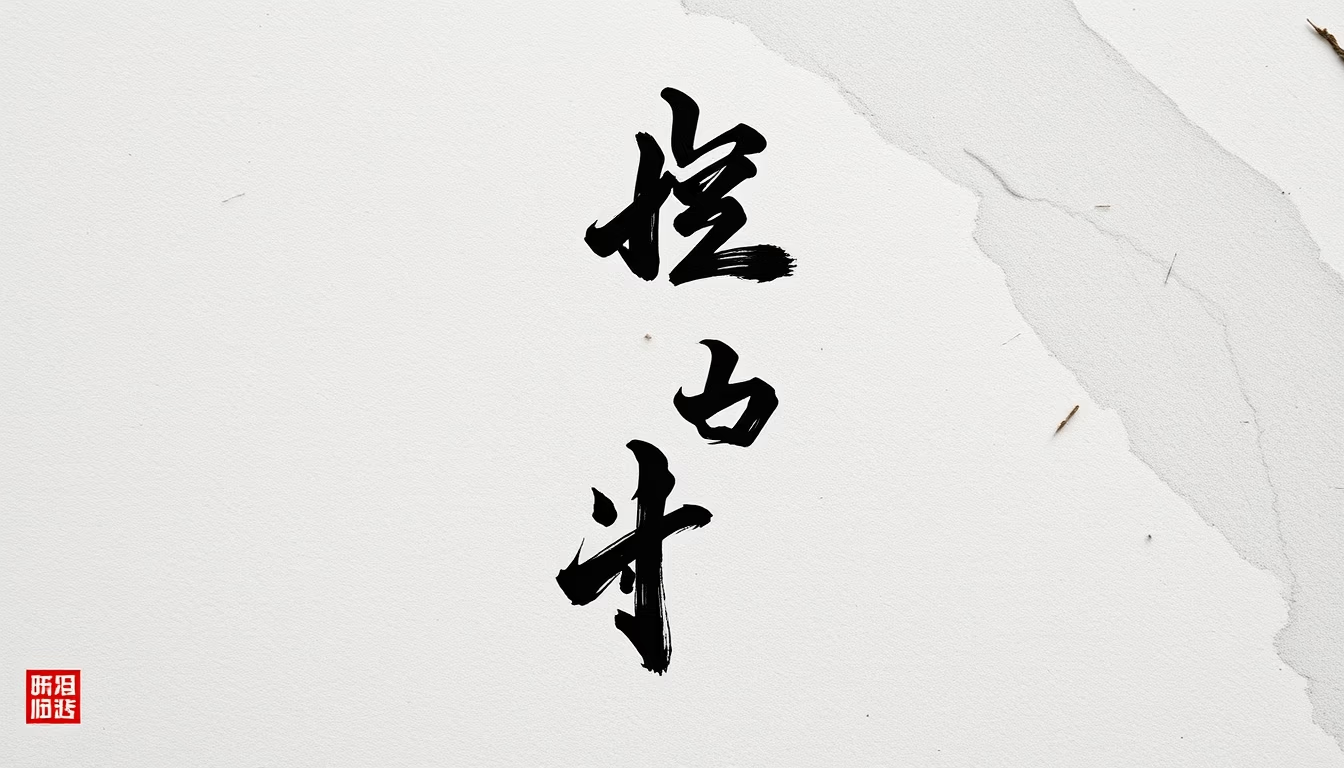
The brush stroke in Chinese calligraphy is the foundation of an ancient art form that merges technique, expression, and spirituality.
About this subject
The brush stroke, or bihua (笔画), is the fundamental element of Chinese calligraphy, one of the oldest and most revered art forms in Eastern culture. Each stroke carries movement, rhythm, and emotion, reflecting the calligrapher's state of mind. Unlike Western writing, Chinese calligraphy emphasizes strength, speed, and variation in stroke thickness, achieved through precise control of pressure and brush angle.
The practice of strokes is deeply connected to Chinese philosophy. The concept of qi (vital energy) permeates every movement, and the harmony between emptiness (white of the paper) and fullness (black ink) echoes the principle of yin and yang. The eight basic strokes, exemplified in the character Yong (eternity), form the basis for all other characters. Mastering each one requires years of practice and discipline.
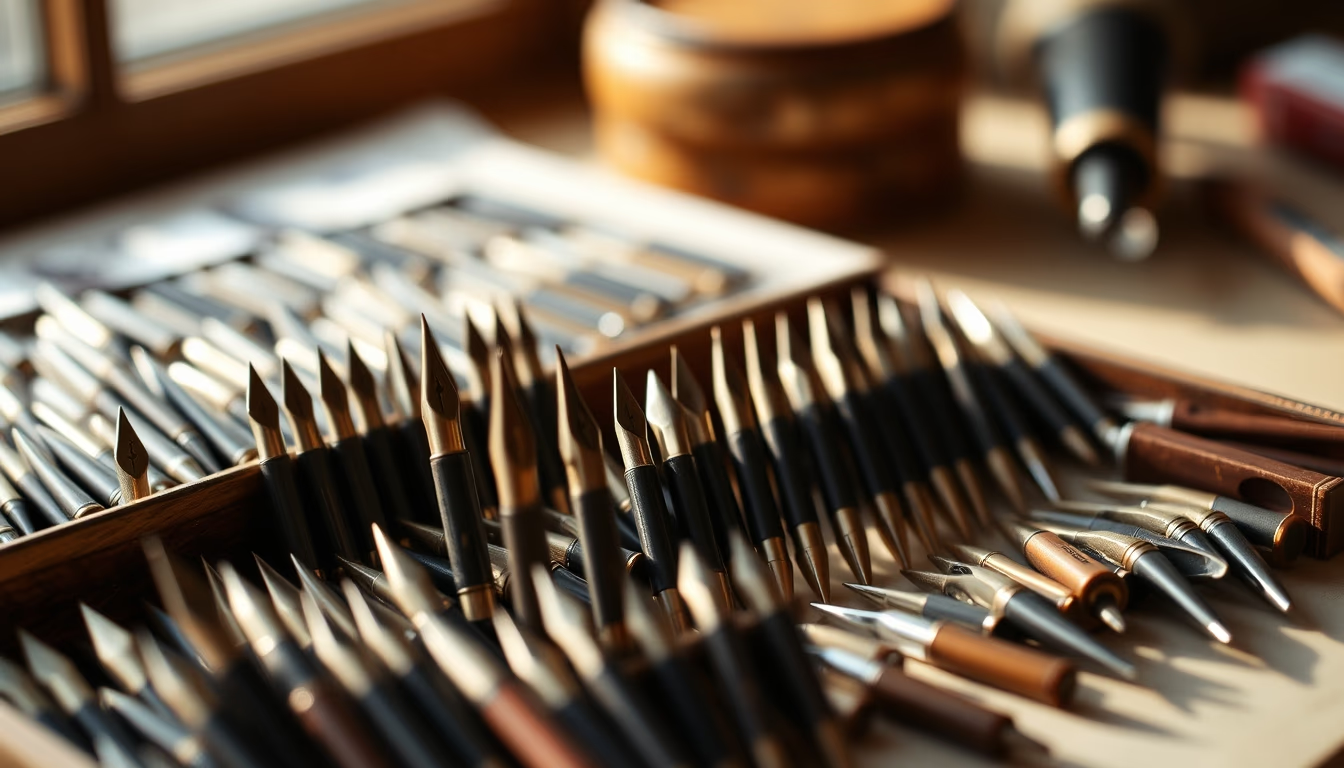
Historically, Chinese calligraphy has evolved through five main styles: seal, official, cursive, running, and regular. Each style demands specific stroke techniques. For example, the cursive style (caoshu) allows more fluid and abstract strokes, while regular script (kaishu) seeks sharp and balanced strokes. The primary tool, a brush made of animal hair, can create everything from ultra-thin lines to broad, expressive blotches.
Beyond writing, brush strokes are the foundation of Chinese painting, especially in the shuimo (ink wash) genre. Artists like Wang Xizhi and Zhang Xu are celebrated for their energetic, spontaneous strokes. Today, calligraphy remains alive in ceremonies, decoration, and even contemporary art, practiced worldwide as a form of meditation and cultural expression.
Frequently Asked Questions
What are the basic strokes of Chinese calligraphy?
The eight basic strokes are known as the Yongzi bafa (eight principles of the character 'eternity'). They include dot, horizontal, vertical, hook, rising, falling, left-falling, and right-falling strokes.
Why is the brush important in Chinese calligraphy?
The animal-hair brush is essential: its flexibility allows variations in thickness and intensity. The sharp tip and ink-filled belly create expressive strokes impossible with ordinary pens.
How can I start practicing Chinese calligraphy strokes?
Begin with the eight basic strokes using a brush, ink stick, and rice paper. Practice pressure and speed control. Study the kaishu (regular) style before moving to more fluid styles.
Direct URL
https://pub-c7d6a6ea828543ac903a74a341ccb2e1.r2.dev/imagens/chinese-calligraphy-brush-stroke-documentary-nature-style-fresh12.avifHow to credit
Include a visible link back to UtilizAí. Copy one of the snippets below:
<a href="https://xn--utiliza-eza.com/en/midia/imagens/chinese-calligraphy-brush-stroke-documentary-nature-style-fresh12">Chinese calligraphy brush stroke</a> by <a href="https://xn--utiliza-eza.com">UtilizAí</a>, licensed under <a href="https://creativecommons.org/licenses/by/4.0/">CC BY 4.0</a>.
[Chinese calligraphy brush stroke](https://xn--utiliza-eza.com/en/midia/imagens/chinese-calligraphy-brush-stroke-documentary-nature-style-fresh12) by [UtilizAí](https://xn--utiliza-eza.com), CC BY 4.0
License: CC-BY-4.0