Chinese calligraphy brush stroke
1344×768 · AVIF · CC BY 4.0
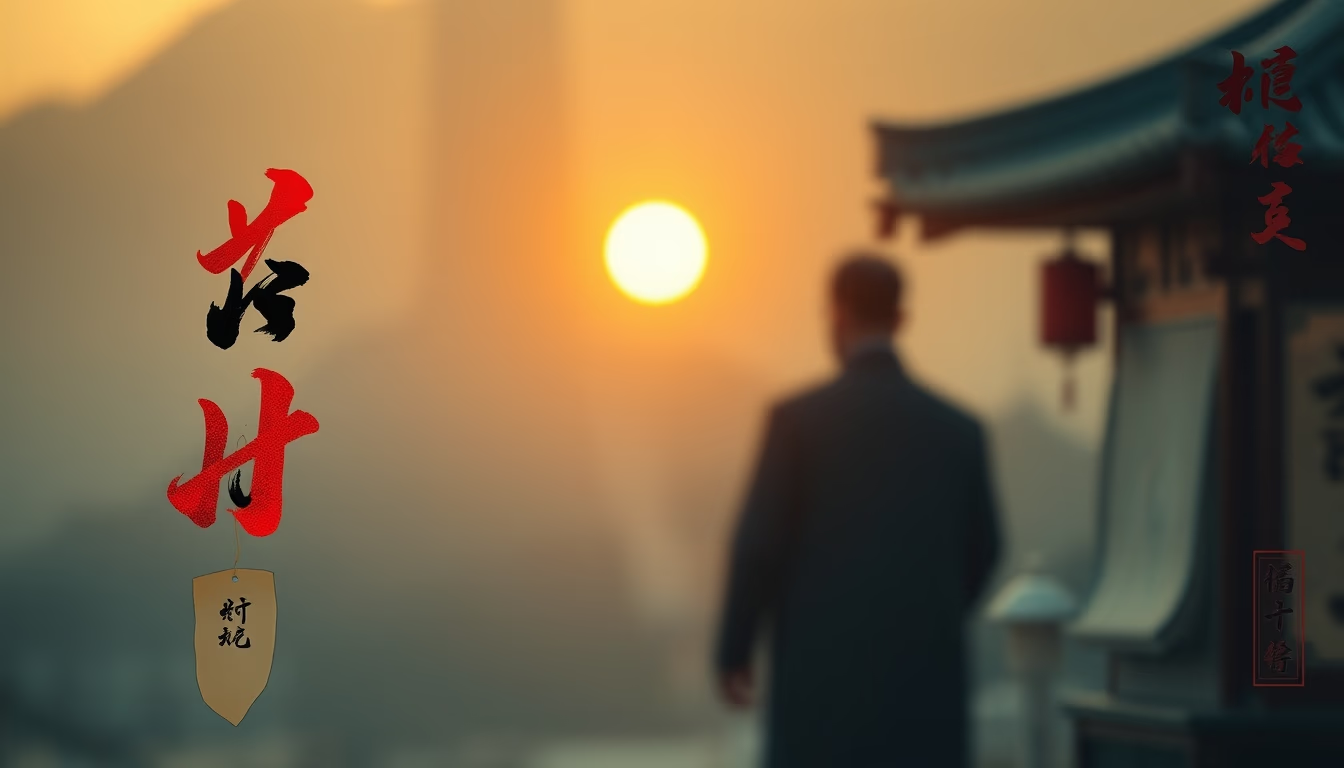
Chinese calligraphy brush strokes reveal centuries of artistic tradition and discipline, combining technique and expression in every stroke.
About this subject
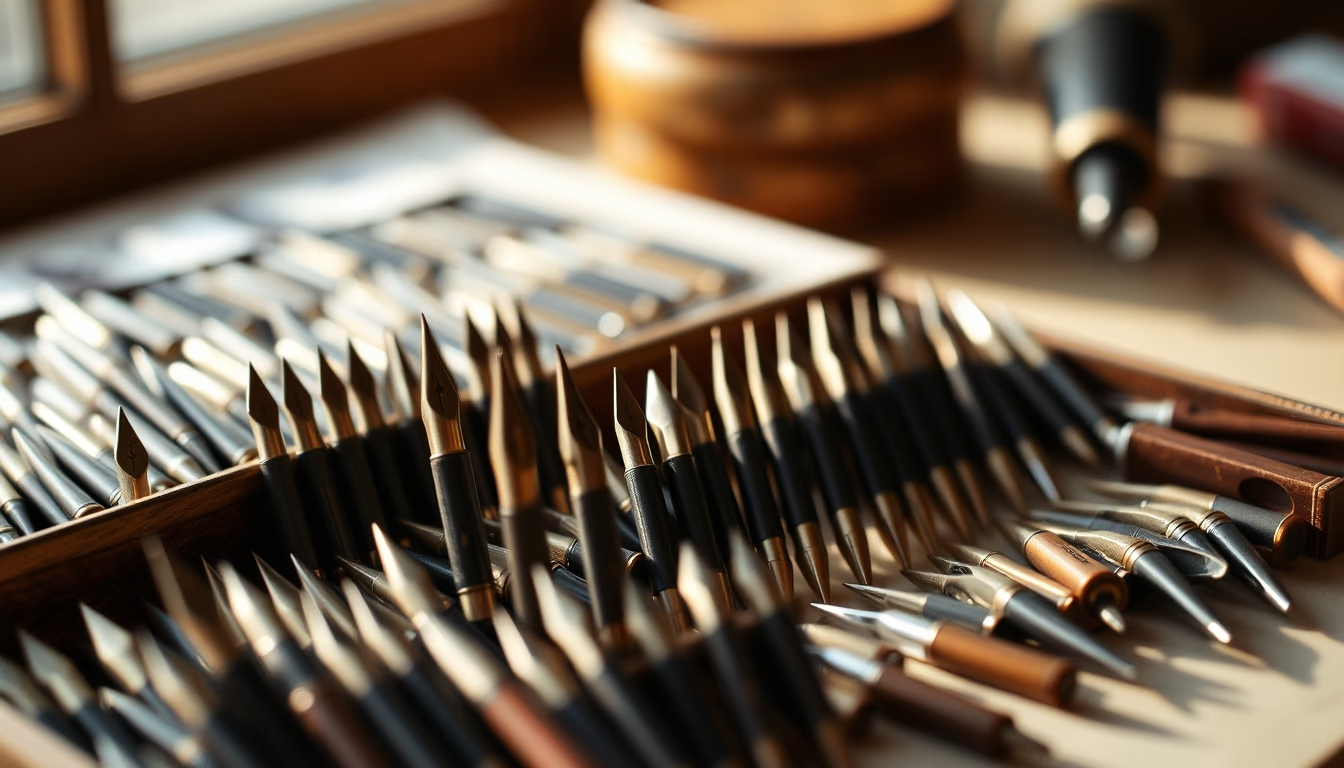
Chinese calligraphy is one of ancient and revered art forms in China, with origins dating back to the Shang dynasty (1600, 1046 BCE). Each brush stroke is not merely a linguistic symbol but a manifestation of the calligrapher's personality and state of mind. Traditional brushes are made from goat, wolf, or rabbit hair mounted on bamboo handles, allowing variations in thickness and pressure that create the illusion of movement and life.
The technique of calligraphy is based on five main styles: seal (zhuanshu), clerical (lishu), cursive (caoshu), regular (kaishu), and running (xingshu). The regular style, for example, is the most standardized and used in printing, while cursive is highly expressive and almost abstract. Masters like Wang Xizhi (303, 361 CE) are celebrated for their ability to master all styles, influencing later generations.
Culturally, calligraphy is considered one of the 'four arts' of the Chinese scholar, along with painting, poetry, and music, essential for an intellectual's formation. The practice requires years of training, not only in the form of characters but also in breathing and posture, integrating body and mind. Ink, made from soot and animal glue, is ground with water on an ink stone, and rice paper (xuanzhi) absorbs ink uniquely, highlighting every imperfection.
Today, Chinese calligraphy is practiced worldwide, whether as a therapeutic hobby or as contemporary art. International exhibitions and competitions, such as the Chinese Calligraphy Biennale, promote dialogue between tradition and modernity. In 2009, Chinese calligraphy was inscribed by UNESCO on the Representative List of the Intangible Cultural Heritage of Humanity, recognizing its universal value.
Frequently Asked Questions
What is the difference between Chinese calligraphy styles?
The main styles are: seal (ancient and angular), clerical (more structured), regular (standard and legible), running (semi-cursive), and cursive (fast and abstract). Each reflects different historical periods and levels of expressiveness.
What materials are used in Chinese calligraphy?
The Four Treasures of the Study are: an animal-hair brush, an ink stick (soot and glue), an ink stone for grinding, and rice paper (xuanzhi). These are essential for traditional practice.
Why is Chinese calligraphy considered an art form?
Because each stroke expresses emotion, technique, and personality, going beyond written communication. It requires years of practice and is valued as a form of meditation and spiritual cultivation.
Direct URL
https://pub-c7d6a6ea828543ac903a74a341ccb2e1.r2.dev/imagens/chinese-calligraphy-brush-stroke-cinematic-wide-shot-fresh4.avifHow to credit
Include a visible link back to UtilizAí. Copy one of the snippets below:
<a href="https://xn--utiliza-eza.com/en/midia/imagens/chinese-calligraphy-brush-stroke-cinematic-wide-shot-fresh4">Chinese calligraphy brush stroke</a> by <a href="https://xn--utiliza-eza.com">UtilizAí</a>, licensed under <a href="https://creativecommons.org/licenses/by/4.0/">CC BY 4.0</a>.
[Chinese calligraphy brush stroke](https://xn--utiliza-eza.com/en/midia/imagens/chinese-calligraphy-brush-stroke-cinematic-wide-shot-fresh4) by [UtilizAí](https://xn--utiliza-eza.com), CC BY 4.0
License: CC-BY-4.0