Chess board mid game
1344×768 · AVIF · CC BY 4.0
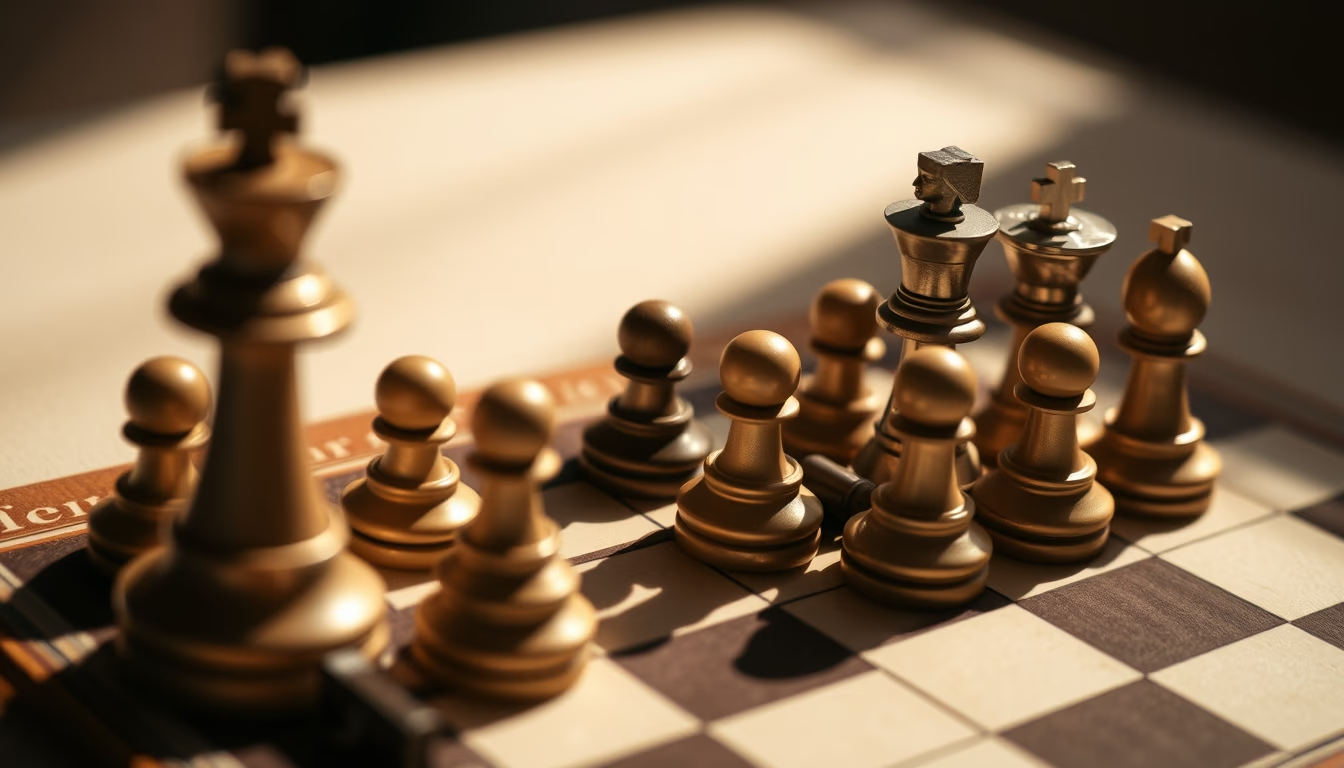
In chess, the midgame is the most complex phase, where tactics and strategy decide the winner.
About this subject
The midgame in chess begins after piece development and the completion of the opening. It is the phase richest in tactical and strategic possibilities, where players seek to improve piece placement, control key squares, and create threats against the opponent's king. Unlike the opening, which follows more standardized principles, the midgame demands deep calculation and creativity. Common themes include attacks on castled kings, piece sacrifices, pawn blockades, and exploitation of weaknesses in pawn structure.
A central feature of the midgame is the fight for the center of the board. Controlling central squares allows superior mobility and attacking opportunities. Grandmasters often sacrifice material for lasting positional advantage, as in Bobby Fischer's famous 'Midgame Pawn Sacrifice' against Donald Byrne in 1956. In Brazil, players like Henrique Mecking (Mequinho) excelled in this phase, winning international tournaments with precise calculations.
Positional evaluation in the midgame considers factors such as piece activity, king safety, pawn structure, and control of open lines. Positions can be classified as tactical (with forced combinations) or strategic (with slow maneuvers). Famous midgame finishes, like Karpov's 'Immortal' against Tsvetkov in 1975, show how piece coordination can suffocate the opponent without direct attacks.
Interestingly, the midgame consumes the most time on the clock, and many professional chess players study grandmaster games to improve their intuition. Databases like Chessbase allow analysis of millions of midgame positions, aiding preparation.
Frequently Asked Questions
What characterizes the midgame in chess?
The midgame is the phase after the opening, where pieces are developed and players seek tactical or strategic advantage. Common themes include king attacks, center control, and sacrifices.
How to improve in the midgame?
Study grandmaster games, solve tactical puzzles, and practice positional evaluation. Focus on piece activity, king safety, and pawn structure.
What is the difference between tactical and strategic midgame?
Tactical midgame involves forced combinations with attacking and defensive moves. Strategic midgame focuses on slow maneuvers to improve position without immediate threats.
Direct URL
https://pub-c7d6a6ea828543ac903a74a341ccb2e1.r2.dev/imagens/chess-board-mid-game-magazine-editorial-p2.avifHow to credit
Include a visible link back to UtilizAí. Copy one of the snippets below:
<a href="https://xn--utiliza-eza.com/en/midia/imagens/chess-board-mid-game-magazine-editorial-p2">Chess board mid game</a> by <a href="https://xn--utiliza-eza.com">UtilizAí</a>, licensed under <a href="https://creativecommons.org/licenses/by/4.0/">CC BY 4.0</a>.
[Chess board mid game](https://xn--utiliza-eza.com/en/midia/imagens/chess-board-mid-game-magazine-editorial-p2) by [UtilizAí](https://xn--utiliza-eza.com), CC BY 4.0
License: CC-BY-4.0