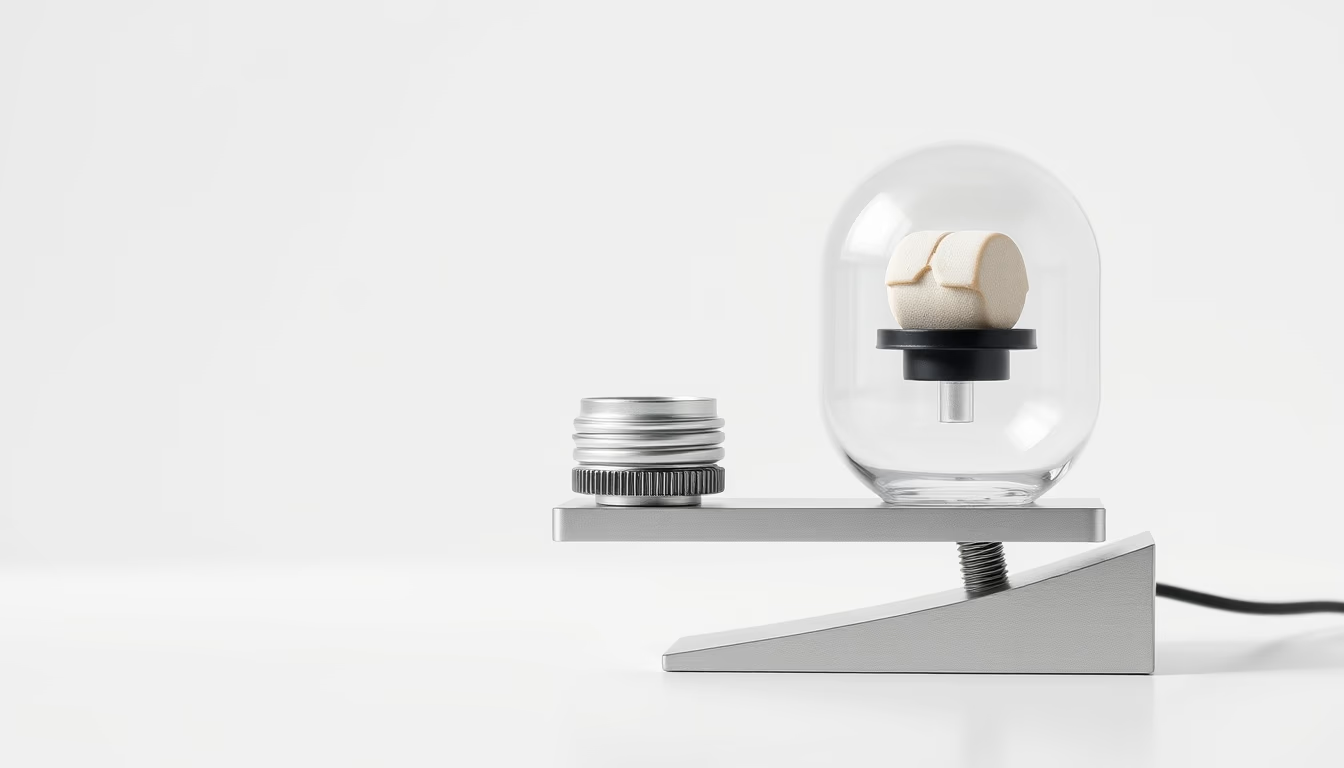
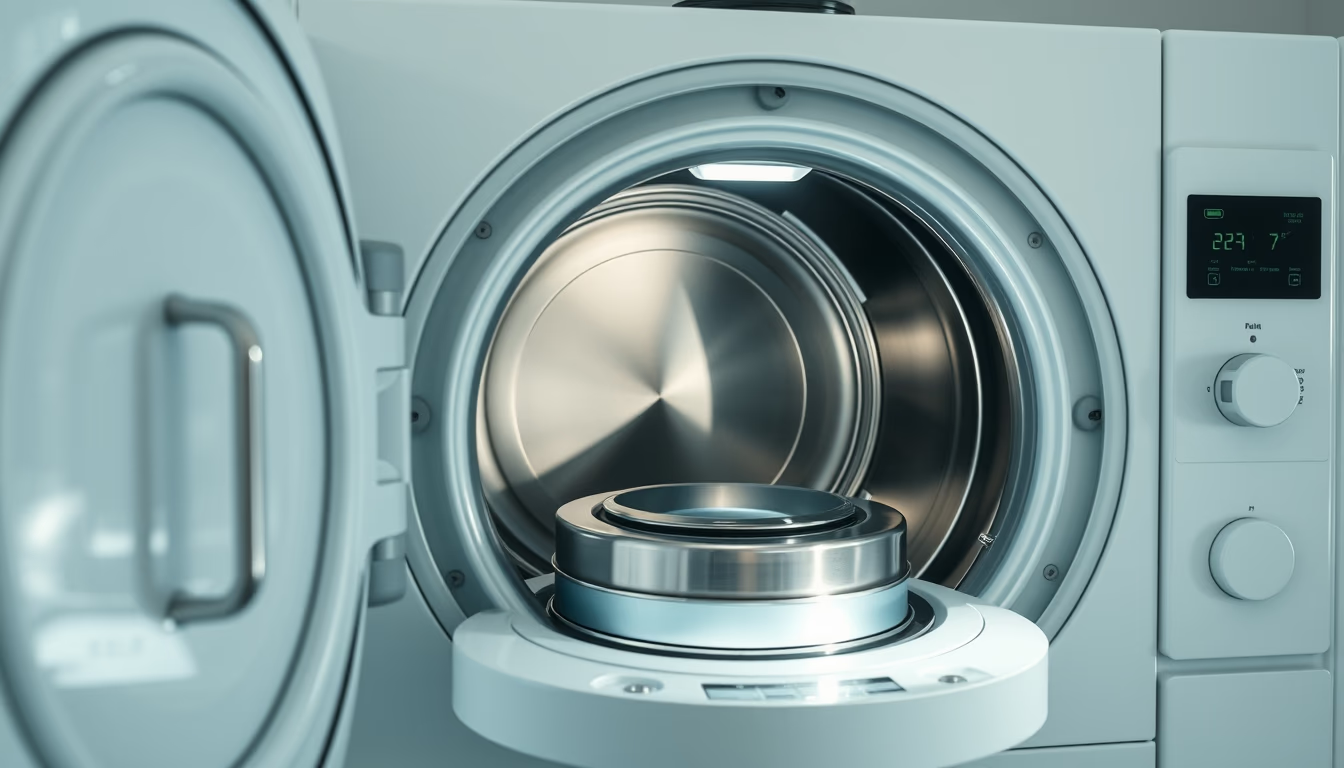
Centrifuge tubes spinning
1344×768 · AVIF · CC BY 4.0

Laboratory centrifuges separate mixture components by density using centrifugal force, essential in molecular biology and chemistry.
About this subject
Laboratory centrifuges apply centrifugal force to separate particles of different densities suspended in a liquid. This accelerated sedimentation process is fundamental for isolating cells, proteins, nucleic acids, and other biological components. Centrifuge tubes, typically made of polypropylene or glass, are placed in rotors that spin at high speeds, reaching tens of thousands of revolutions per minute (rpm).
The modern centrifuge was pioneered by Swedish engineer Theodor Svedberg, who developed the ultracentrifuge in the 1920s, earning him the Nobel Prize in Chemistry in 1926. Since then, technology has evolved to include refrigerated models, microcentrifuges, and ultracentrifuges capable of generating forces exceeding 600,000 g. In Brazil, centrifuges are widely used in hospitals, universities, and pharmaceutical industries, following ABNT technical standards for safety and calibration.
Rotor and tube selection depend on the application. Conical tubes are common for pelleting cells, while thin-walled tubes are used in density gradient separations. Differential centrifugation and density gradient centrifugation are classic techniques; the latter allows separation of particles with very close densities. In procedures such as DNA extraction, centrifugation is a critical step to remove debris and purify genetic material.
Centrifugal force can be calculated as RCF = 1.118 × radius (cm) × (rpm/1000)². Proper maintenance, including tube balancing and rotor lubrication, is vital to avoid vibration and equipment damage. Modern centrifuges feature braking systems and imbalance sensors that enhance operator safety.
Frequently Asked Questions
What is the difference between a centrifuge and an ultracentrifuge?
An ultracentrifuge operates at much higher speeds, above 60,000 rpm, generating centrifugal forces over 600,000 g, while standard centrifuges reach up to 15,000 rpm. This allows separation of subcellular particles such as ribosomes and viruses.
How do you properly balance tubes in a centrifuge?
Tubes must be placed symmetrically, with equal masses in opposite pairs. For tubes with different volumes, add water or balancing solution until weights match. Imbalance can cause excessive vibration and damage the rotor.
What safety precautions are essential when using a centrifuge?
Always ensure the rotor is securely fastened and the lid is locked. Do not exceed the rotor's maximum speed. Use tubes appropriate for the applied g-force. After use, clean spills and decontaminate if necessary.
Direct URL
https://pub-c7d6a6ea828543ac903a74a341ccb2e1.r2.dev/imagens/centrifuge-tubes-spinning-magazine-editorial-fresh2.avifHow to credit
Include a visible link back to UtilizAí. Copy one of the snippets below:
<a href="https://xn--utiliza-eza.com/en/midia/imagens/centrifuge-tubes-spinning-magazine-editorial-fresh2">Centrifuge tubes spinning</a> by <a href="https://xn--utiliza-eza.com">UtilizAí</a>, licensed under <a href="https://creativecommons.org/licenses/by/4.0/">CC BY 4.0</a>.
[Centrifuge tubes spinning](https://xn--utiliza-eza.com/en/midia/imagens/centrifuge-tubes-spinning-magazine-editorial-fresh2) by [UtilizAí](https://xn--utiliza-eza.com), CC BY 4.0
License: CC-BY-4.0