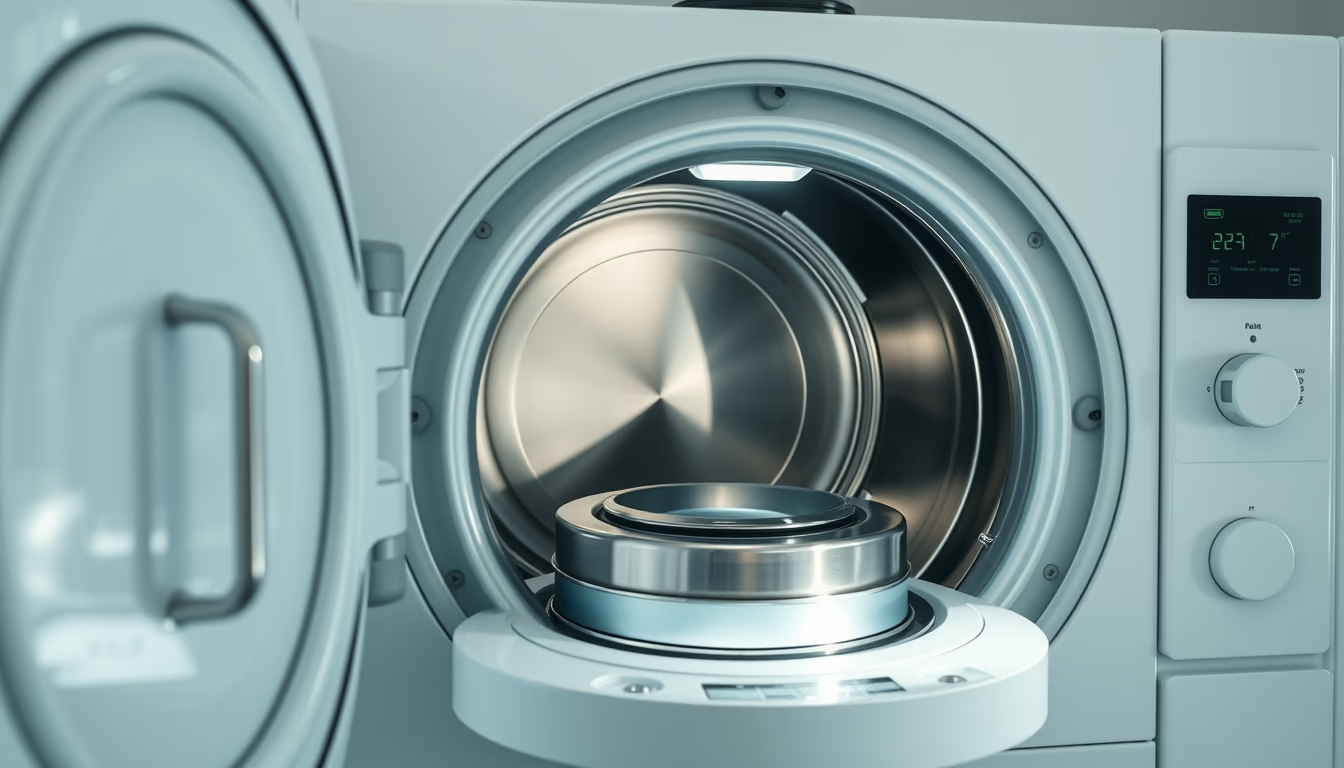
Centrifuge tubes spinning
1344×768 · AVIF · CC BY 4.0

Spinning centrifuge tubes are essential in laboratories to separate sample components by density using centrifugal force.
About this subject
A centrifuge is a fundamental piece of equipment in biology, chemistry, and medical laboratories. Its basic principle is the rapid rotation of sample tubes, generating centrifugal force that separates particles of different densities. Centrifuge tubes are typically made of polypropylene or other durable plastics to withstand high speeds without deformation. Common types include 1.5 mL microtubes and 15 mL or 50 mL conical tubes, widely used for DNA extraction, protein purification, and clinical sample preparation.
Rotation speed is measured in revolutions per minute (RPM) or relative centrifugal force (RCF), expressed in multiples of gravity (g). Protocols require specific RCF values to ensure proper sedimentation. For instance, blood centrifugation to separate plasma or serum usually runs at 1500-2000 g for 10 minutes. Ultracentrifugation can exceed 100,000 g, enabling isolation of cellular organelles or viruses.
Proper tube balancing is critical: pairs of tubes must have equal mass and be placed opposite each other in the rotor to prevent vibrations and equipment damage. Imbalanced tubes can cause accidents or compromise separation. Additionally, secure cap sealing prevents leaks and cross-contamination.
Interestingly, the first centrifuge was invented by Antonin Prandtl in the 19th century for cream separation. Since then, designs have evolved into compact, refrigerated models that maintain low sample temperatures during rotation, preserving sensitive biomolecules. Today, automated centrifuges with rotor changers are common in high-throughput labs.
Frequently Asked Questions
What is the difference between RPM and RCF in centrifuges?
RPM (revolutions per minute) indicates angular speed, while RCF (relative centrifugal force) measures the actual force applied to samples. RCF depends on rotor radius and is calculated as RCF = (1.118 × 10⁻⁵) × R² × RPM², where R is the radius in mm.
Why do centrifuge tubes need to be balanced?
Balancing prevents vibrations that can damage the rotor and motor, and ensures uniform centrifugal force. Unbalanced tubes can cause accidents such as rotor failure or tube ejection.
What precautions should be taken when using centrifuges?
Always balance tubes with equal masses, use proper caps, and check rotors for cracks or dirt. Do not exceed the rotor's maximum speed, and shut down immediately if unusual noises occur.
Direct URL
https://pub-c7d6a6ea828543ac903a74a341ccb2e1.r2.dev/imagens/centrifuge-tubes-spinning-lo-fi-disposable-camera-fresh8.avifHow to credit
Include a visible link back to UtilizAí. Copy one of the snippets below:
<a href="https://xn--utiliza-eza.com/en/midia/imagens/centrifuge-tubes-spinning-lo-fi-disposable-camera-fresh8">Centrifuge tubes spinning</a> by <a href="https://xn--utiliza-eza.com">UtilizAí</a>, licensed under <a href="https://creativecommons.org/licenses/by/4.0/">CC BY 4.0</a>.
[Centrifuge tubes spinning](https://xn--utiliza-eza.com/en/midia/imagens/centrifuge-tubes-spinning-lo-fi-disposable-camera-fresh8) by [UtilizAí](https://xn--utiliza-eza.com), CC BY 4.0
License: CC-BY-4.0