Centrifuge tubes spinning
1344×768 · AVIF · CC BY 4.0
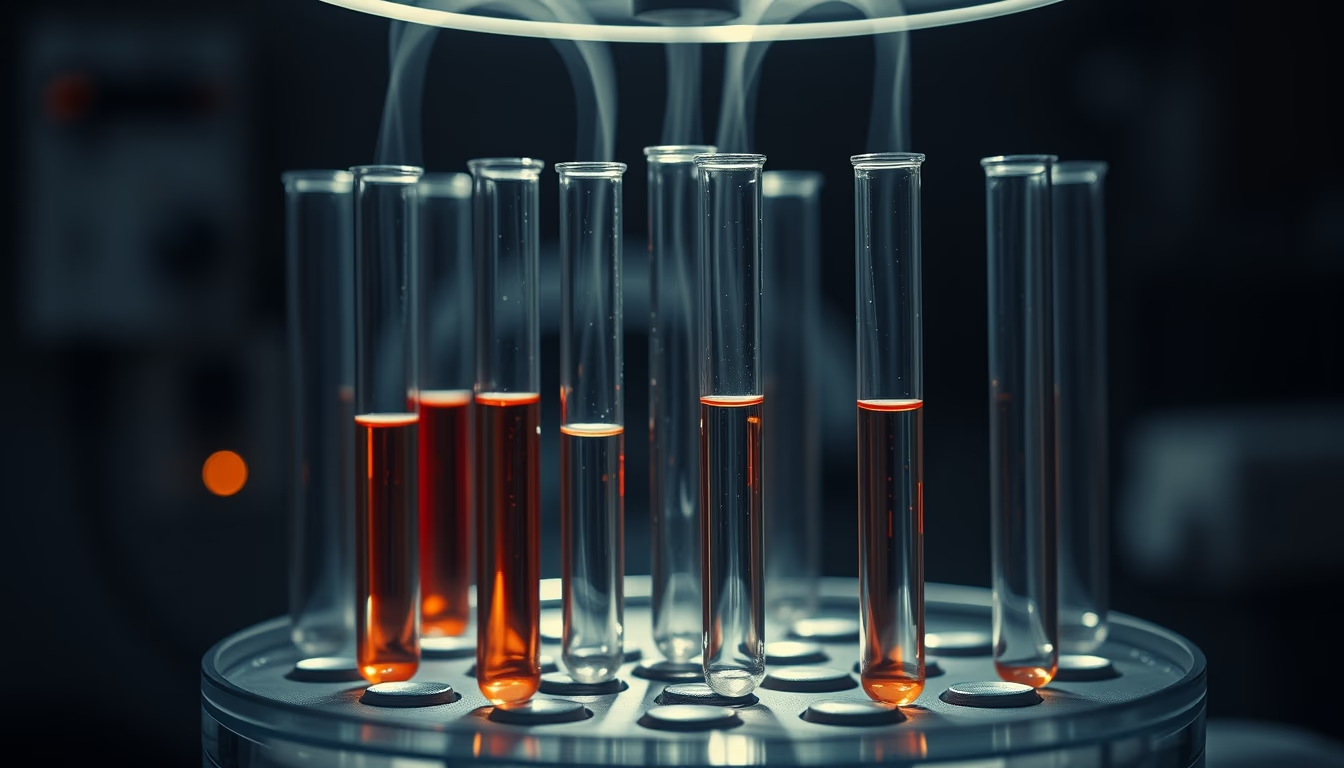
Laboratory centrifuges spin test tubes at high speeds to separate components of liquid mixtures by density.
About this subject
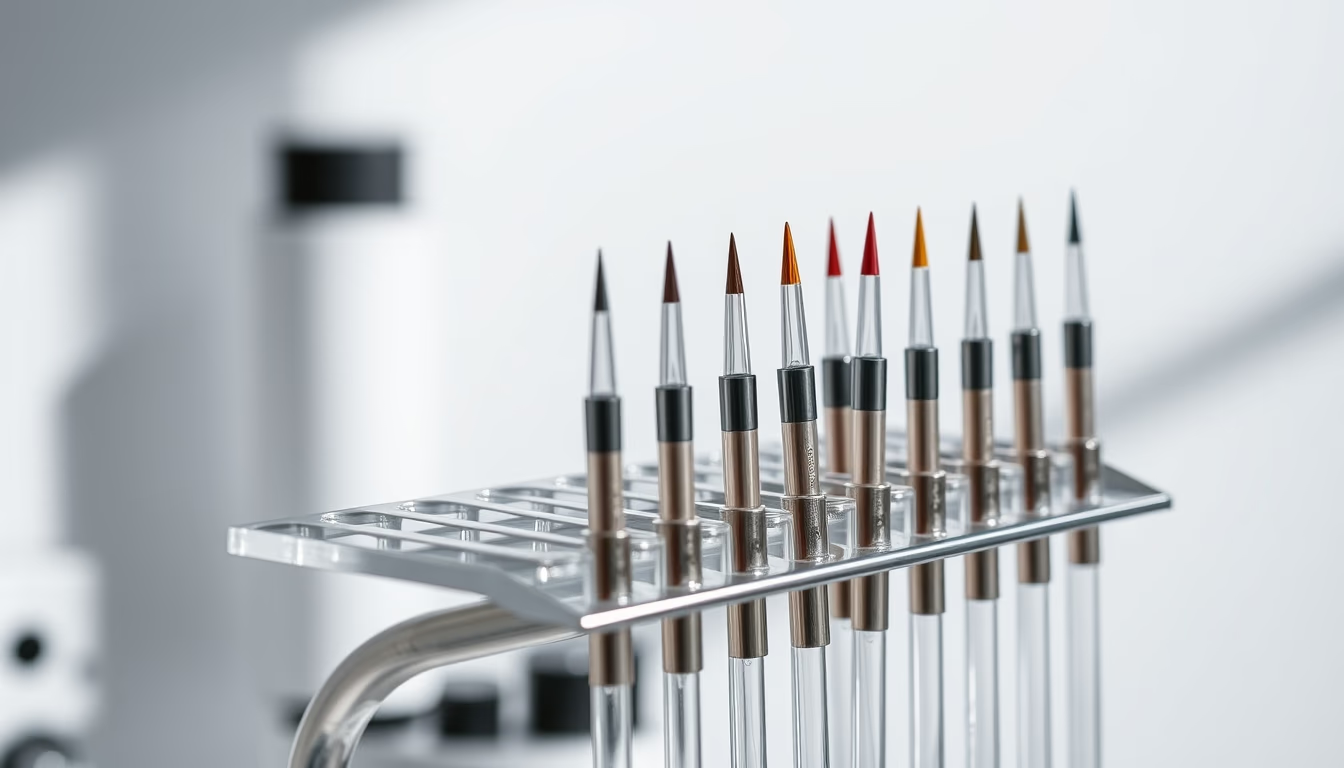
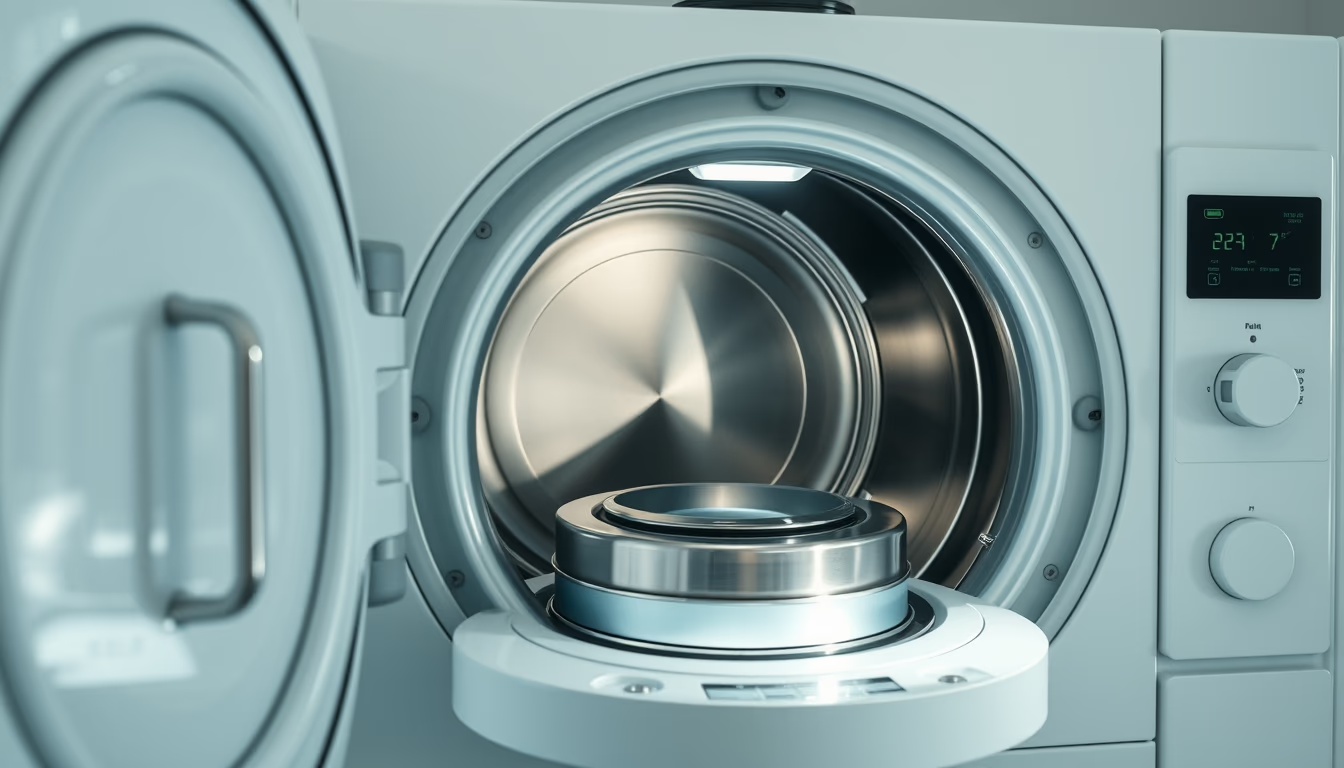
Laboratory centrifuges are essential equipment in molecular biology, biochemistry, and clinical medicine. They use centrifugal force to accelerate the sedimentation of particles or cells in suspension. Test tubes, typically made of polypropylene or glass, are placed in rotors that spin at speeds ranging from hundreds to tens of thousands of revolutions per minute (RPM). Different rotor types (fixed-angle, swinging-bucket, vertical) are chosen based on the application, such as plasma preparation, DNA extraction, or protein purification.
Biological samples like blood, urine, or tissue homogenates are centrifuged to separate the supernatant from the pellet. Differential centrifugation, for example, allows sequential isolation of cellular organelles like mitochondria and nuclei at different speeds. Modern equipment includes refrigeration systems to prevent degradation of heat-sensitive biomolecules, as well as imbalance sensors and safety lids.
Historically, the first laboratory centrifuge was developed by Antonin Prandtl in the late 19th century, but the modern design was improved by Svedberg and Tiselius in the 1920s. The ultracentrifuge, capable of generating forces up to 1,000,000 g, revolutionized the study of macromolecules such as proteins and nucleic acids. Today, centrifugation is a routine technique that enables everything from rapid blood cell separation to the production of viral vaccines.
Tube selection is critical: conical 15 mL or 50 mL tubes are common for clinical samples, while 1.5 mL or 2 mL microtubes are used in molecular biology. PCR tubes and ultracentrifuge tubes withstand extreme pressures. Proper labeling and balancing of the centrifuge are fundamental steps to avoid accidents and ensure sample integrity.
Frequently Asked Questions
What is the purpose of centrifuging test tubes in a lab?
Centrifugation separates components of a liquid mixture based on density, such as cells from blood plasma, or pellets particles like DNA or proteins for further analysis.
What are common types of centrifuge tubes?
Common types include conical 15 mL and 50 mL tubes, 1.5 mL and 2 mL microtubes, PCR tubes, and special ultracentrifuge tubes, each suited for different volumes and forces.
What precautions are necessary when using a centrifuge?
Always balance tubes symmetrically in the rotor, use safety lids, do not exceed the maximum speed, and ensure samples are tightly sealed to prevent leaks and aerosols.
Direct URL
https://pub-c7d6a6ea828543ac903a74a341ccb2e1.r2.dev/imagens/centrifuge-tubes-spinning-fine-art-photography-fresh1.avifHow to credit
Include a visible link back to UtilizAí. Copy one of the snippets below:
<a href="https://xn--utiliza-eza.com/en/midia/imagens/centrifuge-tubes-spinning-fine-art-photography-fresh1">Centrifuge tubes spinning</a> by <a href="https://xn--utiliza-eza.com">UtilizAí</a>, licensed under <a href="https://creativecommons.org/licenses/by/4.0/">CC BY 4.0</a>.
[Centrifuge tubes spinning](https://xn--utiliza-eza.com/en/midia/imagens/centrifuge-tubes-spinning-fine-art-photography-fresh1) by [UtilizAí](https://xn--utiliza-eza.com), CC BY 4.0
License: CC-BY-4.0