Catamaran tropical
1344×768 · AVIF · CC BY 4.0
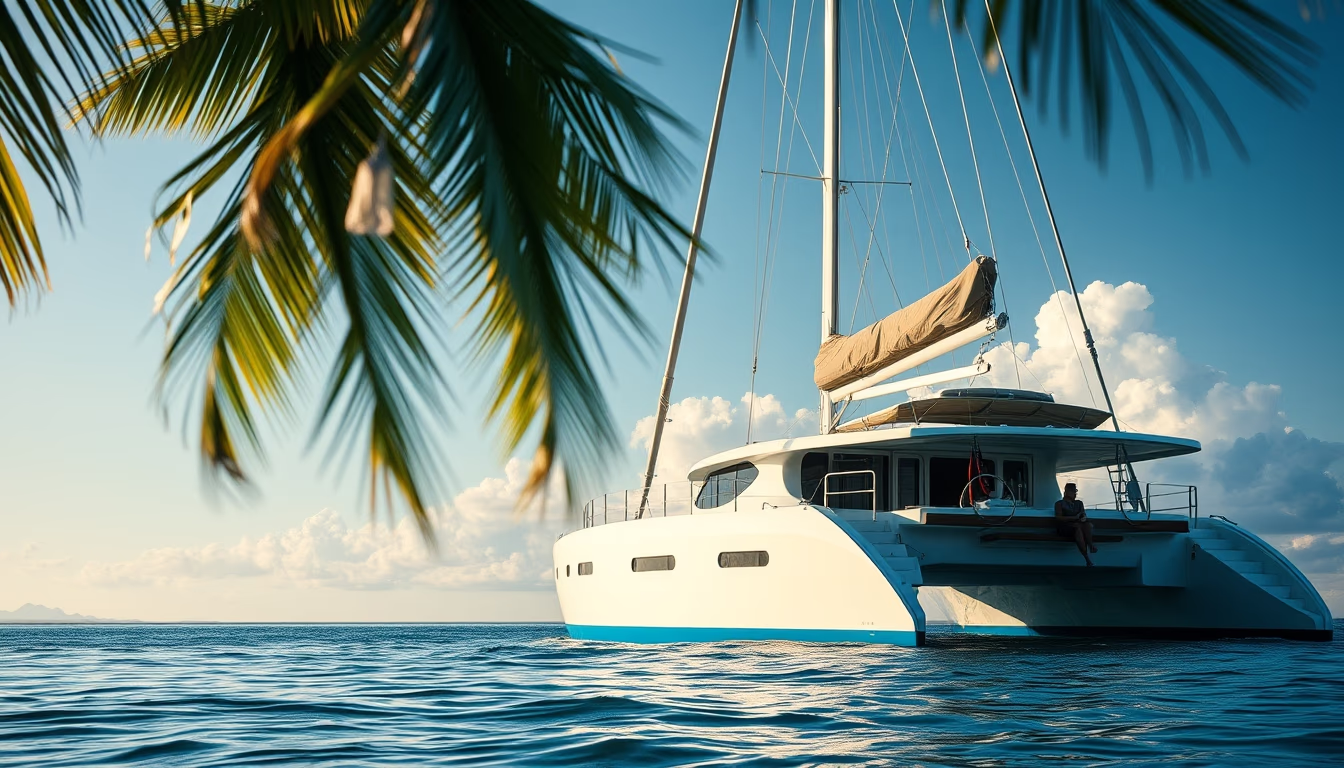
Catamarans are twin-hulled vessels that excel in tropical waters, offering stability and comfort for tourist excursions in destinations like the Caribbean and northeastern Brazil.
About this subject
The catamaran, with its two parallel hulls, is an evolution of Polynesian rafts, adapted to modern nautical tourism. Its width provides greater lateral stability, reducing seasickness in choppy waters. That is why it is the preferred choice for tours over coral reefs and tropical islands, such as Fernando de Noronha and Cancún. Sails or powerful engines allow quick travel between tourist spots, while the spacious deck offers room for sunbathing and meals.
Typical construction uses fiberglass or aluminum, materials resistant to salt corrosion. Modern models can reach up to 30 knots and carry dozens of passengers. In Brazil, the region of Angra dos Reis and Paraty concentrates catamaran fleets for ecological tours. Safety is reinforced by additional flotation systems and watertight compartments.
Historically, catamarans emerged over 4,000 years ago in Southeast Asia. The word derives from Tamil 'kattumaram', meaning 'tied logs'. Europeans rediscovered them for recreation in the 20th century. Today, they are also used in competitions, such as the America's Cup, and as luxury floating homes. The tourist economy of many countries relies on these vessels to take visitors to hard-to-reach locations.
Regarding sustainability, operators seek to reduce emissions with auxiliary sails and electric motors. Some destinations impose speed restrictions to protect marine fauna, such as dolphins. Periodic maintenance includes hull cleaning to prevent biofouling, which increases fuel consumption. Thus, the catamaran remains a symbol of leisure and efficiency in tropical seas.
Frequently Asked Questions
What is the difference between a catamaran and a monohull?
A catamaran has two parallel hulls, providing greater stability and deck space. A monohull has a single hull and is less stable but more maneuverable in certain conditions.
Are catamarans safe for open-ocean sailing?
Yes, they are considered very safe due to their wide beam, which reduces capsizing risk. Ocean models are designed with watertight compartments and additional flotation systems.
Where can I take a catamaran tour in Brazil?
Popular destinations include Angra dos Reis, Paraty, Fernando de Noronha, Salvador, and Florianópolis. Companies offer packages that include snorkeling stops and lunch on board.
Direct URL
https://pub-c7d6a6ea828543ac903a74a341ccb2e1.r2.dev/imagens/catamaran-tropical-magazine-editorial-p2.avifHow to credit
Include a visible link back to UtilizAí. Copy one of the snippets below:
<a href="https://xn--utiliza-eza.com/en/midia/imagens/catamaran-tropical-magazine-editorial-p2">Catamaran tropical</a> by <a href="https://xn--utiliza-eza.com">UtilizAí</a>, licensed under <a href="https://creativecommons.org/licenses/by/4.0/">CC BY 4.0</a>.
[Catamaran tropical](https://xn--utiliza-eza.com/en/midia/imagens/catamaran-tropical-magazine-editorial-p2) by [UtilizAí](https://xn--utiliza-eza.com), CC BY 4.0
License: CC-BY-4.0