Cargo ship docking
1344×768 · AVIF · CC BY 4.0
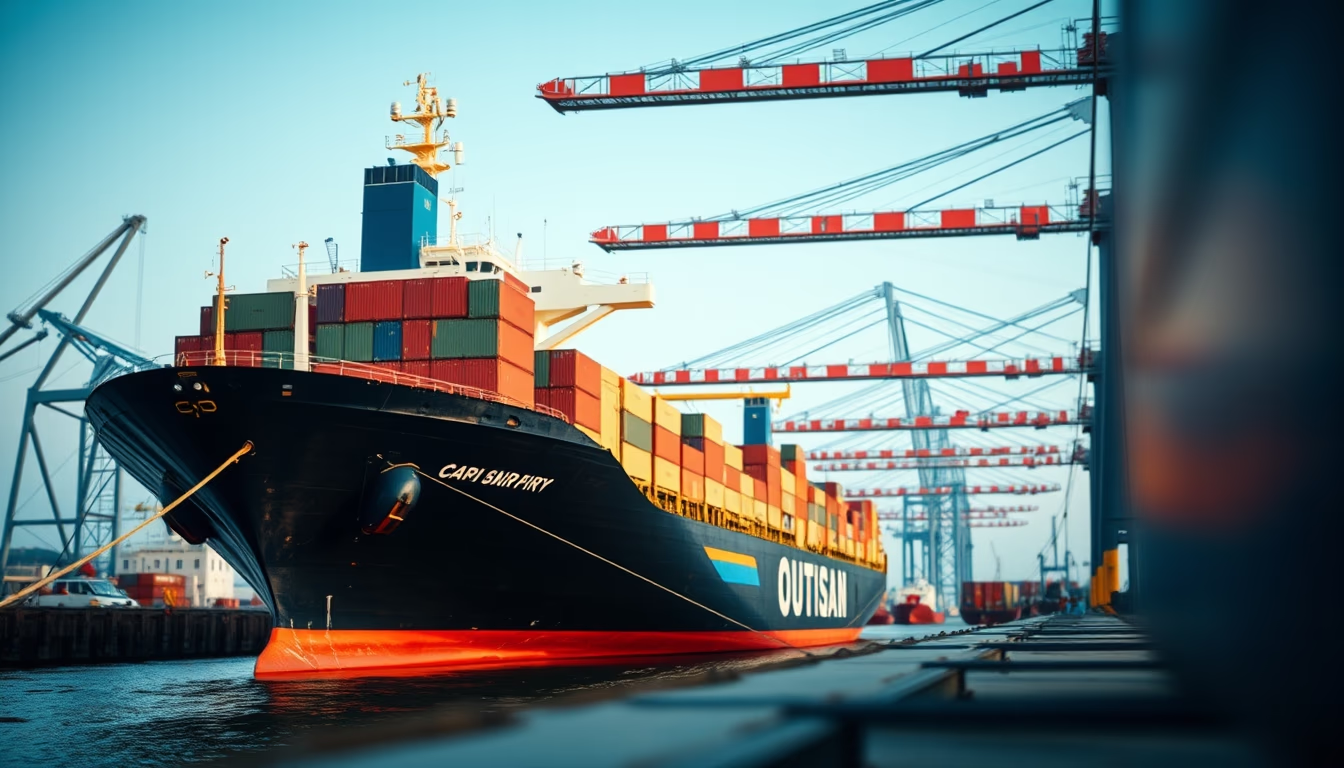
Cargo ships perform docking maneuvers with millimeter precision, using tugboats, mooring lines, and specialized pilots to ensure safety in ports worldwide.
About this subject
Docking a cargo ship is a complex operation blending engineering, coordination, and human expertise. In bustling ports like Santos (Brazil) or Rotterdam (Netherlands), each maneuver involves tugboats for positioning, polypropylene or steel mooring lines for securing to the quay, and fender systems to cushion both vessel and infrastructure. The process can last from 30 minutes to several hours, depending on ship size, weather, and local traffic.
Pilotage is a critical step: a harbor pilot boards the vessel to advise the captain on currents, winds, and channel depths. Large ships such as bulk carriers or container vessels (with capacities over 20,000 TEUs) require tugboats with over 5,000 HP and azimuth propulsion for tight maneuvers. Differential GPS and echo sounders assist in approach, but final decisions rest on human judgment.
Modern technologies like laser-assisted docking systems and thermal cameras are being adopted to reduce risks and save time. Yet the maneuver still depends heavily on human skill, especially in narrow channels or challenging sea states. The economic cost of error is high: a collision can damage the quay and halt operations for weeks, causing millions in losses. Hence, virtual reality simulators are common for training pilots and captains.
Environmental safety is also paramount. During docking, teams monitor for oil or fuel leaks and keep containment booms ready. Protocols like the Safe Dock Procedure, developed by international maritime organizations, unify practices across ports. Every successful docking draws on decades of accumulated knowledge, blending naval tradition with technological innovation.
Frequently Asked Questions
How long does it take to dock a cargo ship?
Time ranges from 30 minutes to several hours, depending on vessel size, weather conditions, port traffic, and maneuver complexity.
What are the main risks during docking?
Risks include collision with the quay, damage to tugboats, broken mooring lines, propulsion failures, and fuel spills. Strong winds and currents increase difficulty.
How is communication between the ship and tugs established?
Communication uses VHF radio on specific channels with standardized commands. Pilots and captains coordinate movements, while tugboats respond to thrust and direction orders.
Direct URL
https://pub-c7d6a6ea828543ac903a74a341ccb2e1.r2.dev/imagens/cargo-ship-docking-macro-closeup-p3.avifHow to credit
Include a visible link back to UtilizAí. Copy one of the snippets below:
<a href="https://xn--utiliza-eza.com/en/midia/imagens/cargo-ship-docking-macro-closeup-p3">Cargo ship docking</a> by <a href="https://xn--utiliza-eza.com">UtilizAí</a>, licensed under <a href="https://creativecommons.org/licenses/by/4.0/">CC BY 4.0</a>.
[Cargo ship docking](https://xn--utiliza-eza.com/en/midia/imagens/cargo-ship-docking-macro-closeup-p3) by [UtilizAí](https://xn--utiliza-eza.com), CC BY 4.0
License: CC-BY-4.0