Cargo ship docking
1344×768 · AVIF · CC BY 4.0
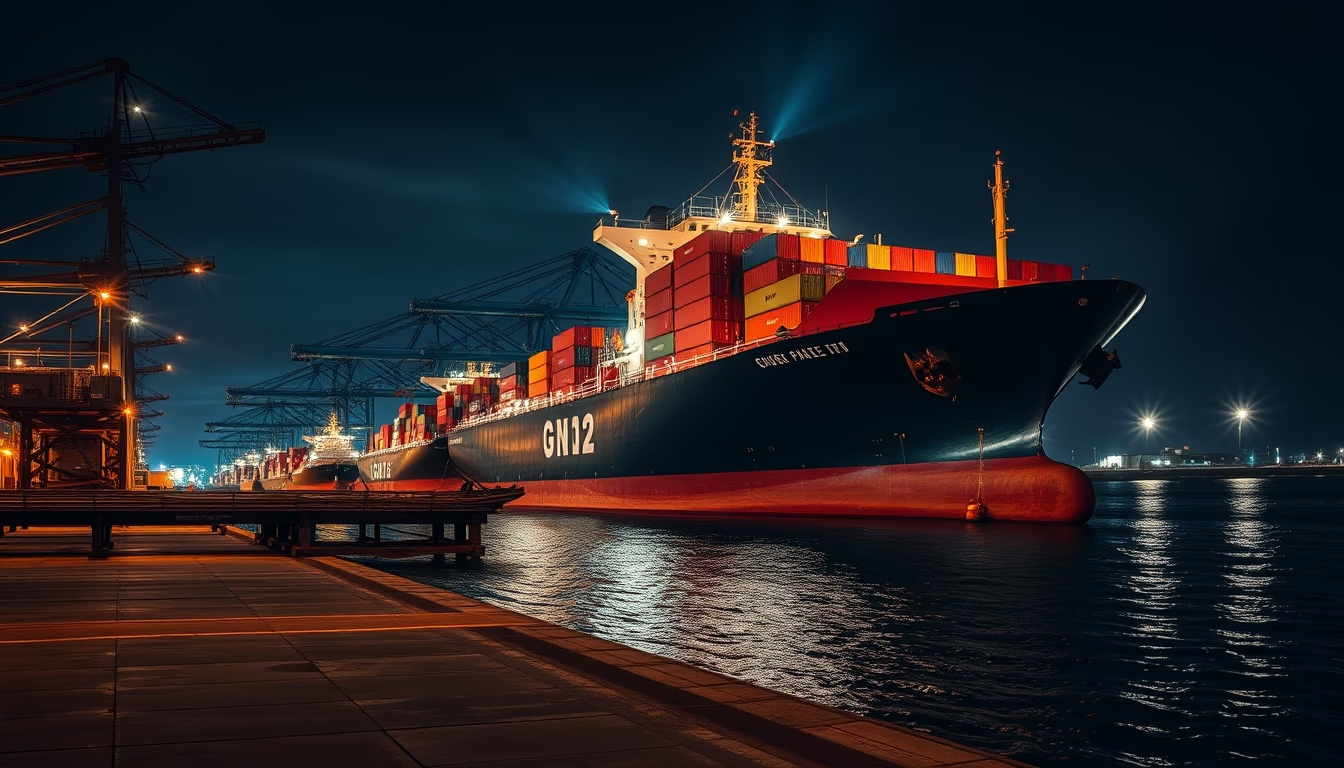
Cargo ship performing docking maneuver at a busy port, essential for global trade and maritime logistics.
About this subject
Docking a cargo ship is a critical process in port logistics, involving precise maneuvers to align the vessel with the quay. General cargo ships, bulk carriers, container ships, and tankers use tugboats and mooring lines to ensure safety. The procedure varies by ship size and weather conditions, often requiring local pilots to assist in restricted waters. Major ports like Santos (Brazil) and Rotterdam (Netherlands) handle millions of tons annually, relying on efficient docking to avoid queues and delays.
The choice of berth considers factors such as channel depth, cargo type, and available equipment. Container ships require terminals with gantry cranes, while bulk carriers need conveyor belts or loaders. The operation is coordinated by the port control center, communicating with the captain and tugboats via radio. In recent years, automated mooring systems and proximity sensors have been implemented to increase accuracy and reduce collision risks.
Interestingly, the average docking time for a cargo ship ranges from 30 minutes to 2 hours, depending on complexity. In busy ports, docking schedules are regulated by tide windows and berth availability. The maneuver requires skill to compensate for wind and currents, often using bow and stern thrusters. Additionally, docking is a high-risk moment for hull and quay damage, demanding constant training of crews.
Global maritime trade continues to grow, with the world fleet exceeding 2 billion deadweight tons. Docking efficiency directly impacts logistics costs and port competitiveness. Innovations such as dynamic positioning systems and augmented reality are being tested to assist pilots during maneuvers, promising to reduce accidents and increase terminal traffic capacity.
Frequently Asked Questions
How long does it take for a cargo ship to dock?
Docking time averages between 30 minutes and 2 hours, depending on ship size, weather conditions, and port complexity.
What are the main types of cargo ships?
Main types include container ships, bulk carriers (for grain and ore), tankers, and general cargo vessels.
Why is docking considered a risky maneuver?
It involves risks of collision with the quay or other vessels, and hull damage due to wind and currents, requiring experienced pilots.
Direct URL
https://pub-c7d6a6ea828543ac903a74a341ccb2e1.r2.dev/imagens/cargo-ship-docking-fine-art-photography-p5.avifHow to credit
Include a visible link back to UtilizAí. Copy one of the snippets below:
<a href="https://xn--utiliza-eza.com/en/midia/imagens/cargo-ship-docking-fine-art-photography-p5">Cargo ship docking</a> by <a href="https://xn--utiliza-eza.com">UtilizAí</a>, licensed under <a href="https://creativecommons.org/licenses/by/4.0/">CC BY 4.0</a>.
[Cargo ship docking](https://xn--utiliza-eza.com/en/midia/imagens/cargo-ship-docking-fine-art-photography-p5) by [UtilizAí](https://xn--utiliza-eza.com), CC BY 4.0
License: CC-BY-4.0