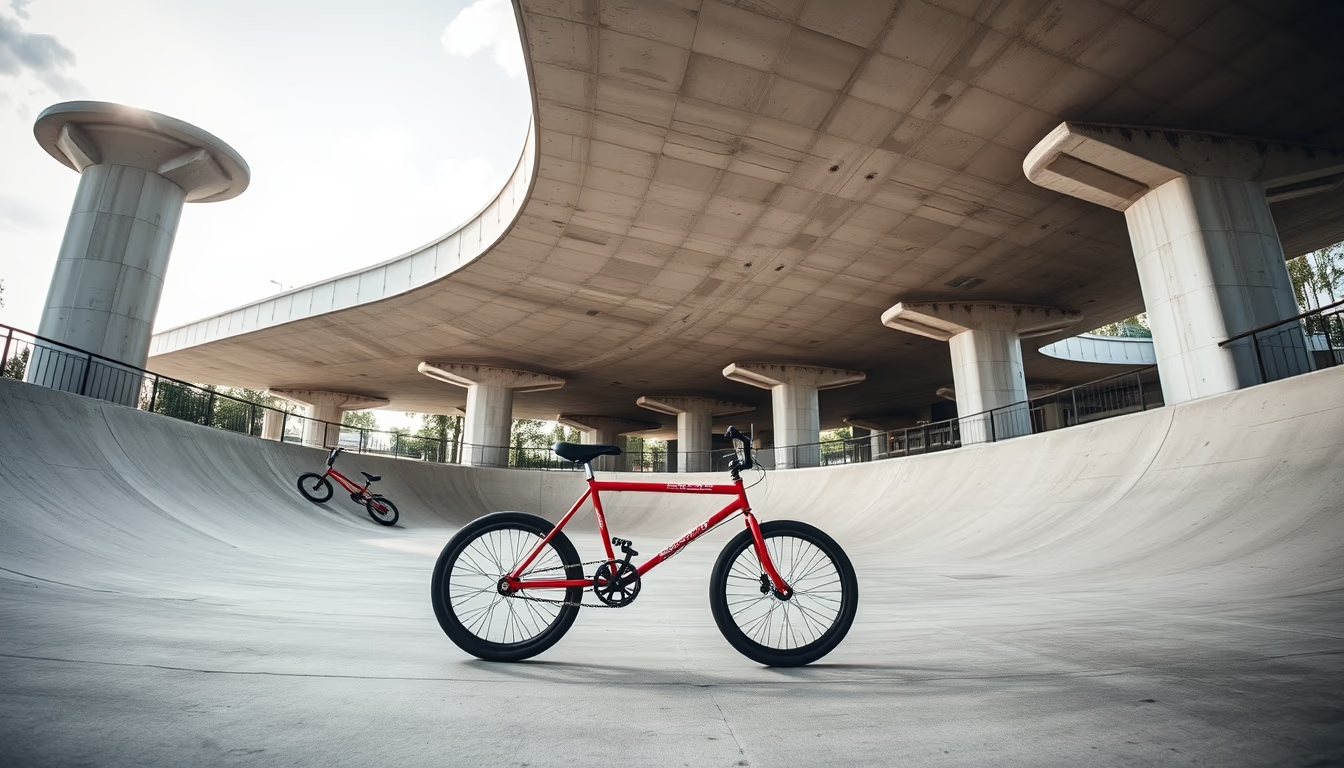
Bmx skatepark concrete
1344×768 · AVIF · CC BY 4.0
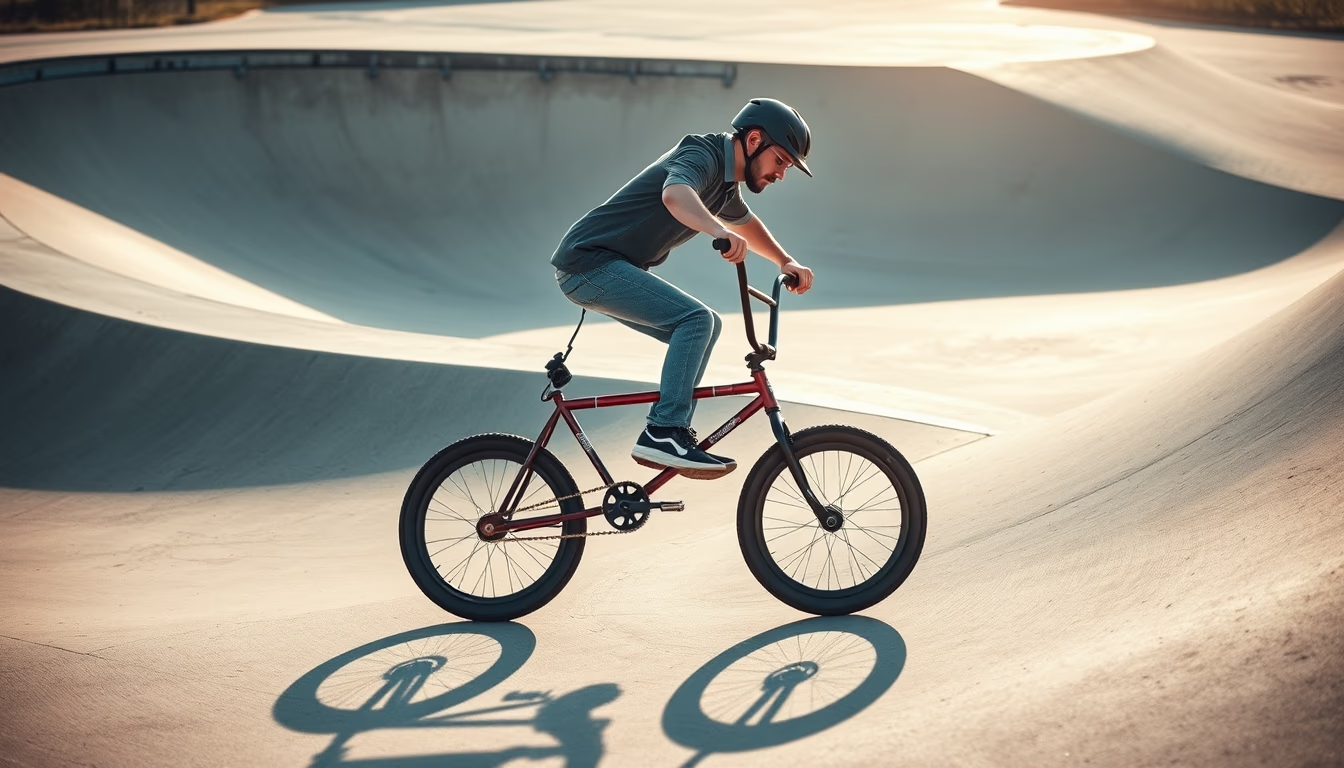
Concrete BMX track, an urban landmark for extreme cyclists.
About this subject
Concrete BMX tracks represent the evolution of spaces dedicated to extreme cycling. Unlike wooden ramps or dirt jumps, concrete offers durability and uniform surfaces that allow for more precise and safer maneuvers. These parks are designed with banked curves, bowls, and obstacles that challenge cyclists of all levels, from beginners to professional athletes.
Brazil is one of the countries with the highest number of concrete BMX tracks, driven by the success of athletes like Renato Rezende and the sport's tradition. Cities such as São Paulo, Rio de Janeiro, and Belo Horizonte feature public parks that have become gathering points for the cycling community. Concrete construction also reduces long-term maintenance costs, making these spaces viable for municipal administration.
Globally, concrete is the preferred material in official UCI (Union Cycliste Internationale) competitions and events like the Olympic Games. Iconic tracks, such as those in London 2012 Olympic Park and Deodoro in Rio 2016, were built with this material. Beyond sports, these spaces function as urban amenities that promote physical activity and social integration.
A technical curiosity: concrete tracks require a specific curing process to prevent cracks and ensure a smooth finish. Specialized engineers use expansion joints and steel reinforcement to withstand repeated impacts. The track design is often collaborative, with experienced cyclists providing input on flow and difficulty, ensuring the final result meets the community's needs.
Frequently Asked Questions
What is the difference between a concrete BMX track and a dirt track?
Concrete tracks are more durable, require less maintenance, and offer a uniform surface for more consistent tricks. Dirt tracks are cheaper to build but suffer from erosion and need frequent repairs.
Which countries have notable concrete BMX tracks?
The United States, Brazil, Australia, and several European countries like the UK and France have prominent concrete tracks. Brazil stands out for its large number of high-quality public parks.
Can a concrete BMX track be used for other sports?
Yes, concrete tracks are often used for skateboarding, rollerblading, and even road cycling skill training. The design with bowls and curves also attracts parkour practitioners.
Direct URL
https://pub-c7d6a6ea828543ac903a74a341ccb2e1.r2.dev/imagens/bmx-skatepark-concrete-magazine-editorial-fresh14.avifHow to credit
Include a visible link back to UtilizAí. Copy one of the snippets below:
<a href="https://xn--utiliza-eza.com/en/midia/imagens/bmx-skatepark-concrete-magazine-editorial-fresh14">Bmx skatepark concrete</a> by <a href="https://xn--utiliza-eza.com">UtilizAí</a>, licensed under <a href="https://creativecommons.org/licenses/by/4.0/">CC BY 4.0</a>.
[Bmx skatepark concrete](https://xn--utiliza-eza.com/en/midia/imagens/bmx-skatepark-concrete-magazine-editorial-fresh14) by [UtilizAí](https://xn--utiliza-eza.com), CC BY 4.0
License: CC-BY-4.0