Blockchain network visualization glowing nodes connected by lines on dark background
1344×768 · AVIF · CC BY 4.0

Abstract visualization of a blockchain network showing interconnected nodes on a dark background, symbolizing the decentralized and secure architecture of distributed ledgers.
About this subject
Blockchain is a distributed ledger technology that stores data in cryptographically chained blocks. Each block contains a hash of the previous block, ensuring integrity and immutability. The network consists of nodes (computers) that validate and record transactions through consensus, without a central authority. This decentralized structure makes blockchain resistant to fraud and censorship, underpinning cryptocurrencies like Bitcoin and Ethereum.
The visualization with glowing nodes and connected lines metaphorically represents the network topology, where each node is a participant maintaining a copy of the ledger. The lines symbolize peer-to-peer connections that propagate information and transactions. The dark background highlights the luminescent elements, evoking transparency and security in a complex digital environment.
Blockchain has applications beyond cryptocurrencies, including smart contracts, supply chains, electronic voting, and digital identity. Countries like Brazil and the United States are exploring its use in public services. The technology also faces challenges such as scalability and energy consumption, but continues to evolve with solutions like proof-of-stake and sharding.
This visual representation is common in educational materials and articles about blockchain, helping to communicate abstract concepts intuitively. The symmetric composition and twilight blue hue suggest an atmosphere of innovation and reliability, aligned with the technology's promise to create fairer and more efficient systems.
Frequently Asked Questions
What is a node in a blockchain network?
A node is any computer that participates in the blockchain network, maintaining a copy of the ledger and validating transactions. There are full nodes (storing the entire history) and light nodes (relying on others).
How does cryptography protect the blockchain?
Each block contains a cryptographic hash of the previous block, forming a chain. Altering a block would require recalculating all subsequent blocks, which is computationally infeasible. Additionally, transactions are digitally signed.
What are the main applications of blockchain beyond cryptocurrencies?
Blockchain is used for smart contracts (Ethereum), supply chain tracking, secure electronic voting, digital identity, property registration, and healthcare systems for secure data sharing.
Direct URL
https://pub-c7d6a6ea828543ac903a74a341ccb2e1.r2.dev/imagens/blockchain-network-visualization-glowing-nodes-connected-by-lines-on-dark-backgr-symmetric-composition-twilight-blue-hour.avifHow to credit
Include a visible link back to UtilizAí. Copy one of the snippets below:
<a href="https://xn--utiliza-eza.com/en/midia/imagens/blockchain-network-visualization-glowing-nodes-connected-by-lines-on-dark-backgr-symmetric-composition-twilight-blue-hour">Blockchain network visualization glowing nodes connected by lines on dark background</a> by <a href="https://xn--utiliza-eza.com">UtilizAí</a>, licensed under <a href="https://creativecommons.org/licenses/by/4.0/">CC BY 4.0</a>.
[Blockchain network visualization glowing nodes connected by lines on dark background](https://xn--utiliza-eza.com/en/midia/imagens/blockchain-network-visualization-glowing-nodes-connected-by-lines-on-dark-backgr-symmetric-composition-twilight-blue-hour) by [UtilizAí](https://xn--utiliza-eza.com), CC BY 4.0
License: CC-BY-4.0
Tags
Related images
 Smart contract code on monitor with solidity syntax highlighted
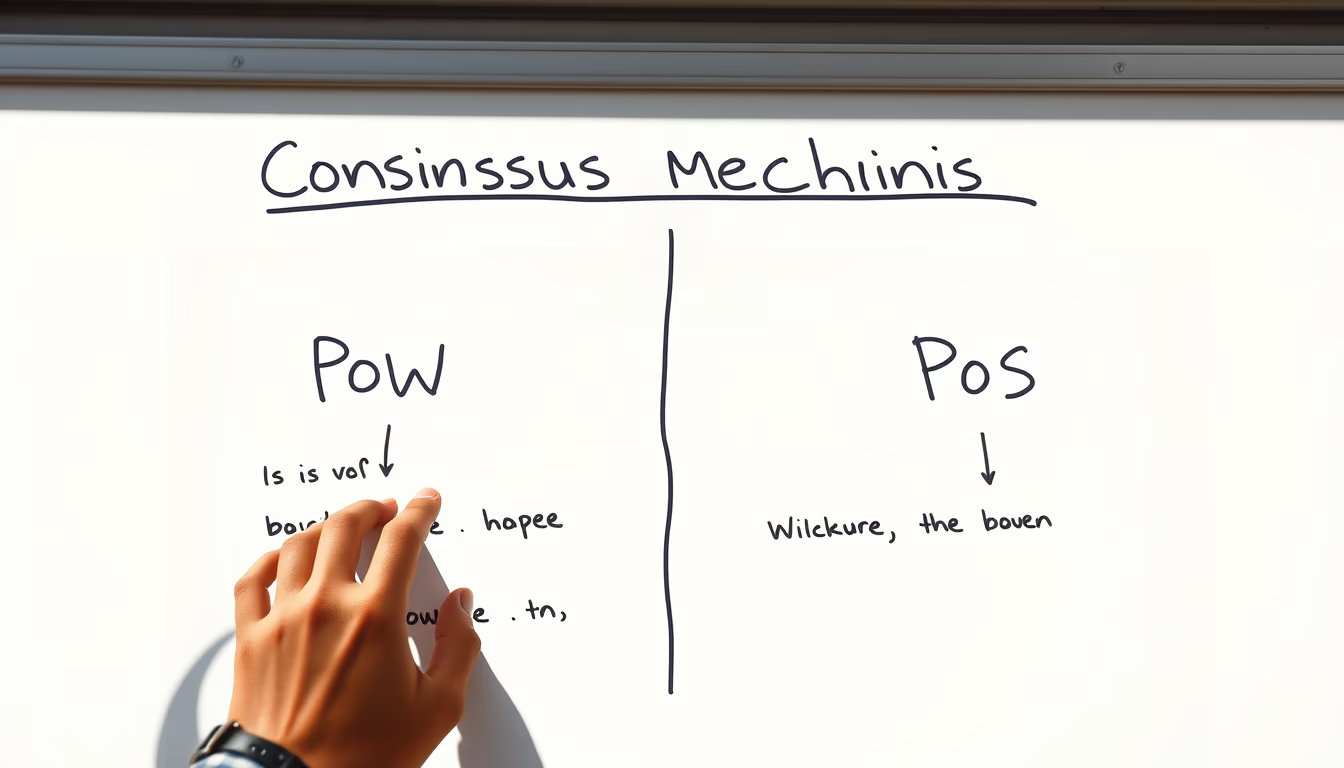 Consensus mechanism diagram on whiteboard showing PoW vs PoS
 Distributed ledger multiple servers in data center
 Hash function visualization cryptographic equations on glass screen
 Hash function visualization cryptographic equations on glass screen
 Hash function visualization cryptographic equations on glass screen