Blockchain network visualization glowing nodes connected by lines on dark background
1344×768 · AVIF · CC BY 4.0

Artistic visualization of a blockchain network, with glowing nodes interconnected by luminous lines against a dark background, representing the decentralized and secure structure of digital records.
About this subject
Blockchain, or chain of blocks, is a distributed ledger technology that emerged in 2008 as the foundation of Bitcoin, the first cryptocurrency. Each block contains a set of verified transactions, and once added to the chain, it becomes immutable thanks to cryptographic hash functions. The network is maintained by nodes, which are computers spread worldwide, each storing a complete copy of the ledger. This decentralization ensures that no single entity controls the data, enhancing security and transparency.
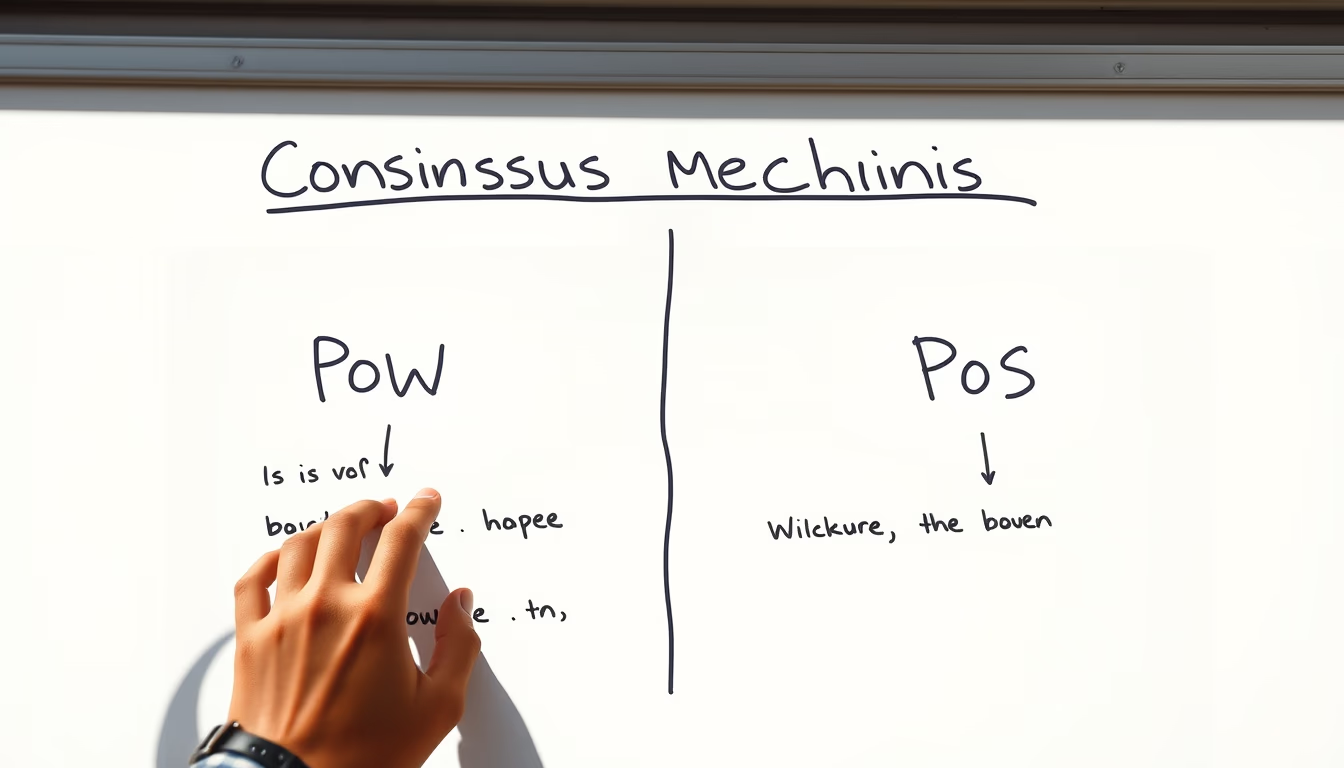
The connections between nodes, visually represented by lines, symbolize the consensus protocol that validates new transactions. Bitcoin uses Proof of Work (PoW), where miners compete to solve complex mathematical problems. Other blockchains, like Ethereum, are transitioning to Proof of Stake (PoS), which consumes less energy. The visualization of a blockchain network with glowing nodes is common in infographics and educational materials to illustrate the interconnection and robustness of the system.
Brazil has adopted blockchain in various sectors, such as electronic voting systems and supply chain tracking. Companies like Petrobras and the Brazilian Central Bank are exploring the technology to increase efficiency and security. The image of glowing nodes on a dark background evokes the idea of a global network operating 24/7, where each node contributes to the system's integrity.
Trivia: The Bitcoin network is estimated to have over 15,000 public nodes distributed across more than 100 countries. This capillarity makes blockchain resilient to attacks and censorship, as taking down a few nodes does not compromise the entire network.
Frequently Asked Questions
What are nodes in a blockchain?
Nodes are computers that maintain a complete copy of the blockchain ledger and validate transactions. They form the backbone of the network, ensuring decentralization and security.
How are transactions validated in a blockchain?
Transactions are grouped into blocks and submitted to a consensus mechanism, such as Proof of Work or Proof of Stake. Nodes verify the transactions, and if valid, the block is added to the chain.
Is blockchain only used for cryptocurrencies?
No, blockchain has applications in various sectors, including smart contracts, supply chain tracking, voting systems, digital identity, and more.
Direct URL
https://pub-c7d6a6ea828543ac903a74a341ccb2e1.r2.dev/imagens/blockchain-network-visualization-glowing-nodes-connected-by-lines-on-dark-backgr-editorial-portrait-studio-professional-lighting.avifHow to credit
Include a visible link back to UtilizAí. Copy one of the snippets below:
<a href="https://xn--utiliza-eza.com/en/midia/imagens/blockchain-network-visualization-glowing-nodes-connected-by-lines-on-dark-backgr-editorial-portrait-studio-professional-lighting">Blockchain network visualization glowing nodes connected by lines on dark background</a> by <a href="https://xn--utiliza-eza.com">UtilizAí</a>, licensed under <a href="https://creativecommons.org/licenses/by/4.0/">CC BY 4.0</a>.
[Blockchain network visualization glowing nodes connected by lines on dark background](https://xn--utiliza-eza.com/en/midia/imagens/blockchain-network-visualization-glowing-nodes-connected-by-lines-on-dark-backgr-editorial-portrait-studio-professional-lighting) by [UtilizAí](https://xn--utiliza-eza.com), CC BY 4.0
License: CC-BY-4.0
Tags
Related images
 Smart contract code on monitor with solidity syntax highlighted
 Consensus mechanism diagram on whiteboard showing PoW vs PoS
 Distributed ledger multiple servers in data center
 Hash function visualization cryptographic equations on glass screen
 Hash function visualization cryptographic equations on glass screen
 Hash function visualization cryptographic equations on glass screen