Blockchain network visualization glowing nodes connected by lines on dark background
1344×768 · AVIF · CC BY 4.0

Glowing nodes and interconnected lines form a visual representation of a blockchain network, highlighting the decentralized structure of digital ledgers.
About this subject
The image illustrates fundamental concepts of blockchain technology, such as decentralization and data immutability. Each glowing node represents a computer in the network, and the connecting lines symbolize validated transactions or blocks of information. This peer-to-peer structure eliminates the need for intermediaries like banks or governments to validate transactions. Blockchain emerged in 2008 with Bitcoin, created by the pseudonymous Satoshi Nakamoto, and has since evolved beyond cryptocurrencies into applications like smart contracts and supply chains. The dark background with vibrant colors is common in infographics and presentations to convey the idea of a secure and transparent network. Blockchain technology is considered a disruptive innovation because it allows multiple parties to maintain a synchronized ledger without trusting each other. Networks like Ethereum and Hyperledger are examples of public and private blockchains using this model. Security is ensured by consensus algorithms such as Proof of Work (PoW) or Proof of Stake (PoS), which require nodes to agree on the ledger's state. This graphical representation helps understand the complexity of interactions in a distributed network, where each node maintains a complete copy of the transaction history.
Frequently Asked Questions
What are nodes in a blockchain network?
Nodes are computers or servers that maintain a copy of the blockchain and participate in transaction validation. Each node is a point in the network that communicates with others to ensure data consistency.
How is security ensured in a blockchain network?
Security is ensured by consensus algorithms like Proof of Work (PoW) or Proof of Stake (PoS), which require nodes to agree on the ledger's state. Additionally, cryptography protects transactions and the immutability of the history.
What is the difference between public and private blockchains?
Public blockchains like Bitcoin and Ethereum are open to anyone and have no central control. Private blockchains like Hyperledger restrict access to authorized participants, offering greater control and privacy.
Direct URL
https://pub-c7d6a6ea828543ac903a74a341ccb2e1.r2.dev/imagens/blockchain-network-visualization-glowing-nodes-connected-by-lines-on-dark-backgr-editorial-portrait-morning-natural-light.avifHow to credit
Include a visible link back to UtilizAí. Copy one of the snippets below:
<a href="https://xn--utiliza-eza.com/en/midia/imagens/blockchain-network-visualization-glowing-nodes-connected-by-lines-on-dark-backgr-editorial-portrait-morning-natural-light">Blockchain network visualization glowing nodes connected by lines on dark background</a> by <a href="https://xn--utiliza-eza.com">UtilizAí</a>, licensed under <a href="https://creativecommons.org/licenses/by/4.0/">CC BY 4.0</a>.
[Blockchain network visualization glowing nodes connected by lines on dark background](https://xn--utiliza-eza.com/en/midia/imagens/blockchain-network-visualization-glowing-nodes-connected-by-lines-on-dark-backgr-editorial-portrait-morning-natural-light) by [UtilizAí](https://xn--utiliza-eza.com), CC BY 4.0
License: CC-BY-4.0
Tags
Related images
 Smart contract code on monitor with solidity syntax highlighted
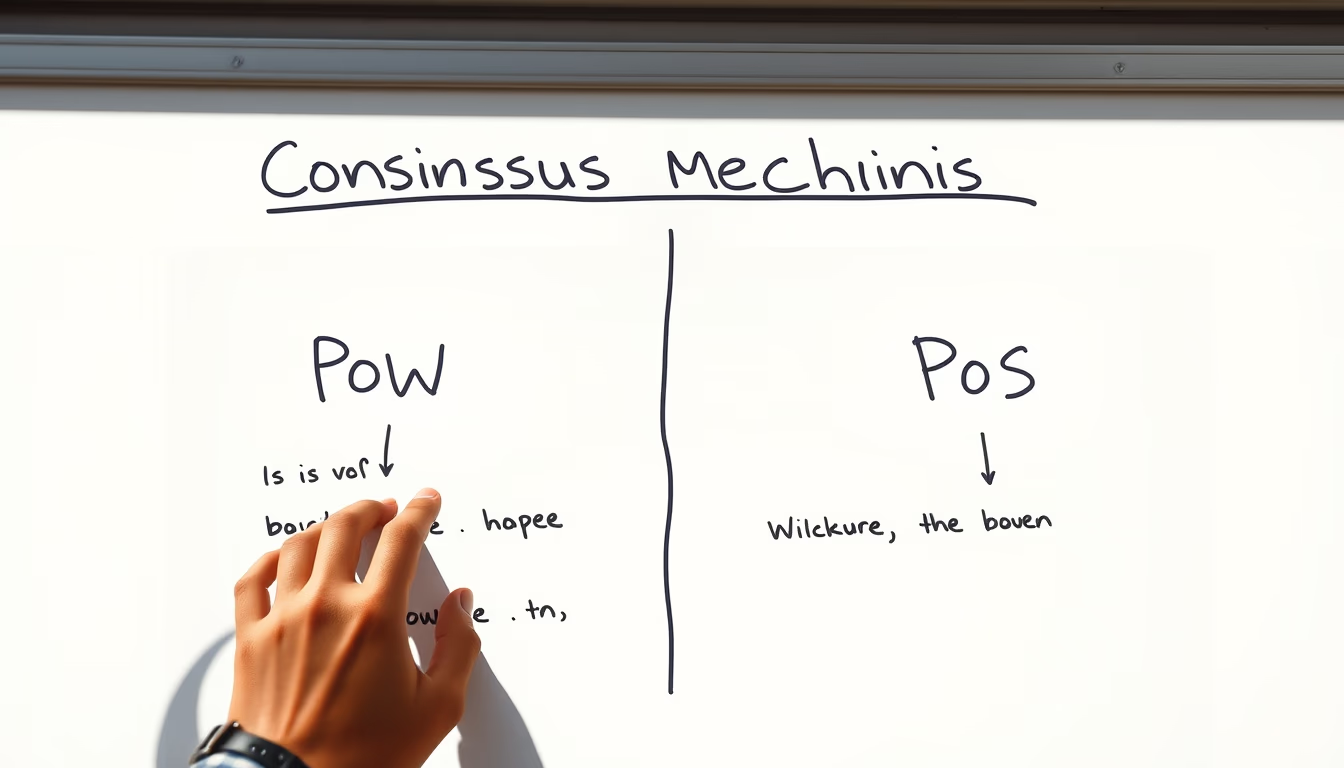 Consensus mechanism diagram on whiteboard showing PoW vs PoS
 Distributed ledger multiple servers in data center
 Hash function visualization cryptographic equations on glass screen
 Hash function visualization cryptographic equations on glass screen
 Hash function visualization cryptographic equations on glass screen