Blockchain network visualization glowing nodes connected by lines on dark background
1344×768 · AVIF · CC BY 4.0

Blockchain network visualization displays glowing nodes and connections on a dark background, representing the decentralized structure of digital transactions.
About this subject
Blockchain is a distributed ledger technology that functions as an immutable digital record. Each block contains a set of verified transactions and is linked to the previous one through cryptographic hashes, forming a chain. This structure ensures transparency and security, as altering any block would require modifying all subsequent blocks, which is computationally infeasible.
The visualization of nodes and connections in a blockchain network illustrates how participants (nodes) communicate and validate transactions. Each node represents a computer in the network that maintains a copy of the ledger. The lines represent peer-to-peer connections that allow information propagation. This decentralized topology eliminates the need for intermediaries like banks, reducing costs and increasing efficiency.
Bitcoin, created in 2009 by Satoshi Nakamoto, was the first blockchain application. Since then, the technology has evolved with platforms like Ethereum, which introduced smart contracts, enabling decentralized applications (dApps). Blockchain is used in sectors such as finance, logistics, healthcare, and governance, offering traceability and data immutability.
An interesting fact is that blockchain consumes significant energy, especially in Proof of Work systems like Bitcoin. It is estimated that the Bitcoin network uses more electricity annually than countries like Argentina. Alternatives such as Proof of Stake aim to reduce this environmental impact.
Frequently Asked Questions
What is a node in a blockchain network?
A node is any computer that participates in the blockchain network, maintaining a copy of the ledger and helping validate and propagate transactions. There are different types of nodes, such as full nodes that store the entire blockchain history.
How does blockchain ensure transaction security?
Security comes from cryptography and distributed consensus. Each block is linked to the previous one by a hash, and the network validates new transactions through algorithms like Proof of Work or Proof of Stake, making tampering extremely difficult.
What are the main applications of blockchain beyond cryptocurrencies?
Blockchain is used in supply chain tracking, electronic voting, identity records, smart contracts, copyright management, and even in healthcare systems for secure data sharing.
Direct URL
https://pub-c7d6a6ea828543ac903a74a341ccb2e1.r2.dev/imagens/blockchain-network-visualization-glowing-nodes-connected-by-lines-on-dark-backgr-closeup-macro-shot-overcast-soft-daylight.avifHow to credit
Include a visible link back to UtilizAí. Copy one of the snippets below:
<a href="https://xn--utiliza-eza.com/en/midia/imagens/blockchain-network-visualization-glowing-nodes-connected-by-lines-on-dark-backgr-closeup-macro-shot-overcast-soft-daylight">Blockchain network visualization glowing nodes connected by lines on dark background</a> by <a href="https://xn--utiliza-eza.com">UtilizAí</a>, licensed under <a href="https://creativecommons.org/licenses/by/4.0/">CC BY 4.0</a>.
[Blockchain network visualization glowing nodes connected by lines on dark background](https://xn--utiliza-eza.com/en/midia/imagens/blockchain-network-visualization-glowing-nodes-connected-by-lines-on-dark-backgr-closeup-macro-shot-overcast-soft-daylight) by [UtilizAí](https://xn--utiliza-eza.com), CC BY 4.0
License: CC-BY-4.0
Tags
Related images
 Smart contract code on monitor with solidity syntax highlighted
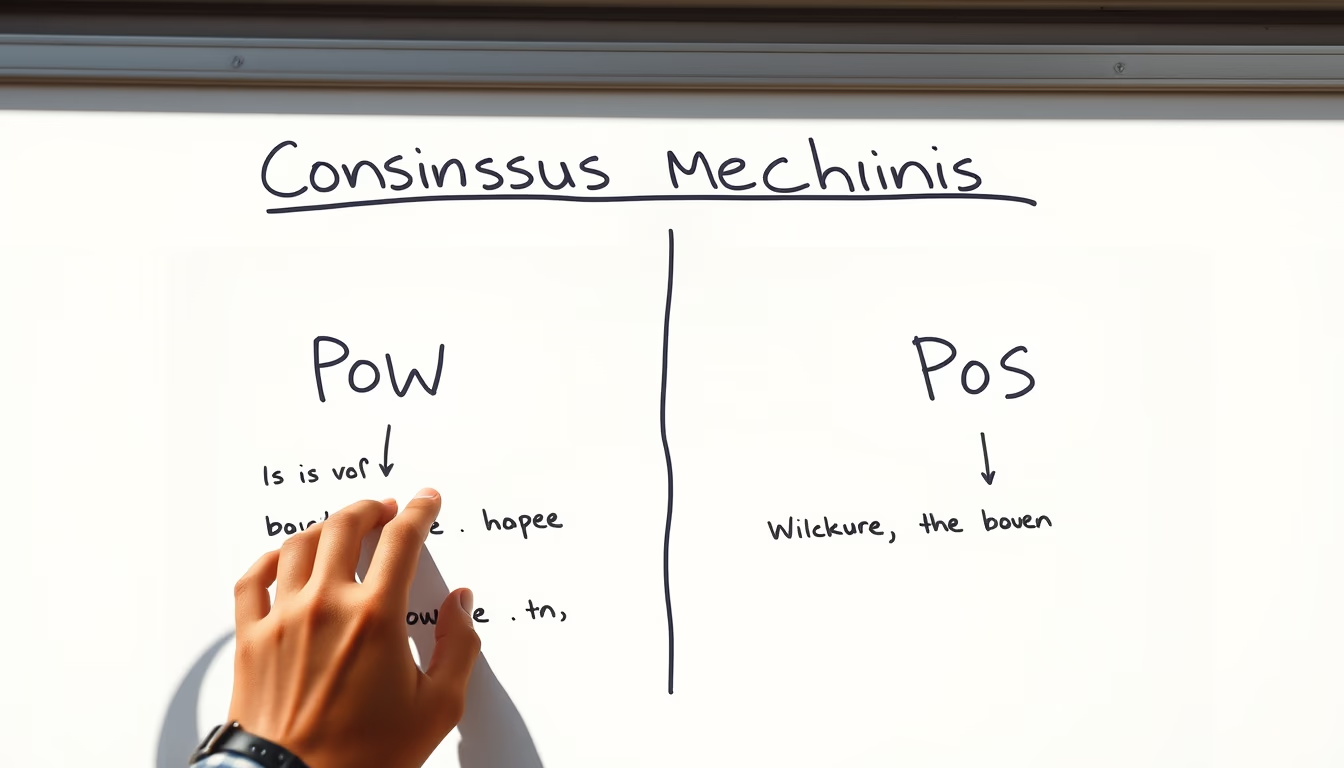 Consensus mechanism diagram on whiteboard showing PoW vs PoS
 Distributed ledger multiple servers in data center
 Hash function visualization cryptographic equations on glass screen
 Hash function visualization cryptographic equations on glass screen
 Hash function visualization cryptographic equations on glass screen