Blockchain network visualization glowing nodes connected by lines on dark background
1344×768 · AVIF · CC BY 4.0

Abstract visualization of a blockchain network: glowing nodes connected by luminous lines on a dark background, representing decentralization and security of digital records.
About this subject
Blockchain technology, immortalized by Bitcoin in 2009, is a distributed ledger that records transactions immutably and transparently. Each block contains a set of transactions, a timestamp, and the hash of the previous block, forming a chain. Security relies on consensus: altering a block would require modifying all subsequent ones, demanding immense computational power and making fraud unfeasible.
The visualization of glowing nodes connected by lines illustrates the peer-to-peer network topology. Each node is a computer that maintains a full copy of the ledger. The lines represent connections between nodes, through which transactions and blocks are propagated. This decentralized structure eliminates the need for intermediaries like banks and reduces risks of censorship or single point of failure.
Beyond cryptocurrencies, blockchain is used in smart contracts (Ethereum), supply chain tracking, electronic voting, and digital identity. Countries like El Salvador have adopted Bitcoin as legal tender, while Brazil explores blockchain in its financial system, such as the Drex (digital real). The technology continues to evolve with scalability solutions like sharding and proof-of-stake, which reduce energy consumption and increase transaction speed.
Frequently Asked Questions
What is a node in a blockchain network?
A node is any computer that maintains a copy of the distributed ledger and participates in validating and propagating transactions. Nodes can be full nodes or light nodes.
How does blockchain ensure transaction security?
Through distributed consensus and immutability: each block is cryptographically linked to the previous one, and altering a block would require rewriting the entire chain, which is computationally infeasible in large networks.
What are practical applications of blockchain beyond Bitcoin?
Blockchain is used in smart contracts, supply chain tracking, electronic voting, digital identity, voting systems, and even in games and NFTs. Brazil is developing Drex, a digital currency based on blockchain.
Direct URL
https://pub-c7d6a6ea828543ac903a74a341ccb2e1.r2.dev/imagens/blockchain-network-visualization-glowing-nodes-connected-by-lines-on-dark-backgr-closeup-macro-shot-bright-midday-sun.avifHow to credit
Include a visible link back to UtilizAí. Copy one of the snippets below:
<a href="https://xn--utiliza-eza.com/en/midia/imagens/blockchain-network-visualization-glowing-nodes-connected-by-lines-on-dark-backgr-closeup-macro-shot-bright-midday-sun">Blockchain network visualization glowing nodes connected by lines on dark background</a> by <a href="https://xn--utiliza-eza.com">UtilizAí</a>, licensed under <a href="https://creativecommons.org/licenses/by/4.0/">CC BY 4.0</a>.
[Blockchain network visualization glowing nodes connected by lines on dark background](https://xn--utiliza-eza.com/en/midia/imagens/blockchain-network-visualization-glowing-nodes-connected-by-lines-on-dark-backgr-closeup-macro-shot-bright-midday-sun) by [UtilizAí](https://xn--utiliza-eza.com), CC BY 4.0
License: CC-BY-4.0
Tags
Related images
 Smart contract code on monitor with solidity syntax highlighted
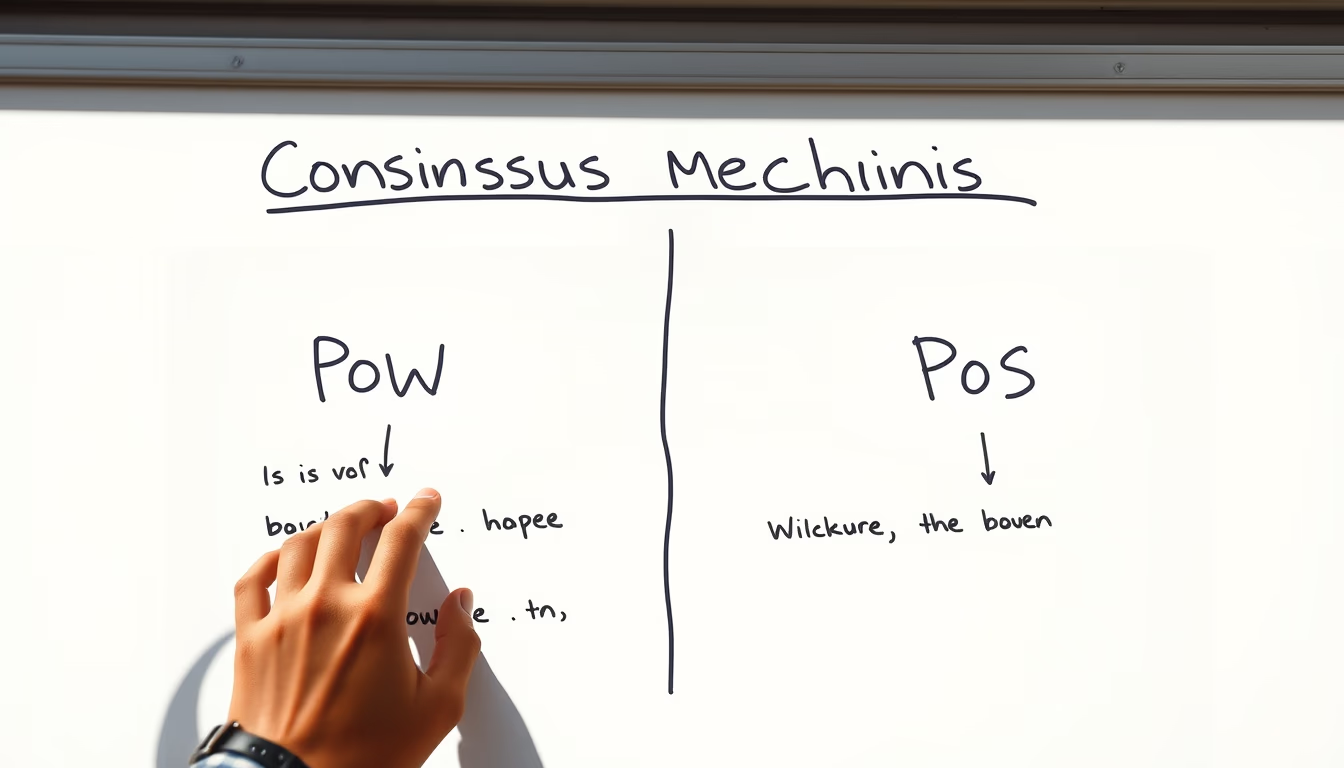 Consensus mechanism diagram on whiteboard showing PoW vs PoS
 Distributed ledger multiple servers in data center
 Hash function visualization cryptographic equations on glass screen
 Hash function visualization cryptographic equations on glass screen
 Hash function visualization cryptographic equations on glass screen