Blockchain network visualization glowing nodes connected by lines on dark background
1344×768 · AVIF · CC BY 4.0

Blockchain network visualization with glowing nodes and linear connections on dark background, representing the decentralized infrastructure of cryptocurrencies.
About this subject
The blockchain technology, which underpins cryptocurrencies like Bitcoin and Ethereum, is often visually represented as a network of interconnected nodes. Each node represents a computer or server that maintains a copy of the distributed ledger, and the lines symbolize transactions or blocks of data that are validated and added to the chain. This decentralized structure eliminates the need for intermediaries, such as banks, and ensures transparency and security through cryptographic consensus.
The concept of blockchain was introduced in 2008 by a person or group under the pseudonym Satoshi Nakamoto, as part of the Bitcoin whitepaper. Since then, the technology has evolved beyond cryptocurrencies, being applied in areas such as supply chains, electronic voting, and smart contracts. The visualization of glowing nodes on a dark background is a common metaphor to highlight the digital and interconnected nature of this global network.
Interestingly, the number of nodes in a blockchain can vary significantly. For example, the Bitcoin network has thousands of nodes spread worldwide, while permissioned blockchains, such as those used by enterprises, may have only a few. Network security increases with the number of nodes, as it makes it harder for an attacker to control the majority. Additionally, cryptocurrency mining consumes electrical energy comparable to that of entire countries, sparking debates about sustainability.
Frequently Asked Questions
What is a node in a blockchain?
A node is a computer or server that maintains a full or partial copy of the blockchain ledger and participates in transaction validation. The more nodes, the more decentralized and secure the network.
How are transactions validated in a blockchain?
Transactions are grouped into blocks and validated through a consensus mechanism, such as Proof of Work (PoW) or Proof of Stake (PoS). Miners or validators compete to solve cryptographic puzzles and add the block to the chain.
What are the applications of blockchain beyond cryptocurrencies?
Blockchain is used in supply chains to track products, in voting systems to ensure integrity, in smart contracts to automate agreements, and in digital identity to protect personal data.
Direct URL
https://pub-c7d6a6ea828543ac903a74a341ccb2e1.r2.dev/imagens/blockchain-network-visualization-glowing-nodes-connected-by-lines-on-dark-backgr-cinematic-wide-shot-overcast-soft-daylight.avifHow to credit
Include a visible link back to UtilizAí. Copy one of the snippets below:
<a href="https://xn--utiliza-eza.com/en/midia/imagens/blockchain-network-visualization-glowing-nodes-connected-by-lines-on-dark-backgr-cinematic-wide-shot-overcast-soft-daylight">Blockchain network visualization glowing nodes connected by lines on dark background</a> by <a href="https://xn--utiliza-eza.com">UtilizAí</a>, licensed under <a href="https://creativecommons.org/licenses/by/4.0/">CC BY 4.0</a>.
[Blockchain network visualization glowing nodes connected by lines on dark background](https://xn--utiliza-eza.com/en/midia/imagens/blockchain-network-visualization-glowing-nodes-connected-by-lines-on-dark-backgr-cinematic-wide-shot-overcast-soft-daylight) by [UtilizAí](https://xn--utiliza-eza.com), CC BY 4.0
License: CC-BY-4.0
Tags
Related images
 Smart contract code on monitor with solidity syntax highlighted
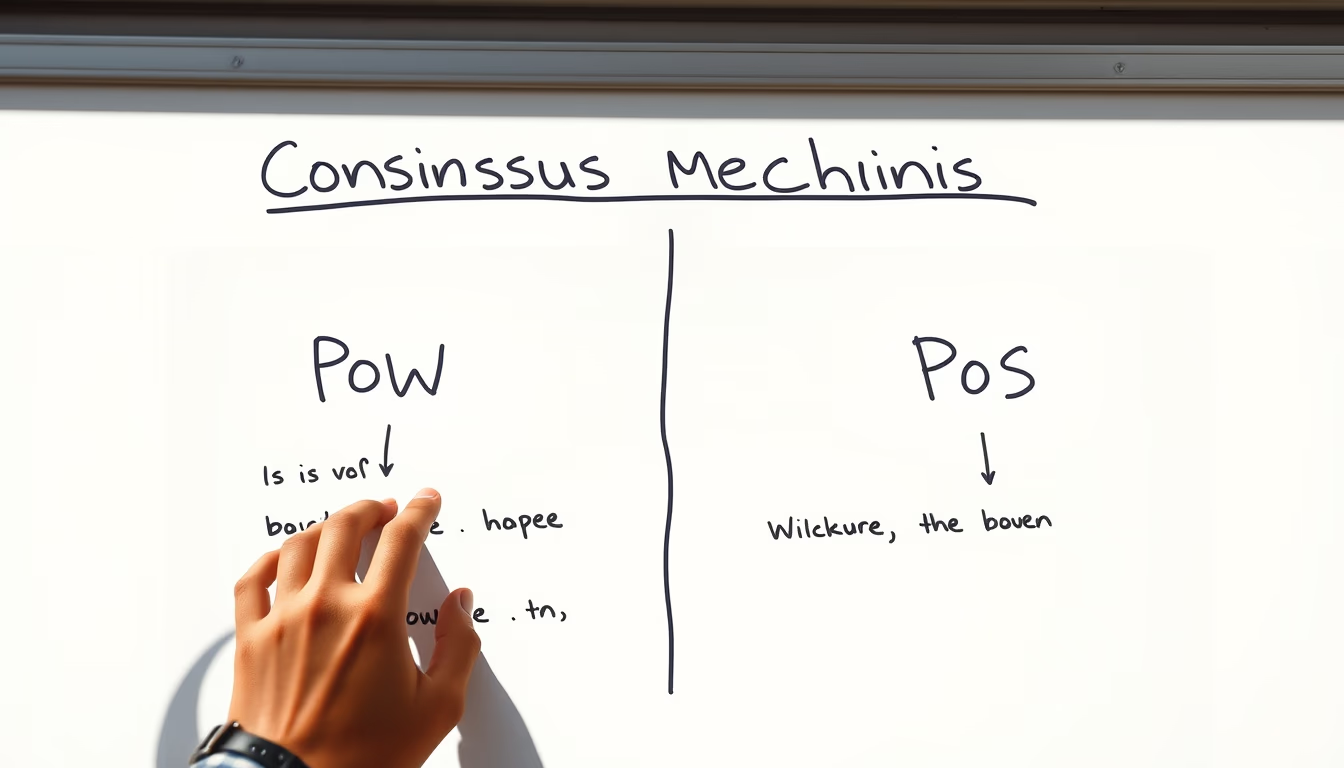 Consensus mechanism diagram on whiteboard showing PoW vs PoS
 Distributed ledger multiple servers in data center
 Hash function visualization cryptographic equations on glass screen
 Hash function visualization cryptographic equations on glass screen
 Hash function visualization cryptographic equations on glass screen