Blockchain network visualization glowing nodes connected by lines on dark background
1344×768 · AVIF · CC BY 4.0

Blockchain is a decentralized digital ledger that records transactions securely, transparently, and immutably.
About this subject
Blockchain is a distributed ledger technology that functions as a shared database among multiple participants without the need for a central authority. Each block contains a set of verified transactions and is linked to the previous block through cryptography, forming a continuous chain. This structure ensures data immutability: altering one block would require modifying all subsequent blocks, which is computationally infeasible in large networks.
The technology gained prominence with Bitcoin, created in 2008 by Satoshi Nakamoto, but today it is applied in various sectors beyond cryptocurrencies. Smart contracts, for example, allow automatic execution of agreements when predefined conditions are met, eliminating intermediaries. Companies like IBM, Microsoft, and governments of countries such as Estonia and Dubai use blockchain for supply chain tracking, electronic voting, and digital identity.
A fundamental concept is distributed consensus, where all network nodes validate transactions. Mechanisms like Proof of Work and Proof of Stake ensure security without relying on a central entity. Transparency is another pillar: anyone can verify the transaction history, although user identities are pseudonymous.
Despite the benefits, the technology faces challenges such as scalability, high energy consumption in some models, and government regulation. Solutions like sharding and new consensus techniques aim to make blockchain faster and more sustainable. The potential for digital transformation continues to attract investments and research worldwide.
Frequently Asked Questions
What is blockchain?
Blockchain is a decentralized digital ledger that records transactions securely, transparently, and immutably without the need for intermediaries.
How does blockchain ensure security?
Security is ensured through cryptography and consensus mechanisms like Proof of Work or Proof of Stake, where the majority of nodes validate transactions.
What are the applications of blockchain beyond cryptocurrencies?
Blockchain is used in smart contracts, supply chains, electronic voting, digital identity, property registration, and many other fields.
Direct URL
https://pub-c7d6a6ea828543ac903a74a341ccb2e1.r2.dev/imagens/blockchain-network-visualization-glowing-nodes-connected-by-lines-on-dark-backgr-aerial-drone-shot-studio-professional-lighting.avifHow to credit
Include a visible link back to UtilizAí. Copy one of the snippets below:
<a href="https://xn--utiliza-eza.com/en/midia/imagens/blockchain-network-visualization-glowing-nodes-connected-by-lines-on-dark-backgr-aerial-drone-shot-studio-professional-lighting">Blockchain network visualization glowing nodes connected by lines on dark background</a> by <a href="https://xn--utiliza-eza.com">UtilizAí</a>, licensed under <a href="https://creativecommons.org/licenses/by/4.0/">CC BY 4.0</a>.
[Blockchain network visualization glowing nodes connected by lines on dark background](https://xn--utiliza-eza.com/en/midia/imagens/blockchain-network-visualization-glowing-nodes-connected-by-lines-on-dark-backgr-aerial-drone-shot-studio-professional-lighting) by [UtilizAí](https://xn--utiliza-eza.com), CC BY 4.0
License: CC-BY-4.0
Tags
Related images
 Smart contract code on monitor with solidity syntax highlighted
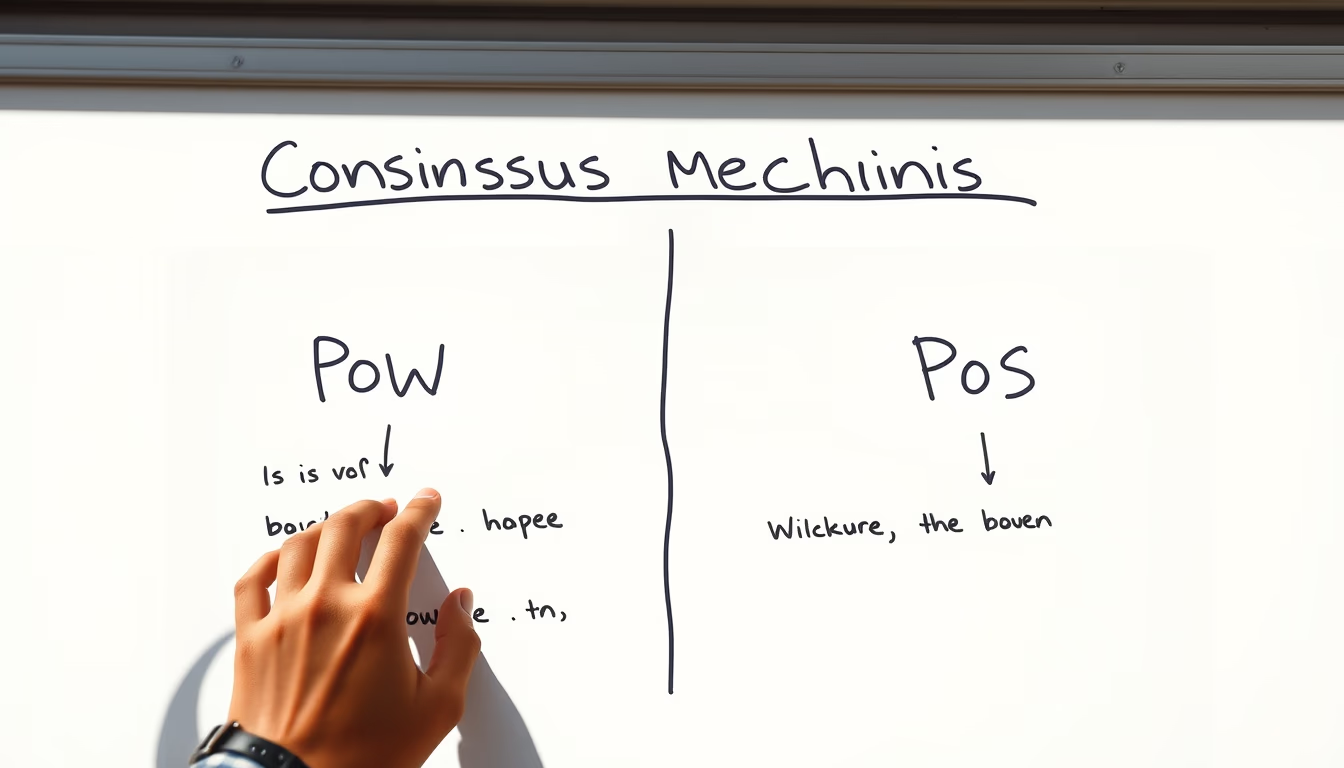 Consensus mechanism diagram on whiteboard showing PoW vs PoS
 Distributed ledger multiple servers in data center
 Hash function visualization cryptographic equations on glass screen
 Hash function visualization cryptographic equations on glass screen
 Hash function visualization cryptographic equations on glass screen