Basalt columnar formations
1344×768 · AVIF · CC BY 4.0
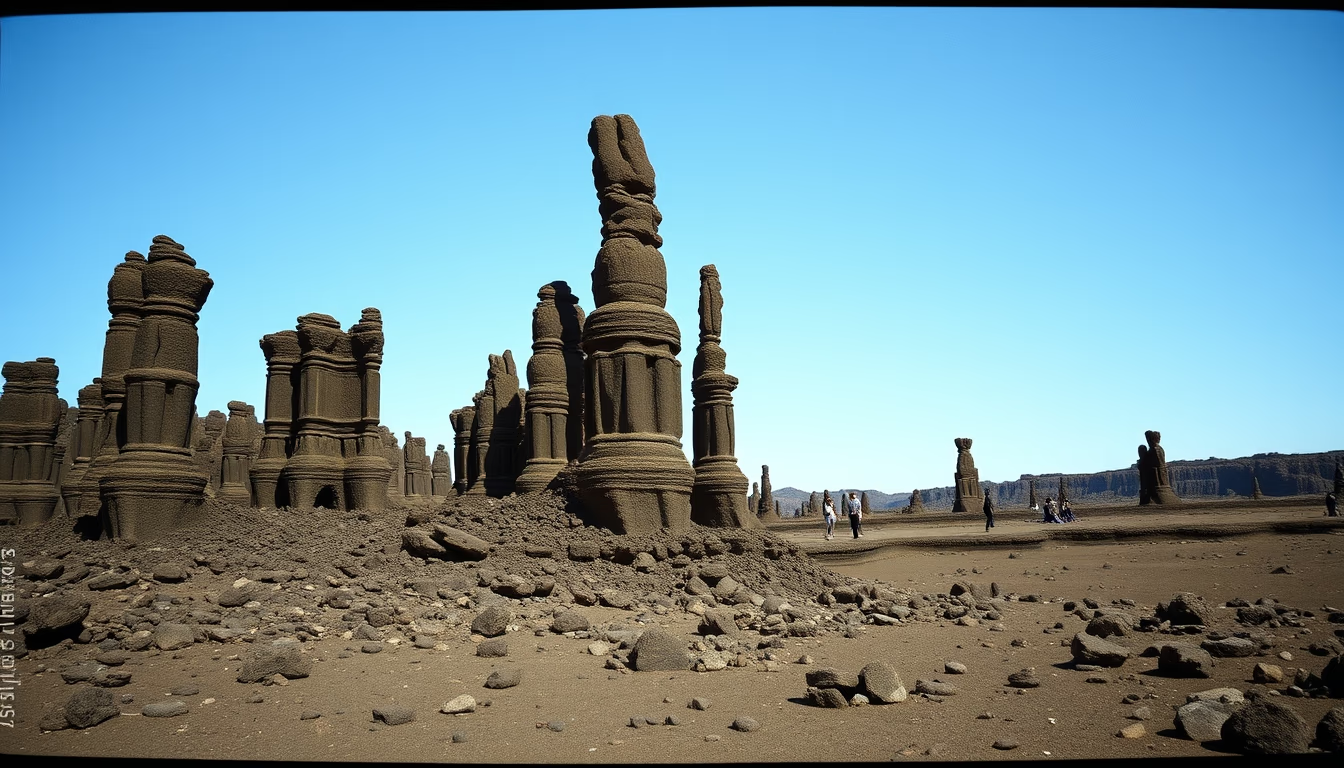
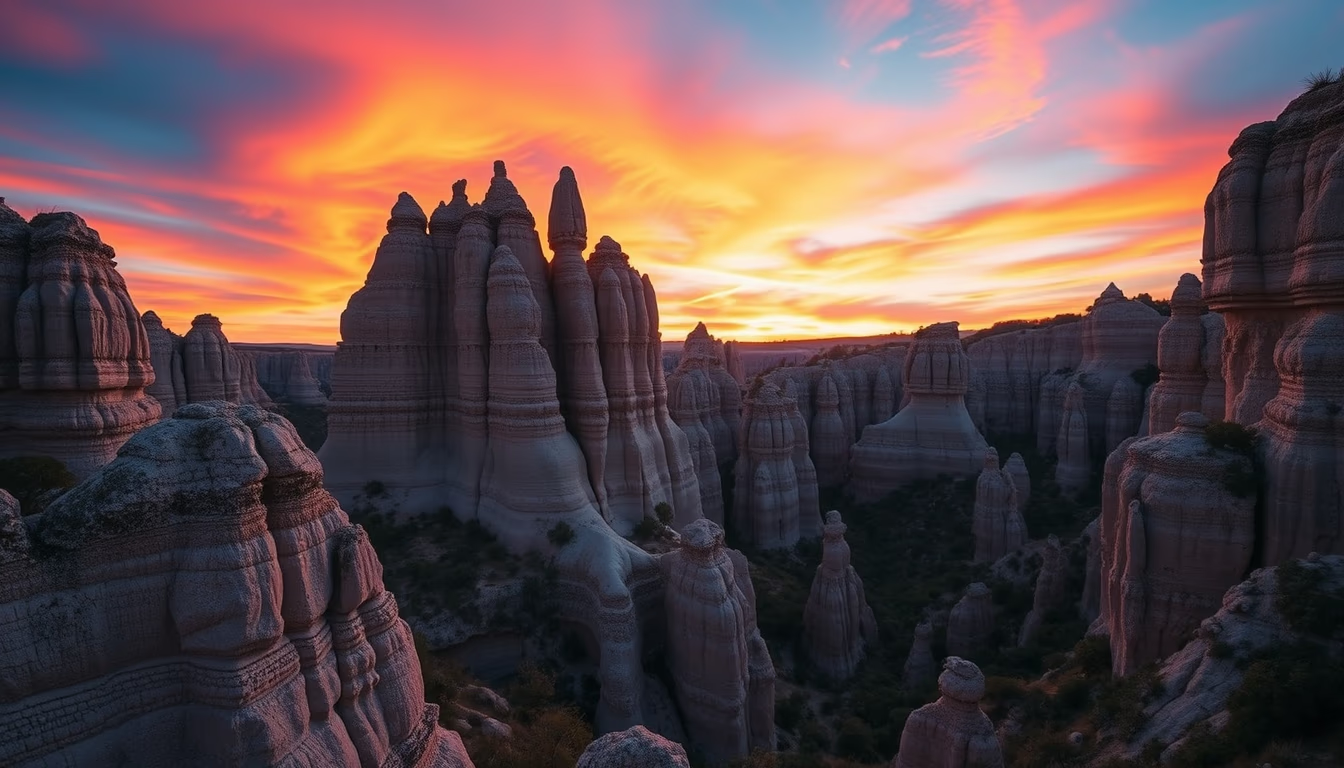
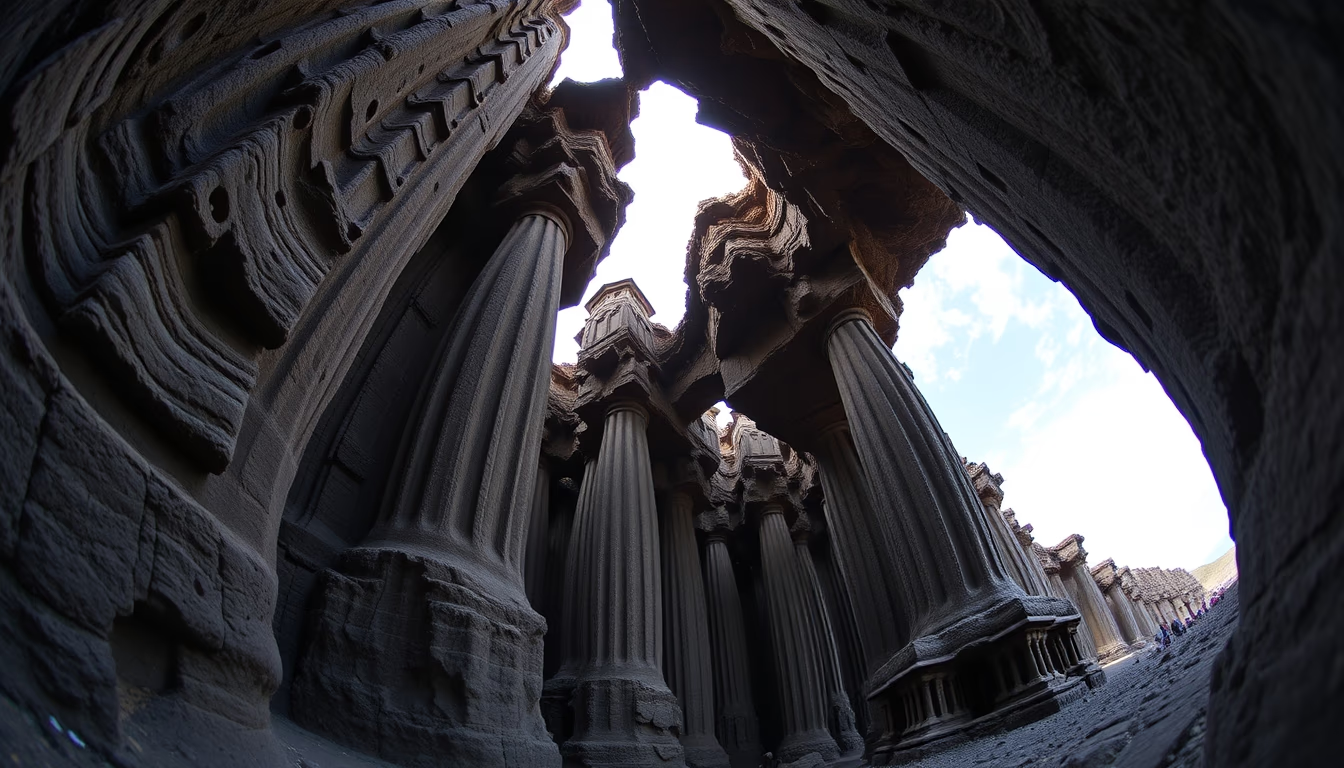
Basalt columns are hexagonal rock formations created by the slow cooling of lava, found in various locations around the world.
About this subject
Basalt columns are striking geological structures formed from the cooling and contraction of basaltic lava flows. When lava cools slowly and uniformly, it contracts and fractures into polygons, usually hexagons, creating vertical pillars that can reach tens of meters in height. This process is known as columnar jointing and occurs in volcanic regions worldwide.
One of the most famous examples is the Giant's Causeway in Northern Ireland, a UNESCO World Heritage site with about 40,000 basalt columns extending into the sea. In Brazil, similar formations can be observed in the Serra Geral, in the southern states of Rio Grande do Sul and Santa Catarina, where extensive lava flows from the Paraná Basin created columnar landscapes. Another notable site is Devils Postpile National Monument in California, with columns up to 18 meters tall.
Culturally, these formations have inspired legends and myths. The Irish tell that the Giant's Causeway was built by the giant Finn McCool to cross the sea to Scotland. In modern geology, studying basalt columns helps scientists understand cooling processes in volcanic materials and even on other planets, such as Mars, where similar structures have been identified. The natural symmetry of these columns also fascinates architects and artists, frequently appearing in art and design works.
The height and width of the columns vary depending on the cooling rate and magma composition. Taller columns tend to form when cooling is slower and more homogeneous. Interestingly, basalt is the most abundant rock in the oceanic crust, and its submarine columns are common near mid-ocean ridges, though less accessible for direct observation.
Frequently Asked Questions
How are basalt columns formed?
They form when basaltic lava cools slowly and uniformly, contracting and fracturing into polygons, usually hexagons, creating vertical pillars.
Where can I find basalt columns in Brazil?
In southern Brazil, especially in the Serra Geral region of Rio Grande do Sul and Santa Catarina states, where extensive lava flows from the Paraná Basin exist.
What is the largest known basalt column formation?
The Giant's Causeway in Northern Ireland is one of the largest and most famous, with about 40,000 hexagonal columns.
Direct URL
https://pub-c7d6a6ea828543ac903a74a341ccb2e1.r2.dev/imagens/basalt-columnar-formations-lo-fi-disposable-camera-fresh14.avifHow to credit
Include a visible link back to UtilizAí. Copy one of the snippets below:
<a href="https://xn--utiliza-eza.com/en/midia/imagens/basalt-columnar-formations-lo-fi-disposable-camera-fresh14">Basalt columnar formations</a> by <a href="https://xn--utiliza-eza.com">UtilizAí</a>, licensed under <a href="https://creativecommons.org/licenses/by/4.0/">CC BY 4.0</a>.
[Basalt columnar formations](https://xn--utiliza-eza.com/en/midia/imagens/basalt-columnar-formations-lo-fi-disposable-camera-fresh14) by [UtilizAí](https://xn--utiliza-eza.com), CC BY 4.0
License: CC-BY-4.0