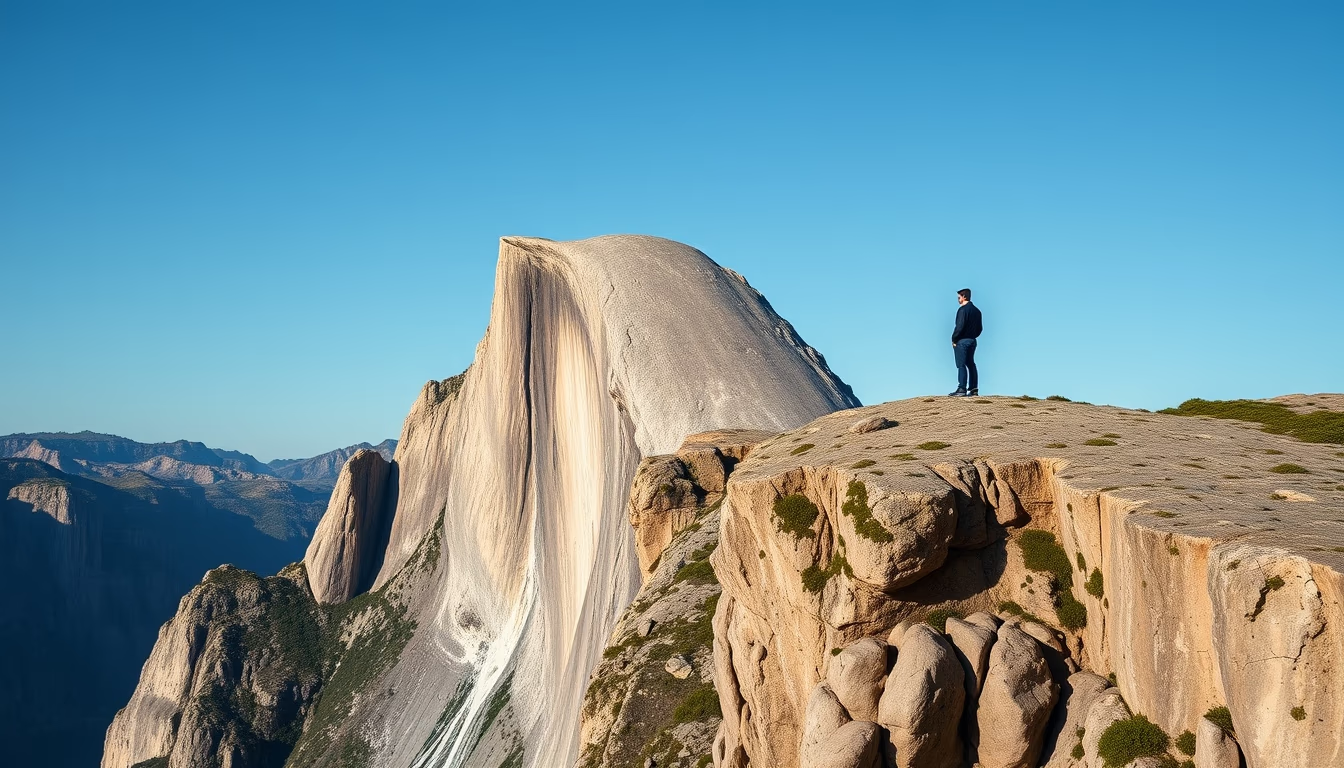
Baobab tree madagascar
1344×768 · AVIF · CC BY 4.0
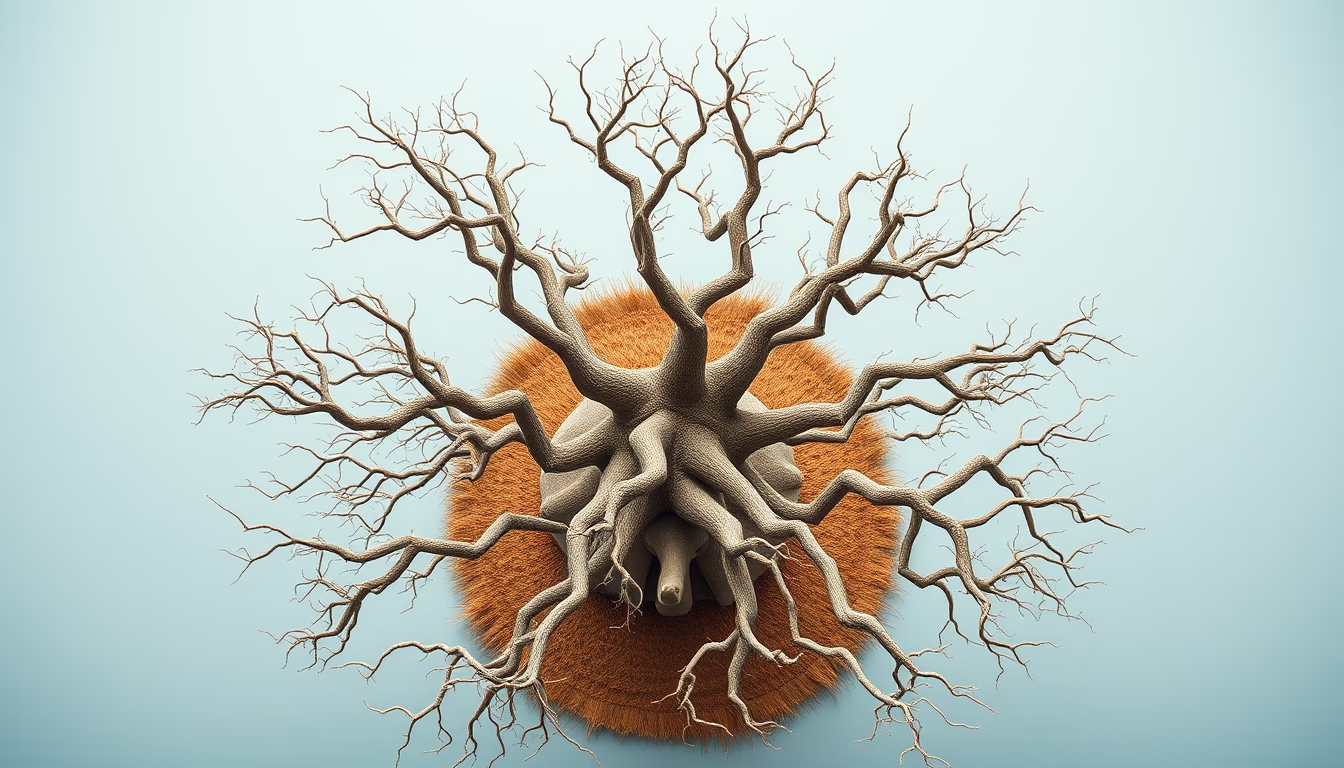
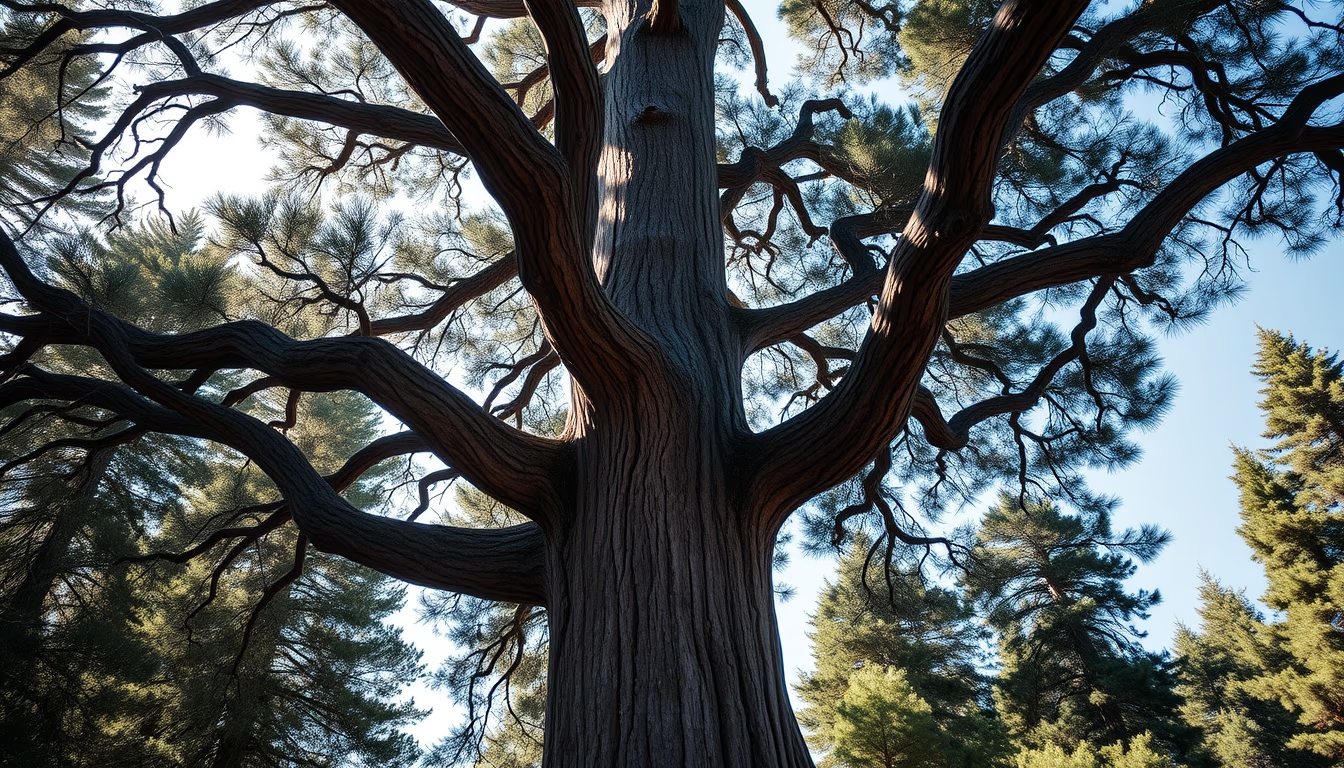
The baobab tree of Madagascar, a symbol of the island, can live for thousands of years and store water in its trunk to survive droughts.
About this subject
The baobab (genus Adansonia) is one of the most emblematic trees of Madagascar, where six of the eight known species are endemic. Among them, the Grandidier's baobab (Adansonia grandidieri), known for its massive trunk and sparse canopy, is the most famous and appears in the iconic Avenue of the Baobabs in the Menabe region. These trees can reach up to 30 meters in height and have a trunk diameter exceeding 10 meters, with a smooth, grayish bark that reflects sunlight and reduces water loss.
Longevity is one of their remarkable features: carbon-14 dating studies indicate that some specimens are over 1,200 years old. The trunk functions as a natural cistern, capable of storing up to 120,000 liters of water during the rainy season, which is consumed during the dry season. This adaptation has allowed baobabs to dominate arid and semi-arid landscapes of western and southern Madagascar.
Culturally, baobabs hold deep significance for the Malagasy people. They are considered sacred trees, often associated with ancestral spirits and used in community rituals. The leaves, fruits, and seeds are used for food and traditional medicine: the dried fruit (known as monkey bread or buyo) is rich in vitamin C and calcium. The bark provides fibers for ropes and fabrics, while the fruit pulp is used to make juices and ice creams.
Unfortunately, some species are threatened due to deforestation, climate change, and selective logging. The population of Grandidier's baobab is estimated to have declined by 50% in the last 100 years. Conservation initiatives involve local communities in reforestation and protection of areas such as the Andasibe-Mantadia Special Reserve.
Frequently Asked Questions
How old can a Madagascar baobab tree live?
Some baobabs in Madagascar can live over 1,200 years, making them among the longest-living trees in the world. Age is estimated by carbon-14 dating.
What makes the baobab trunk so thick?
The trunk stores large amounts of water, up to 120,000 liters. This adaptation allows the tree to survive long dry periods in its native habitat.
Why are baobabs threatened in Madagascar?
Deforestation for agriculture, climate change, and selective logging have drastically reduced some populations. The species Adansonia grandidieri has lost half of its individuals in the last century.
Direct URL
https://pub-c7d6a6ea828543ac903a74a341ccb2e1.r2.dev/imagens/baobab-tree-madagascar-isometric-flat-lay-p0.avifHow to credit
Include a visible link back to UtilizAí. Copy one of the snippets below:
<a href="https://xn--utiliza-eza.com/en/midia/imagens/baobab-tree-madagascar-isometric-flat-lay-p0">Baobab tree madagascar</a> by <a href="https://xn--utiliza-eza.com">UtilizAí</a>, licensed under <a href="https://creativecommons.org/licenses/by/4.0/">CC BY 4.0</a>.
[Baobab tree madagascar](https://xn--utiliza-eza.com/en/midia/imagens/baobab-tree-madagascar-isometric-flat-lay-p0) by [UtilizAí](https://xn--utiliza-eza.com), CC BY 4.0
License: CC-BY-4.0