Baklava layered honey
1344×768 · AVIF · CC BY 4.0
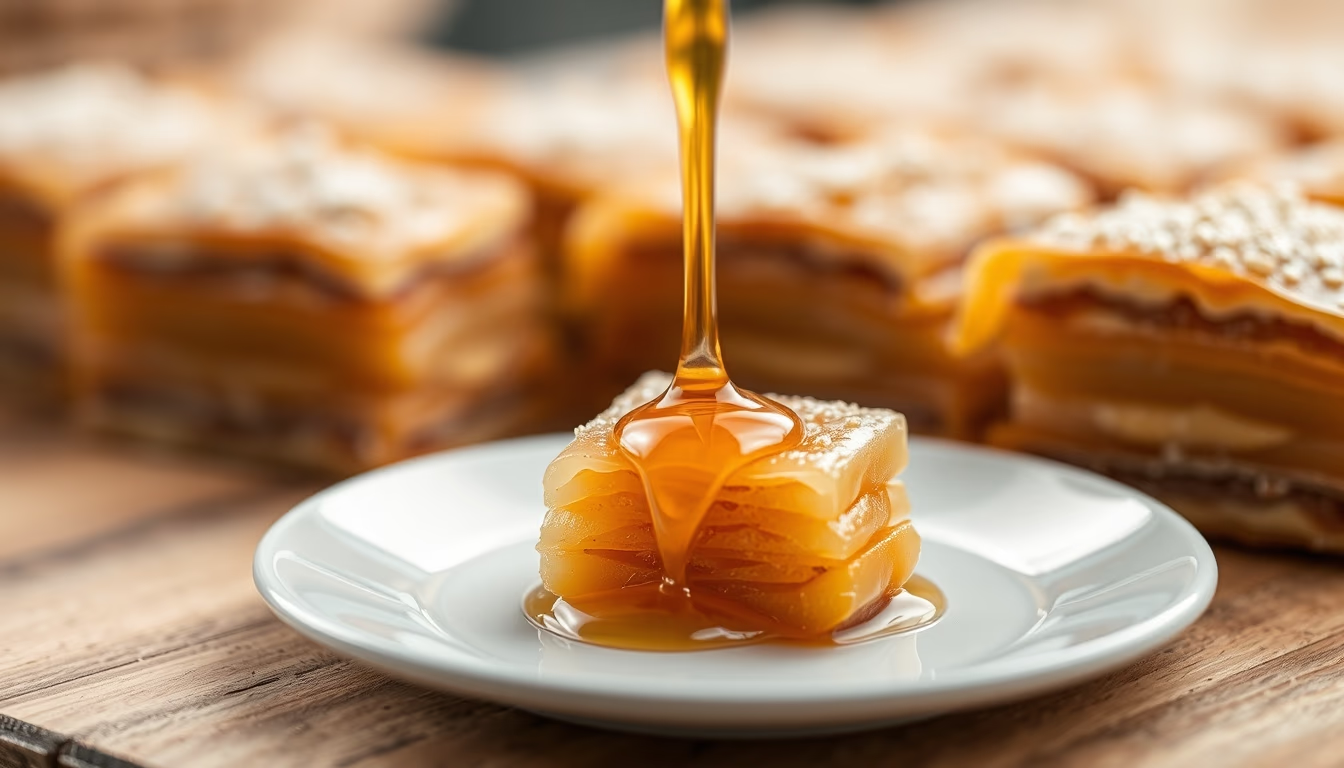
Macro close-up of the flaky texture of baklava, with thin layers of phyllo dough and honey syrup dripping between them.
About this subject
Baklava is one of the oldest and most iconic desserts in the Middle East, representing Ottoman confectionery. Its origins date back to the Ottoman Empire in the 15th century, although earlier versions existed in Central Asia. The technique of stretching phyllo dough into extremely thin layers, alternating with chopped nuts such as walnuts or pistachios, and finishing with a honey or sugar syrup, requires manual mastery. In 2013, Turkish baklava was inscribed on UNESCO's Intangible Cultural Heritage list, recognizing the traditional craftsmanship.
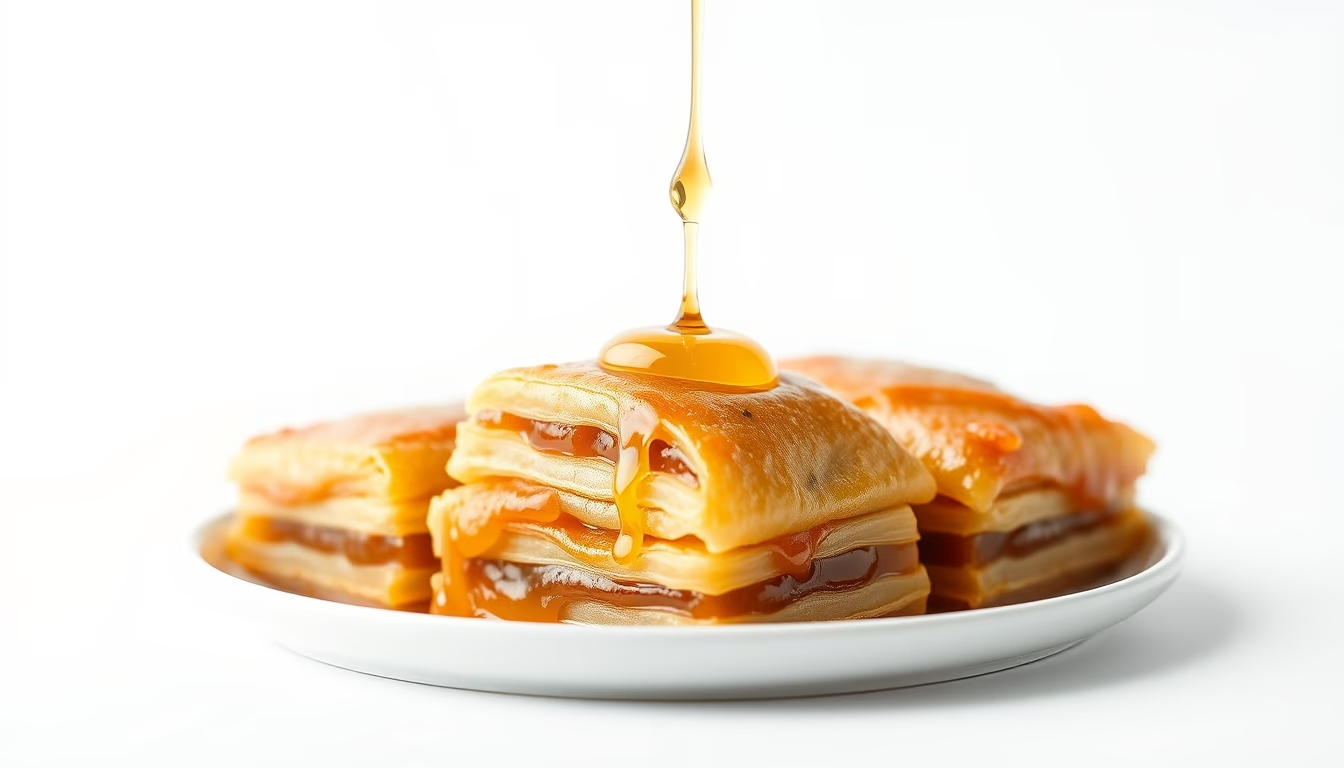
The use of honey in the syrup is deliberate: honey imparts floral aroma, moisture, and a milder crystallization, contrasting with the crispness of the layers. Different regions have adapted the recipe: in Turkey, Gaziantep pistachios are used; in Greece, cinnamon and cloves are added; in Lebanon, orange blossom water. The visual secret lies in the 30 to 40 layers of dough, which after baking form thin, golden air pockets visible in a macro close-up.
Preparation requires patience: each phyllo sheet is brushed with melted butter, stacked layer upon layer, then baked slowly. After browning, hot honey syrup is poured over the still-hot pastry, which absorbs it gradually, creating a sticky, shiny texture. The syrup-to-dough ratio is critical to avoid sogginess. Classic baklava is cut into diamond shapes before baking, though modern variations explore different forms.
Culturally, baklava is associated with celebrations and family gatherings, served at weddings and religious festivals such as Ramadan. Homemade production remains strong, but specialty bakeries compete for exclusive recipes. Examining the layers in a close-up reveals the pastry chef's skill: the thinner and more uniform the layers, the more delicate the result.
Frequently Asked Questions
What is the origin of baklava?
Baklava originated in the Ottoman Empire, with records dating back to the 15th century, but its roots can be traced to Central Asia, where primitive versions were made with layered bread and nuts. It was refined in Ottoman palace kitchens and spread across the Middle East, Balkans, and Caucasus.
Why is honey used in baklava?
Honey is traditionally used as a natural sweetener, providing floral aroma and moisture to the dessert. It also helps create the characteristic sticky texture and enhances the flavor of the nuts. Some modern recipes use sugar syrup, but honey is valued for its complex flavor profile.
How many layers does traditional baklava have?
Traditional baklava can have 30 to 40 very thin layers of phyllo dough, alternated with butter and nuts. The exact count varies by recipe, but the key is the uniform thinness of each layer, which should be almost transparent.
Direct URL
https://pub-c7d6a6ea828543ac903a74a341ccb2e1.r2.dev/imagens/baklava-layered-honey-macro-closeup-fresh13.avifHow to credit
Include a visible link back to UtilizAí. Copy one of the snippets below:
<a href="https://xn--utiliza-eza.com/en/midia/imagens/baklava-layered-honey-macro-closeup-fresh13">Baklava layered honey</a> by <a href="https://xn--utiliza-eza.com">UtilizAí</a>, licensed under <a href="https://creativecommons.org/licenses/by/4.0/">CC BY 4.0</a>.
[Baklava layered honey](https://xn--utiliza-eza.com/en/midia/imagens/baklava-layered-honey-macro-closeup-fresh13) by [UtilizAí](https://xn--utiliza-eza.com), CC BY 4.0
License: CC-BY-4.0