Badlands south dakota
1344×768 · AVIF · CC BY 4.0
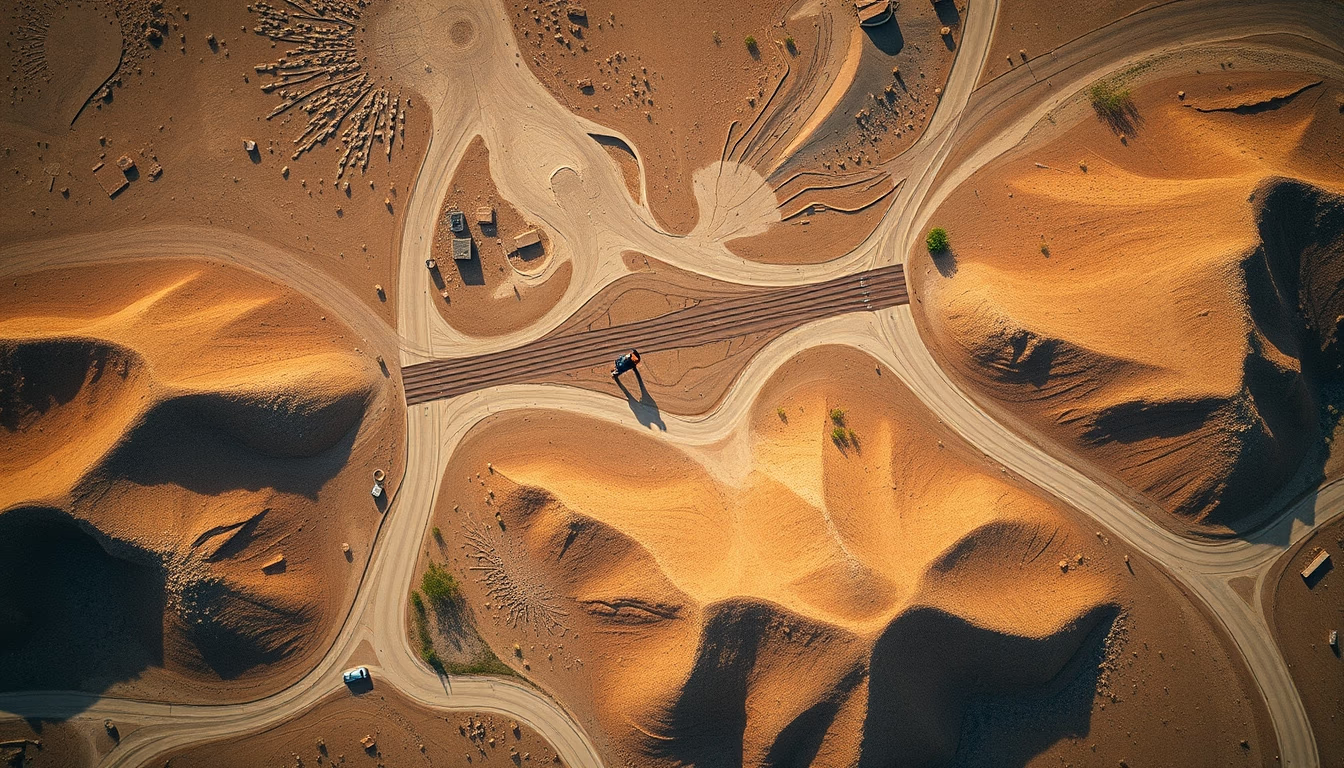
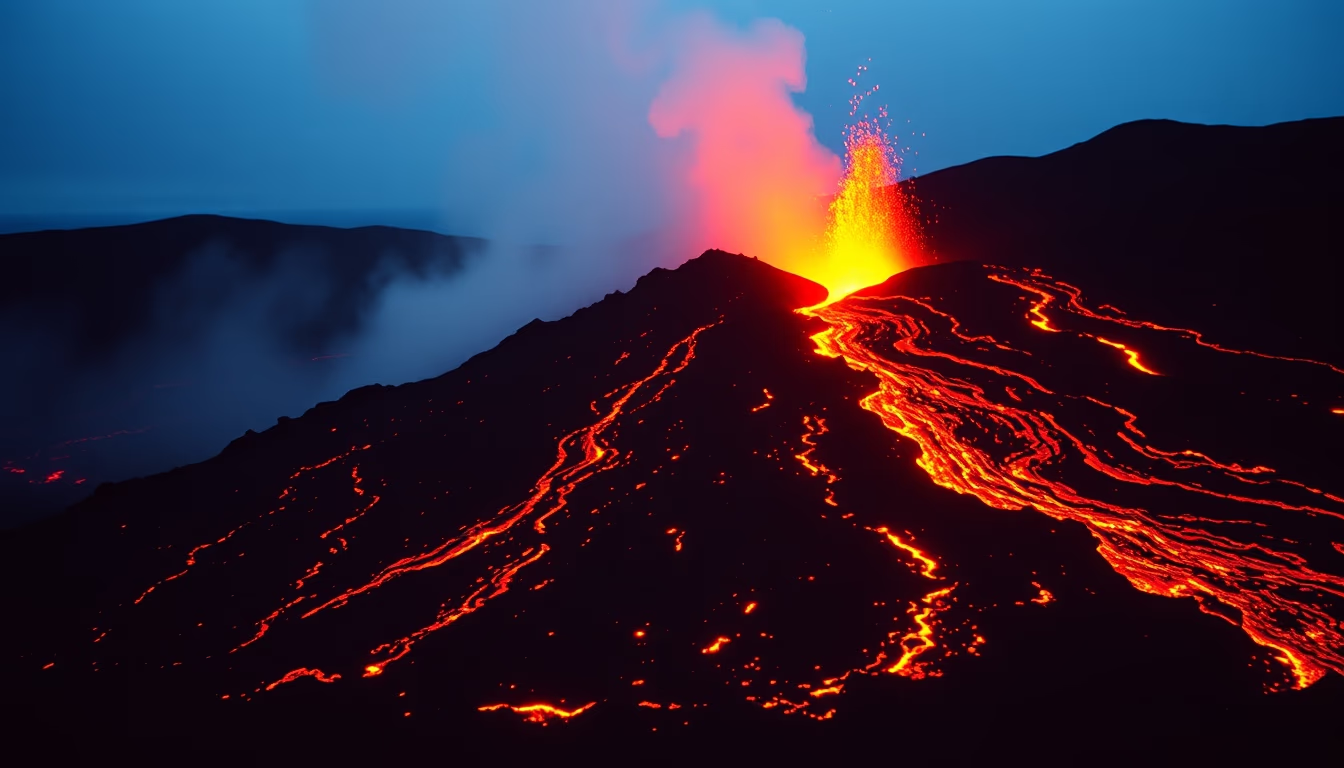
The Badlands of South Dakota are eroded rock formations that reveal layers of fossils and sediments, creating an arid and colorful landscape.
About this subject
Badlands National Park, located in southwestern South Dakota, covers approximately 982 km² and is one of the most important geological and paleontological sites in the United States. Its landscapes were sculpted over millions of years by wind and water erosion, exposing layers of sedimentary rock dating from the Late Cretaceous to the Oligocene, about 75 to 30 million years ago. The colorful stripes that characterize the area result from different minerals: volcanic ash, iron, manganese, and organic matter. The region was once a shallow inland sea and later an alluvial plain teeming with life, as evidenced by the vast collection of fossils of prehistoric mammals, including the extinct rhinoceros Titanothere, the ancestral camel, the bear-dog, and the primitive horse. The park also holds one of the world's richest concentrations of Oligocene mammal fossils. For the Lakota Native Americans, the area is considered sacred, called "mako sica" (bad land) due to its difficult crossing, yet also a source of resources and spiritual stories. The harsh landscape hides surprising biodiversity: coyotes, prairie dogs, pronghorns, and raptors adapted to the semi-arid environment. The Badlands are thus not only a visual spectacle but a true archive of Earth's history.
Frequently Asked Questions
What causes the striped colors in the Badlands?
The colors come from different minerals in the rock layers: volcanic ash (white), iron (red and orange), manganese (purple and gray), and organic matter (black). Differential erosion exposes these layers.
What fossils can be found in the Badlands?
Common are Oligocene mammal fossils such as the Titanothere (extinct rhinoceros), the ancestral camel Poebrotherium, the bear-dog Hyaenodon, and the primitive horse Mesohippus. There are also marine fossils from the Cretaceous period.
What is the best time to visit Badlands National Park?
Spring (April to May) and fall (September to October) offer mild temperatures and fewer crowds. Summer is hot and dry, while winter can be harsh with snow and strong winds.
Direct URL
https://pub-c7d6a6ea828543ac903a74a341ccb2e1.r2.dev/imagens/badlands-south-dakota-isometric-flat-lay-p6.avifHow to credit
Include a visible link back to UtilizAí. Copy one of the snippets below:
<a href="https://xn--utiliza-eza.com/en/midia/imagens/badlands-south-dakota-isometric-flat-lay-p6">Badlands south dakota</a> by <a href="https://xn--utiliza-eza.com">UtilizAí</a>, licensed under <a href="https://creativecommons.org/licenses/by/4.0/">CC BY 4.0</a>.
[Badlands south dakota](https://xn--utiliza-eza.com/en/midia/imagens/badlands-south-dakota-isometric-flat-lay-p6) by [UtilizAí](https://xn--utiliza-eza.com), CC BY 4.0
License: CC-BY-4.0