Badlands south dakota
1344×768 · AVIF · CC BY 4.0
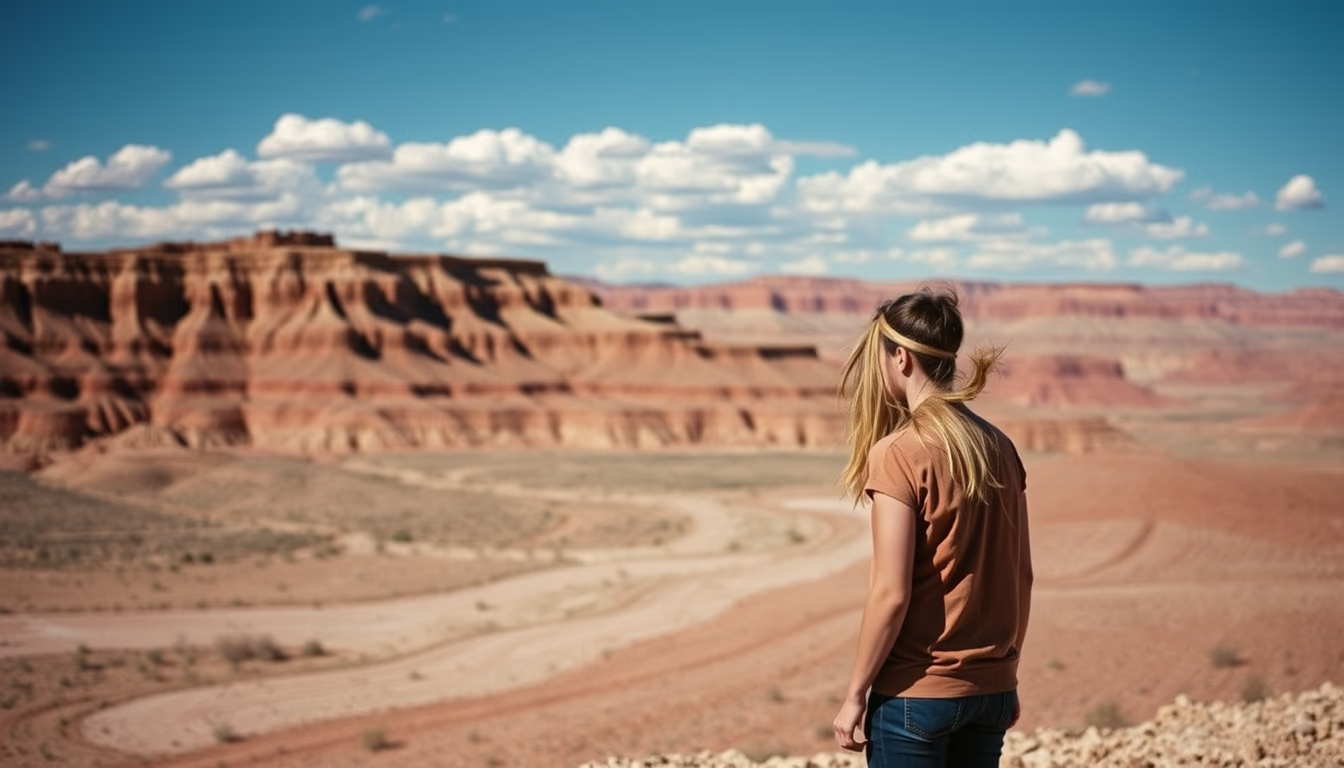
The South Dakota Badlands are an arid, eroded landscape famous for colorful rock formations and rich fossil deposits.
About this subject
The Badlands, located in southwestern South Dakota, United States, form a region of steep cliffs, jagged spires, and deep ravines carved by erosion over millions of years. Geologically, the area is part of the White River Formation, composed of sediment layers deposited between 75 and 28 million years ago during the Cretaceous and Oligocene periods. These layers alternate between mudstone, sandstone, and volcanic ash, creating a mosaic of colors ranging from gray to red, orange, and purple.
The region is internationally renowned for its exceptional fossil record of Oligocene mammals, such as the small horse Mesohippus, the camel Protolabis, and the predator Hyaenodon. Badlands National Park, established in 1978, protects about 982 km² of this unique terrain and attracts paleontologists and tourists from around the world. The name "Badlands" comes from the Lakota Native Americans, who called the area "mako sica," meaning "bad land," due to the poor soil and harsh climate, with hot, dry summers and severe winters.
Culturally, the Badlands hold significance for the Lakota people, who used the region for hunting and collecting stones for tools. During the 19th century, European explorers and settlers described the landscape as inhospitable but stunning. Today, besides the national park, the area includes parts of the Pine Ridge Indian Reservation and is a popular destination for hiking, wildlife viewing (pronghorn, prairie dogs, bighorn sheep), and photography, especially during sunrise and sunset when the rock colors intensify.
Frequently Asked Questions
What causes the varied colors in the Badlands?
The colors result from alternating sedimentary layers with different mineral compositions, such as iron oxides (red and orange), manganese (purple), and volcanic ash (light gray). Differential erosion exposes these layers in a striped pattern.
Which fossil animals are most common in the Badlands?
The most common fossils include Mesohippus (ancestor of the horse), Oreodont (extinct ruminant), Hyaenodon (hyaena-like carnivore), and Titanothere (primitive rhino). The park also preserves turtles, crocodiles, and birds.
What is the best time to visit Badlands National Park?
Spring (April to May) and fall (September to October) offer mild temperatures and fewer crowds. Summer is hot and dry, with temperatures above 100°F (38°C), while winter brings snow and freezing rain.
Direct URL
https://pub-c7d6a6ea828543ac903a74a341ccb2e1.r2.dev/imagens/badlands-south-dakota-film-grain-authentic-p2.avifHow to credit
Include a visible link back to UtilizAí. Copy one of the snippets below:
<a href="https://xn--utiliza-eza.com/en/midia/imagens/badlands-south-dakota-film-grain-authentic-p2">Badlands south dakota</a> by <a href="https://xn--utiliza-eza.com">UtilizAí</a>, licensed under <a href="https://creativecommons.org/licenses/by/4.0/">CC BY 4.0</a>.
[Badlands south dakota](https://xn--utiliza-eza.com/en/midia/imagens/badlands-south-dakota-film-grain-authentic-p2) by [UtilizAí](https://xn--utiliza-eza.com), CC BY 4.0
License: CC-BY-4.0