Auguste rodin sculptures
1344×768 · AVIF · CC BY 4.0
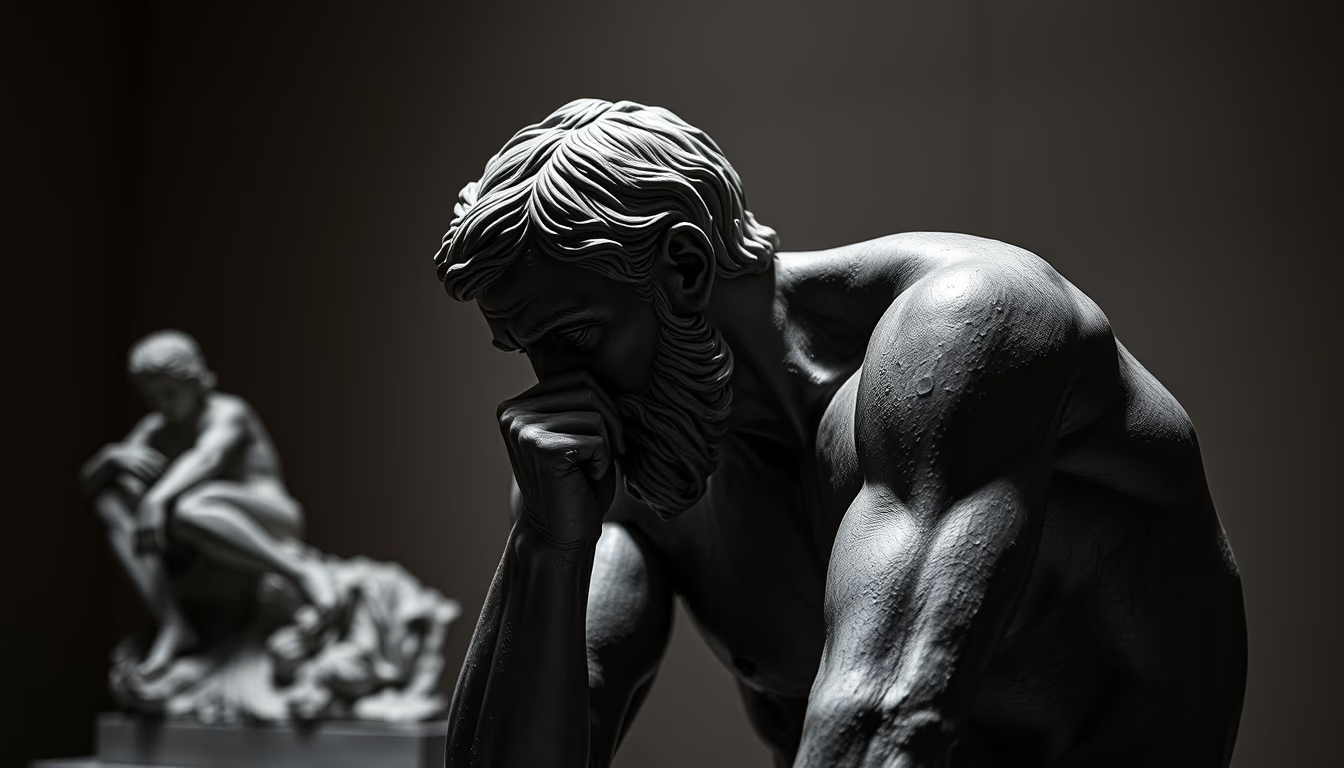
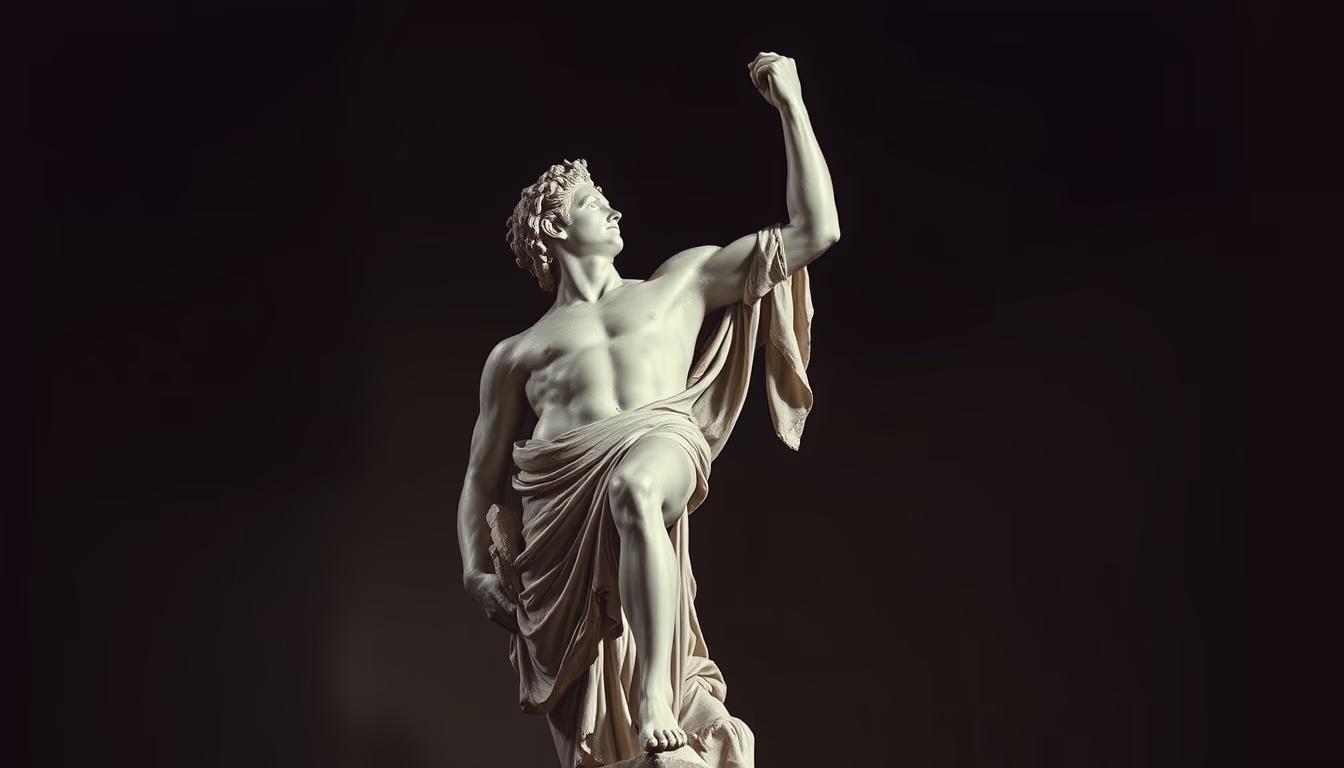
Auguste Rodin revolutionized sculpture in the 19th century with expressive works like The Thinker and The Kiss, marked by realism and emotion.
About this subject
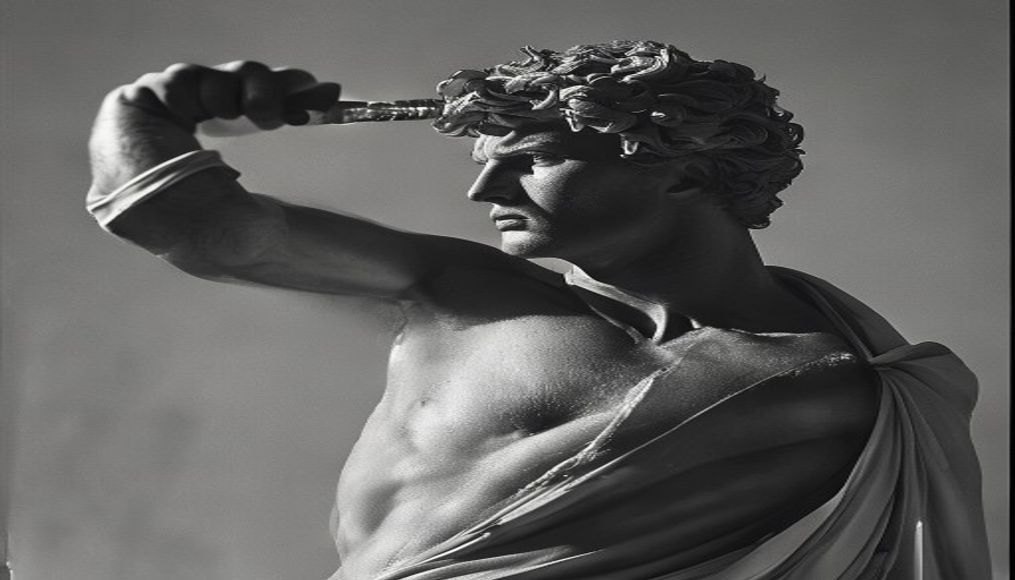
Auguste Rodin (1840-1917) is regarded as the father of modern sculpture. Unlike the academic standards of his time, he sought to capture movement, emotion, and the complexity of the human condition. His works often feature textured surfaces and fragmented figures, such as The Walking Man, which challenged the idea of completeness. Rodin also created monumental gates, like The Gates of Hell, which was never fully finished but gave rise to several independent sculptures, including The Thinker. This figure, originally a poet contemplating hell, became a universal symbol of reflection.
Rodin faced criticism for his unconventional approach. In 1877, his sculpture The Age of Bronze was accused of being a direct cast from a live model, a serious offense at the time. To prove his skill, he modeled St. John the Baptist Preaching, a life-size figure demonstrating his mastery of anatomy and movement. His non finito technique left parts of the stone or bronze rough, influencing generations of modern sculptors. Despite initial resistance, Rodin gained international recognition, receiving commissions such as The Burghers of Calais and the monument to Balzac.
Today, Rodin's sculptures are exhibited in museums worldwide, notably the Musée Rodin in Paris, which houses the largest collection of his works. His influence extends beyond sculpture, inspiring artists, writers, and filmmakers with his psychological and emotional approach. By combining realism with symbolism, Rodin paved the way for Expressionism and modern art.
Frequently Asked Questions
What is Rodin's most famous sculpture?
The Thinker (Le Penseur) is Rodin's most iconic work. Originally conceived as part of The Gates of Hell, the figure represents Dante Alighieri or a universal poet in deep contemplation.
Why were Rodin's sculptures considered controversial?
Rodin broke academic conventions by using live models and unfinished techniques. His sculpture The Age of Bronze was accused of being a direct cast from a body, but he proved his skill by modeling St. John the Baptist Preaching.
Where can I see Auguste Rodin's sculptures?
The Musée Rodin in Paris has the largest collection, including The Thinker, The Kiss, and The Burghers of Calais. Other works are at the Metropolitan Museum of Art (New York), the National Gallery (London), and museums worldwide.
Direct URL
https://pub-c7d6a6ea828543ac903a74a341ccb2e1.r2.dev/imagens/auguste-rodin-sculptures-fine-art-photography-p4.avifHow to credit
Include a visible link back to UtilizAí. Copy one of the snippets below:
<a href="https://xn--utiliza-eza.com/en/midia/imagens/auguste-rodin-sculptures-fine-art-photography-p4">Auguste rodin sculptures</a> by <a href="https://xn--utiliza-eza.com">UtilizAí</a>, licensed under <a href="https://creativecommons.org/licenses/by/4.0/">CC BY 4.0</a>.
[Auguste rodin sculptures](https://xn--utiliza-eza.com/en/midia/imagens/auguste-rodin-sculptures-fine-art-photography-p4) by [UtilizAí](https://xn--utiliza-eza.com), CC BY 4.0
License: CC-BY-4.0