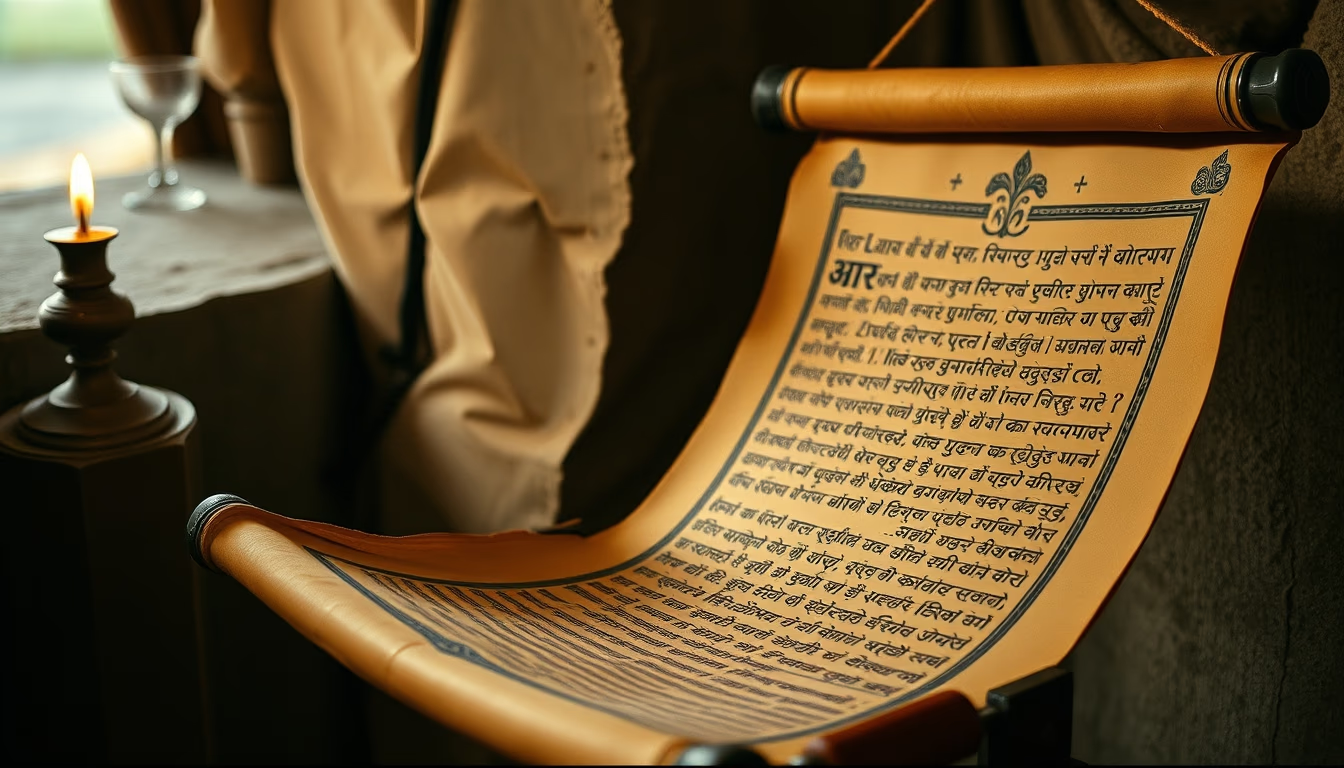
Arabic calligraphy ink
1344×768 · AVIF · CC BY 4.0

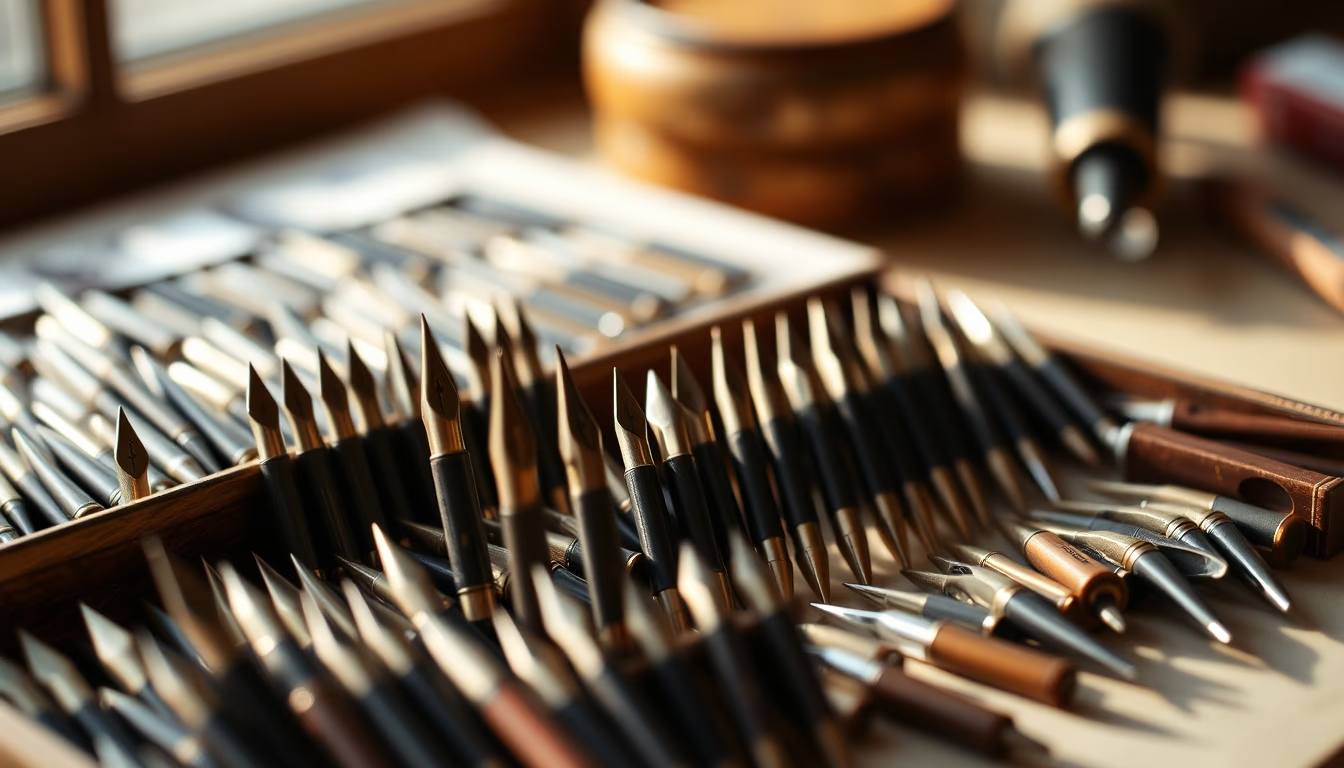
Arabic calligraphy ink, traditionally made from soot and gum arabic, is essential in Islamic art and used with a bamboo qalam.
About this subject
Arabic calligraphy ink is one of the most important elements of this ancient art. Traditionally, its production involves burning materials like oil or wood to obtain fine soot (carbon black), which is then mixed with gum arabic, a natural binder extracted from acacia, and water. The resulting paste is kneaded until it reaches the ideal consistency. This handcrafted process, passed down through generations, ensures a dense, lustrous ink that enhances the elegant strokes of calligraphy.
Historically, carbon-based black ink was used to copy the Quran and decorate manuscripts, mosques, and palaces. Styles such as Kufic, Naskh, and Thuluth require specific properties: the ink must flow smoothly without bleeding, dry quickly, and resist aging. The composition directly influences stroke thickness and sheen, characteristics valued in Islamic aesthetics. Medieval calligraphers like Ibn Muqla and Yaqut al-Musta'simi perfected both the ink and the tools.
The primary instrument is the qalam, a pen made from cut reed or bamboo. The ink is kept in an inkwell (dawāt) made of metal or ceramic. The relationship between ink and support (paper or parchment) is crucial: paper absorption and texture determine flow. Regional variations are notable, Persian calligraphers prefer thicker inks, while Turks opt for a more liquid consistency. Even today, artisanal production persists in workshops in Egypt, Iran, and Turkey, though synthetic versions are also used by beginners. Arabic calligraphy ink remains a symbol of tradition and technical precision.
Frequently Asked Questions
How is traditional Arabic calligraphy ink made?
The ink is made from soot (carbon black) mixed with gum arabic and water, forming a paste that is diluted to the ideal consistency for writing with a qalam.
Why is ink important in Arabic calligraphy?
The ink is crucial for the clarity and durability of strokes. Its composition affects flow and sheen, characteristics prized in Islamic art.
Is Arabic calligraphy ink still used today?
Yes, artisans and calligraphers still produce traditional ink by hand, though synthetic versions are also common for modern practice.
Direct URL
https://pub-c7d6a6ea828543ac903a74a341ccb2e1.r2.dev/imagens/arabic-calligraphy-ink-high-fashion-editorial-fresh14.avifHow to credit
Include a visible link back to UtilizAí. Copy one of the snippets below:
<a href="https://xn--utiliza-eza.com/en/midia/imagens/arabic-calligraphy-ink-high-fashion-editorial-fresh14">Arabic calligraphy ink</a> by <a href="https://xn--utiliza-eza.com">UtilizAí</a>, licensed under <a href="https://creativecommons.org/licenses/by/4.0/">CC BY 4.0</a>.
[Arabic calligraphy ink](https://xn--utiliza-eza.com/en/midia/imagens/arabic-calligraphy-ink-high-fashion-editorial-fresh14) by [UtilizAí](https://xn--utiliza-eza.com), CC BY 4.0
License: CC-BY-4.0